America's Five Largest Army Bases: Why These Massive Military Installations Matter
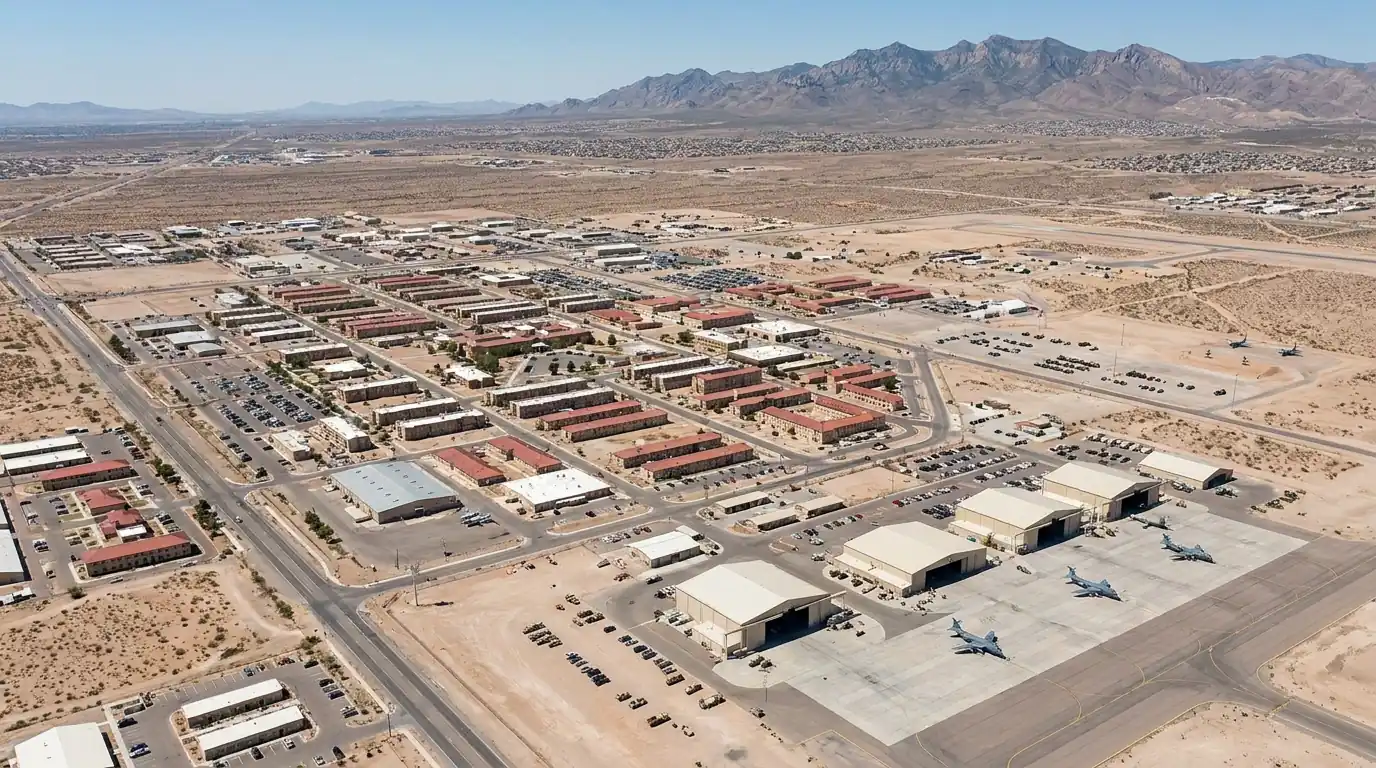
The United States is home to several Army bases spanning hundreds of thousands to millions of acres, complete with residential communities, airfields, hospitals, schools, and training ranges. These installations serve as the backbone of U.S. military readiness, supporting ground and joint combat exercises, weapons testing including drones and autonomous systems, logistics operations, and regional economic development.
Highlights
- The largest U.S. Army bases span hundreds of thousands to millions of acres, functioning as self-contained communities with airfields, hospitals, schools, and training ranges.
- These installations provide restricted airspace and dedicated test ranges used to develop and validate drones, autonomous vehicles, and advanced weapons systems.
- U.S. Army mega-bases serve as critical logistics hubs for military supply chains and troop deployment operations.
- Large military installations generate significant local employment and serve as major economic drivers for surrounding regions.
- As autonomous and unmanned systems become central to modern warfare, expansive bases with open airspace are increasingly vital to U.S. defense strategy.
Imagine a place so vast that you could drive for miles in any direction and still never reach its boundary. Such places exist within the United States — Army installations spanning hundreds of thousands to millions of acres, complete with self-contained residential communities, airstrips, medical facilities, schools, and training ranges. Their infrastructure rivals that of a small city.
Calling them simply "bases" hardly does them justice. These enormous military complexes are the core of the U.S. Army's ability to maintain combat readiness, train soldiers, and test next-generation weapons systems — including drones and autonomous vehicles.
Why These Bases Matter
These mega-installations are far more than soldier training grounds. They serve multiple strategic functions simultaneously:
- Defense Training: Providing space for large-scale ground, air, and joint combat exercises
- Weapons Testing: Vast acreage and restricted airspace create ideal conditions for testing drones, missiles, and advanced weapons systems
- Logistics Hubs: Serving as critical nodes for military supply chain management and troop deployment
- Economic Contribution: Generating large numbers of jobs in surrounding communities and driving local economic growth
Overview of the Five Largest U.S. Army Bases
America's largest Army installations are spread across multiple states, each with a distinct strategic value and mission profile. Their existence reflects the military's enduring need for expansive training environments and multi-mission facilities as the nature of modern warfare continues to evolve.
As drone technology and autonomous systems play an increasingly prominent role in modern military operations, these large bases — with their wide-open airspace and dedicated test ranges — have also become critical sites for the U.S. Army to develop and validate new unmanned systems.
Conclusion
America's largest Army bases are more than symbols of military power — they are essential infrastructure underpinning the nation's entire defense architecture. From conventional ground force training to cutting-edge drone system testing, the multifaceted capabilities of these installations will remain indispensable to U.S. defense strategy well into the future.
原文來源: 查看原文
FAQ
Reviewed and published by the LAETimes editorial desk ·