Royal Navy Achieves Historic Milestone with First Sea-Launch of Attack Drone
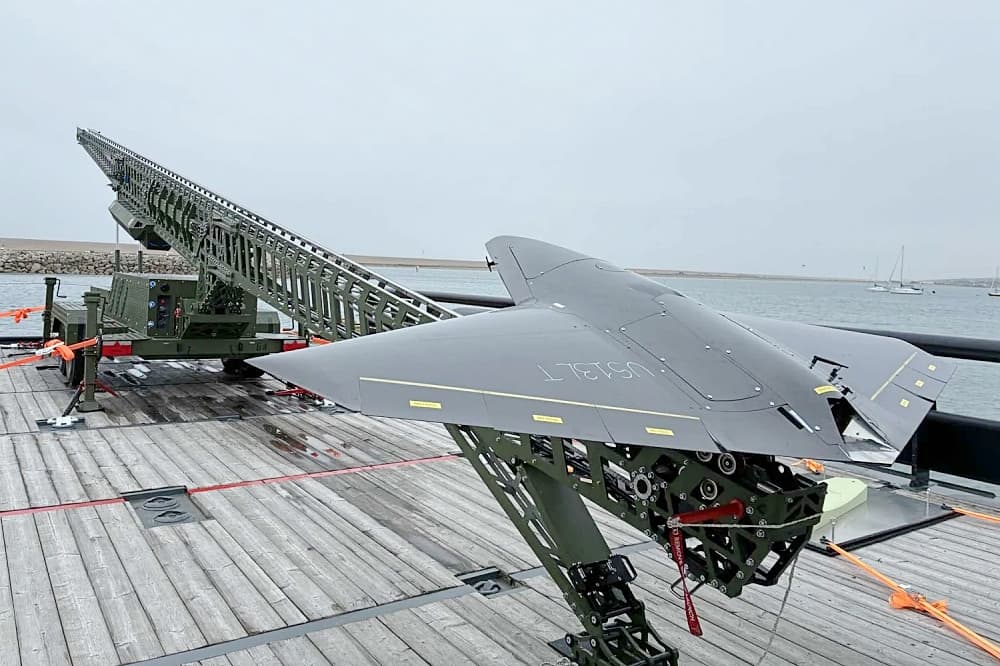
The Royal Navy has successfully launched an attack-capable 'Nyan One Way Effector' drone from a vessel at sea aboard experimental ship XV Patrick Blackett, in a joint trial with the British Army and Royal Air Force. The milestone marks a significant step forward in the UK's ambition to build a hybrid naval force capable of countering evolving security threats.
Highlights
- The Royal Navy successfully launched the Nyan One Way Effector attack drone from experimental ship XV Patrick Blackett in a tri-service trial involving the British Army and RAF.
- The Nyan One Way Effector is a loitering munition — a drone that flies into its target on a single mission with no return capability, offering low-cost asymmetric strike potential.
- The trial is a major milestone in the UK's hybrid navy programme, which aims to integrate crewed and uncrewed platforms into a unified, more resilient naval force.
- XV Patrick Blackett serves as the Royal Navy's dedicated trials vessel and plays a central role in testing emerging maritime technologies.
- Major military powers are accelerating attack drone development following their demonstrated battlefield impact in recent regional conflicts; the UK trial advances its sea-based strike drone capability.
The Royal Navy has successfully launched an attack-capable drone from a vessel at sea, marking a significant step in the UK's efforts to build a hybrid naval force and respond to increasingly complex security threats.
Tri-Service Trial Sets a Historic Precedent
The trial was conducted aboard the Royal Navy's experimental ship XV Patrick Blackett, where naval personnel worked in close collaboration with British Army soldiers and Royal Air Force (RAF) operators to complete the sea-based launch of the Nyan One Way Effector (OWE) drone.
A One Way Effector — commonly referred to in the industry as a loitering munition or 'kamikaze' drone — is a system that, once launched, flies directly toward its target and neutralises it on impact, with no provision for recovery. This class of weapon offers asymmetric advantages through low cost and high operational effectiveness.
A Key Step Toward a Hybrid Naval Force
The sea-launch trial is regarded as a major milestone in the UK's push toward a 'hybrid navy' concept — an operational model that integrates traditional crewed platforms with a range of uncrewed systems to create a more flexible and resilient force structure capable of responding to threats from both state and non-state actors.
XV Patrick Blackett, which serves as the Royal Navy's dedicated trials vessel, has long played a central role in testing emerging maritime technologies, and this latest trial further underscores its importance in the UK's naval modernisation programme.
Attack Drone Capabilities Advancing Rapidly
In recent years, attack drones have demonstrated a battlefield-altering capability in several regional conflicts, prompting major military powers to accelerate research, development, and deployment of related technologies. The UK's successful trial represents a concrete advance in its sea-based strike drone capabilities, with further trials expected to expand in scope as the Royal Navy continues to assess the operational integration potential of such systems.
原文來源: 查看原文
FAQ
Reviewed and published by the LAETimes editorial desk ·