Iran Fits M60A1 Main Battle Tanks with Foldable Anti-Drone Canopies
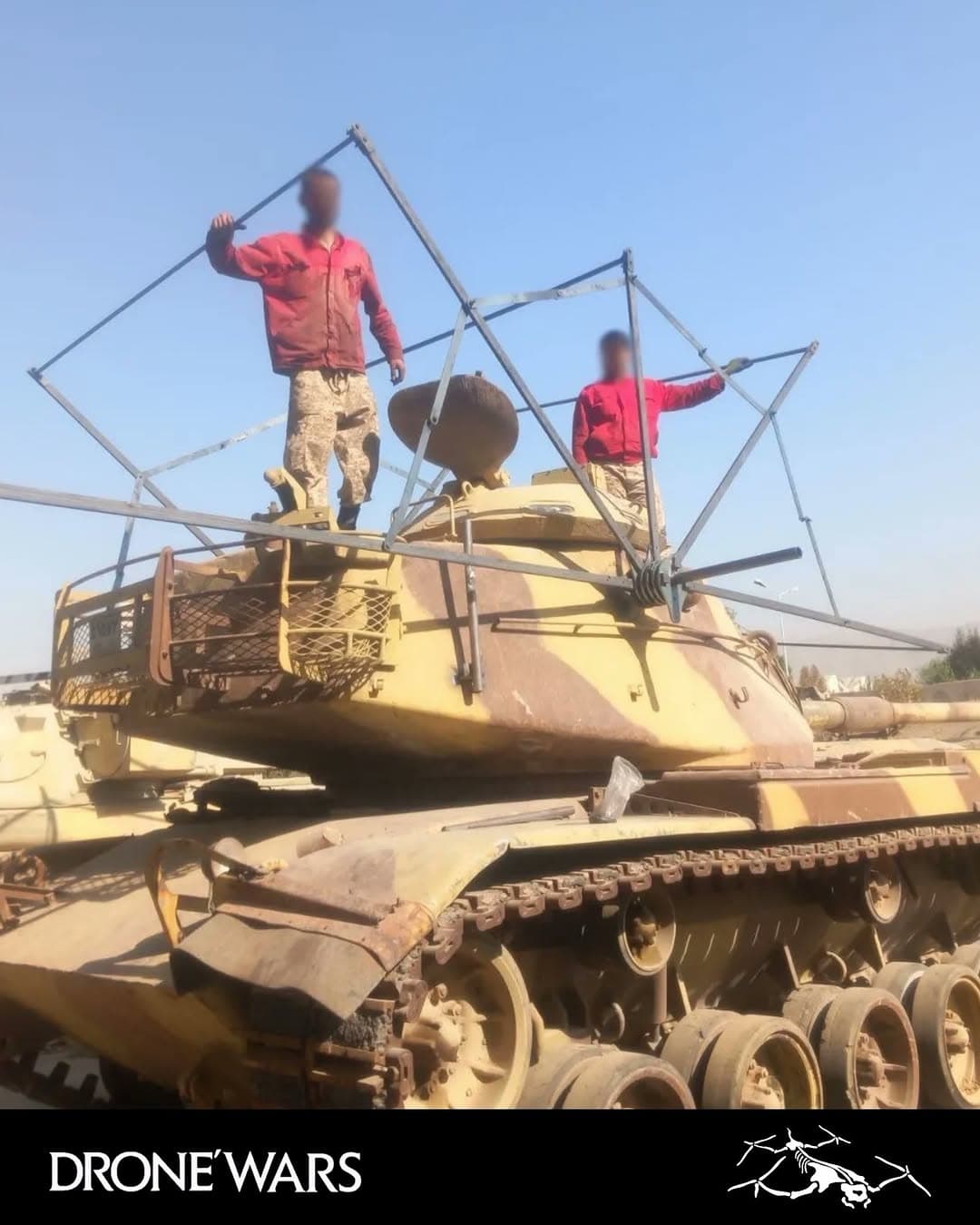
Leaked imagery shows the Iranian military has retrofitted its M60A1 main battle tanks with foldable anti-drone canopies. The protective structures closely resemble the 'turtle shell' cage armor widely adopted on the Ukrainian battlefield, and are designed to defend against top-attack drone threats.
Highlights
- Leaked imagery confirms Iran has retrofitted M60A1 main battle tanks with foldable anti-drone canopies to counter top-attack FPV drone threats.
- The Iranian canopy design mirrors Ukraine's 'turtle shell' slat-armor structures, which emerged as a passive countermeasure during the Russia-Ukraine war.
- The M60A1 is a decades-old U.S. Cold War-era tank platform, and Iran's retrofit reflects a broader trend of low-cost upgrades to legacy armored vehicles.
- Small, low-cost FPV loitering munitions have become a defining asymmetric threat in modern warfare due to their ability to exploit thin top armor on conventional armored vehicles.
- Multiple militaries worldwide are now actively modifying existing armored fleets with improvised top-protection structures in response to the proliferation of drone threats.
Recently leaked imagery confirms that the Iranian military has fitted its M60A1 main battle tanks with foldable anti-drone canopies, a modification aimed at improving vehicle survivability in drone-contested environments.
Design Mirrors Ukraine's 'Turtle Shell' Approach
The canopy-style protection closely mirrors the so-called 'turtle shell' slat-armor structures that have become commonplace on the Ukrainian battlefield. Faced with a sustained threat from FPV loitering munitions diving onto the thin top armor of armored vehicles, Ukrainian forces progressively began welding metal grilles and folding roof covers over their tanks and armored personnel carriers as a passive countermeasure.
Drone Attacks Have Become a Defining Threat on the Modern Battlefield
In recent years, low-cost, single-use FPV drones have emerged as a significant asymmetric threat due to their affordability, maneuverability, and ability to exploit the relatively thin top armor of conventional armored vehicles. In response, militaries around the world have been actively upgrading their legacy platforms with improvised protective solutions.
Iran's decision to retrofit the M60A1 — a platform originally designed in the United States during the Cold War and now decades old — with foldable anti-drone canopies underscores how the proliferation of drone threats is compelling armed forces to pursue low-cost modifications to existing equipment rather than waiting for next-generation replacements.
Image source and further real-time battlefield updates: follow the official Drone Wars social media accounts.
原文來源: 查看原文
FAQ
Newsletter
Subscribe to our Low-Altitude Industry Newsletter
Daily curated news on low-altitude economy and drone industry, delivered to your inbox.
Reviewed and published by the LAETimes editorial desk ·


