German Counter-Drone Startup Tytan Technologies Prepares New Factory Targeting 3,000 Interceptors Per Month
Munich-based counter-drone manufacturer Tytan Technologies is establishing a new facility in Germany, with mass production of autonomous interceptor drones set to begin in August. The factory will have a monthly capacity of 3,000 units. The company's interceptors are already combat-proven in Ukraine and have been adopted by Germany and Baltic allies, with Poland and Hungary identified as potential future production sites.
Highlights
- Tytan Technologies is opening a new factory in Germany targeting monthly production of 3,000 autonomous interceptor drones, with mass production launching in August 2025.
- CEO Balázs Nagy states Tytan's approach costs 200 times less than traditional air defence systems to protect equivalent airspace.
- The company's interceptors are combat-proven in Ukraine and have been adopted by Germany and Baltic states.
- Poland and Hungary have been identified as potential sites for additional Tytan Technologies manufacturing facilities.
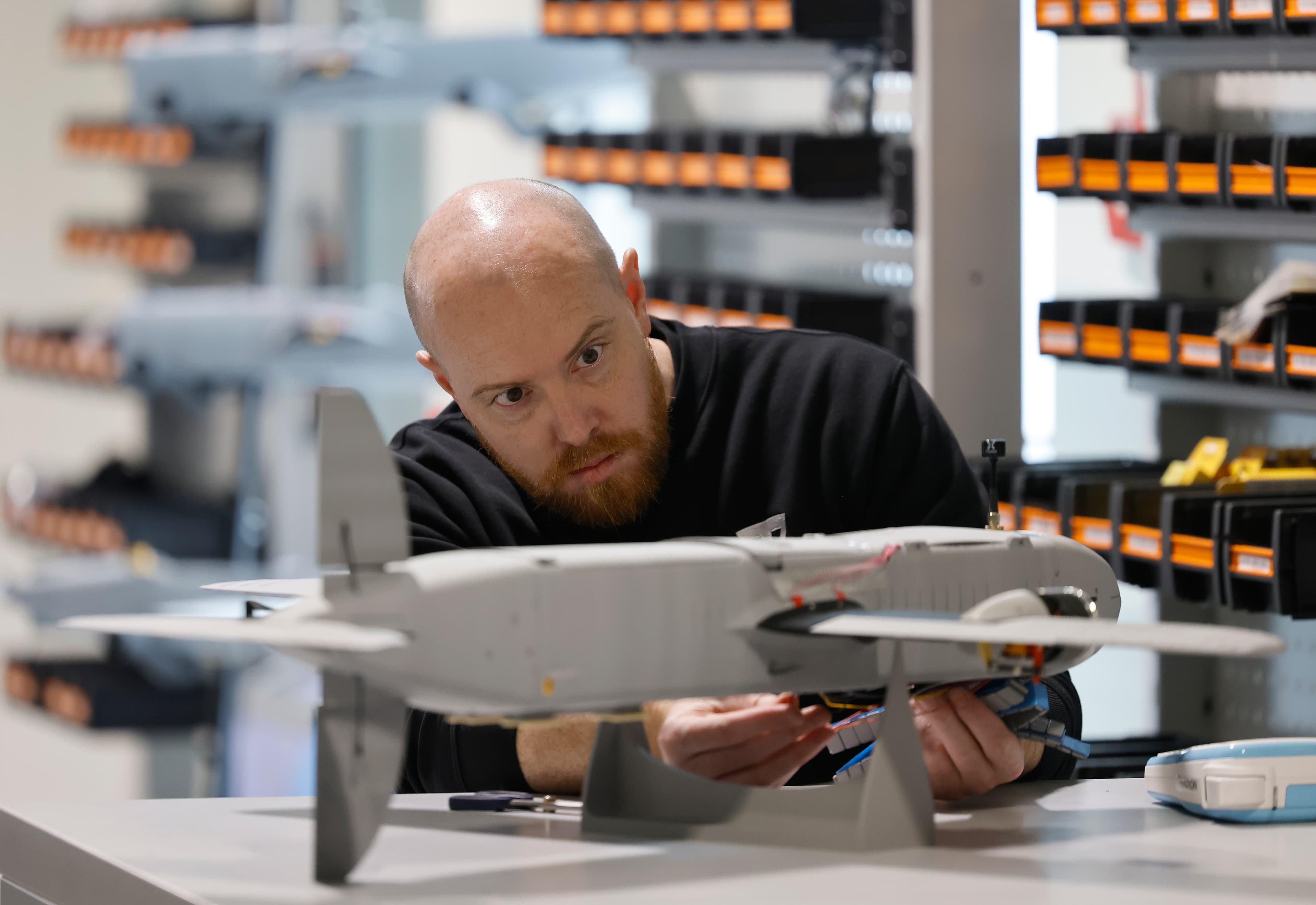
- Tytan's product line includes the EOS (multi-rotor, NATO Class I threats) and METIS (fixed-wing, NATO Class II threats), both AI-driven and autonomous.
WARSAW, Poland — Munich-based counter-drone systems manufacturer Tytan Technologies is actively preparing to open a new factory in Germany to meet growing demand for interceptor drones.
According to company executives, the facility will be capable of producing 3,000 autonomous interceptors per month, with mass production scheduled to begin in August of this year.
Combat-Proven in Ukraine
Balázs Nagy, CEO and co-founder of Tytan Technologies, told Defense News that the company's interceptor drones have seen extensive use on the Ukrainian battlefield, where Ukrainian forces have found them to be a cost-effective, high-performance, and easy-to-operate solution against aerial threats.
"Conventional systems simply cannot prove their worth in Ukraine. Large platforms have been destroyed by incredibly cheap drones. Tytan's approach makes it 200 times cheaper to protect the same airspace compared to traditional systems," Nagy said.
He added: "Our approach is to neutralize enemy drones in the air through the development and mass production of autonomous counter-drone systems. This represents a major paradigm shift — moving away from extremely complex and expensive hardware toward very simple, scalable hardware paired with highly sophisticated software."
Expanding Ally Adoption
As an increasing number of allies — including Germany and the Baltic states — adopt its interceptors, Tytan Technologies is actively advancing plans to expand its manufacturing footprint. Poland and Hungary have been identified as potential sites for additional facilities.
"As our larger new German factory comes online, we have established a replicable blueprint that allows us to rapidly scale production capacity across different regions," Nagy said.
Product Line Covers NATO Class I and II Threats
Tytan Technologies currently offers multiple AI-driven autonomous interceptors, with its main products including:
- EOS: A short-range multi-rotor interceptor developed to counter small drone threats classified as NATO Class I.
- METIS: A long-range fixed-wing interceptor designed to neutralize drone threats at the NATO Class II level.
As drones play an increasingly decisive role on the modern battlefield, the low-cost "drone-to-defeat-drone" counter-strategy represented by Tytan Technologies is attracting growing attention from defence procurement agencies worldwide.
原文來源: 查看原文
FAQ
Reviewed and published by the LAETimes editorial desk ·