Tales From the Tower: The Air Traffic Controller Perspective
Here's a look at a typical day in the life of an ATC.

I reach the top stair to the control tower. It’s just before dawn, the air is still and clear. A glow in the eastern sky radiates an optimistic outlook for today’s weather. The panoramic view is a peaceful, familiar sea of blue and white lights dimming as the sun peeks over the horizon. A scan of the airport perimeter reveals little motion or disturbance. The continuous four-second rotation of the radar antenna array is very reassuring.
Closer in and below, plumes of exhaust begin to appear as ground vehicles fire up and reposition for the first wave of air carrier departures. The airport ops vehicle conducts its morning runway and taxiway inspections. The relative calm will not last long—it’s going to be a busy day.
The flight data/clearance delivery position is already humming. The ATIS is updated with the promise of a nice VFR day with light winds, and to expect Runway 28 for approach and landing. Clearances are issued one after the other to a mix of light singles, corporate twins and jets, and air carriers. As the primary airport in Class C airspace, VFR departures also must call clearance for radar services and a transponder code.
This Article First Appeared in FLYING Magazine
If you're not already a subscriber, what are you waiting for? Subscribe today to get the issue as soon as it is released in either Print or Digital formats.
Syracuse Hancock International Airport (KSYR) in New York, like many others frequented by GA, has intersecting runways. The primary east-west runway is the longest, best aligned with prevailing surface winds, and served by ILS and GPS approaches. A secondary southeast-northwest runway intersects the primary near the southeast end of the field.
Airport Wakes Up
It’s 7 a.m. EST. A coworker and I have just relieved the very bleary-eyed midnight shift fellow so he can find his way home to bed. I’m working ground control. A few arrivals start to pop up on the tower radar display, lining up for the ILS to the west runway. More beacons and strobes begin to flicker at the GA ramp area on the south side. Airliners northwest of the runway intersection, begin pushback and engine start. Unlike at some airports, they don’t have to call me for pushback clearance since there’s adequate space in the nonmovement area.
Multiple aircraft call for taxi. They caravan toward the west runway—air carriers via a north parallel taxiway, GA via the south parallel. Winds are light and an opportunistic 737 near the back of the line requests departure from the southeast Runway 15—the approach end of which is nearby and happens to point almost directly at his destination.
- READ MORE: FAA Hits Air Traffic Control Hiring Goal for 2025
- READ MORE: FAA Modifies Rest Rules for Air Traffic Controllers
Controllers are primarily focused on safety and adherence to local airport procedures. We’re also generally amenable to approving or suggesting viable alternatives, especially when safety, efficiency, and convenience are enhanced, and traffic and operational conditions permit.
Because inbounds are still few and distant, I receive approval from the local tower controller next to me and issue the 737 a taxi clearance to that runway. As soon as the departure that’s already rolling on the west runway clears the intersection, tower clears the 737 for takeoff to the southeast. While he’s rolling southeast, tower issues “ABC123, Runway 28, line up and wait, traffic departing runway 15” to the next west departure. Once the southeast bound 737 clears the runway intersection, ABC123 is cleared for takeoff to the west. Three departuresoccur in the same amount of time that only two would on the primary runway alone.
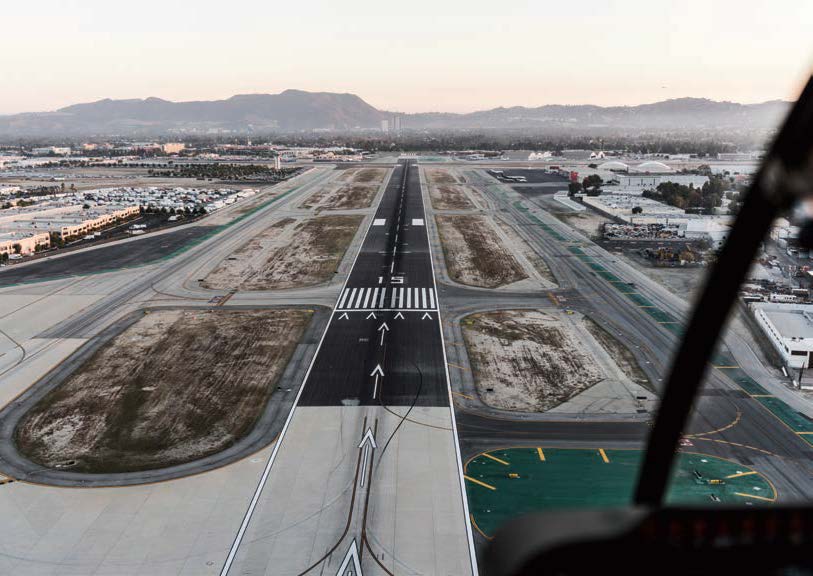
Hollywood Burbank Airport (KBUR) in California serves the Greater Los Angeles area. [Credit: Adobe Stock]
At this airport, once the arrivals are inside the outer marker for the west runway, the southeast departure window closes. The runway intersection angle is only about 45 degrees, so aircraft separation near the intersection could get dicey, especially if the southeast departure is already airborne and west arrival misses the approach or goes around—one of the many surprises for which we must always be ready.
Meanwhile, several GA aircraft are taxiing for departure along the south parallel taxiway. Two bizjets in the lead are easily sequenced into the departure mix on the primary runway. The eastbound VFR Cessna near the end of the line asks for an intersection departure, hoping to bypass the congestion ahead. But since most of the awaiting departures are Category III aircraft, the Cessna would be issued a wake turbulence delay of three minutes after the departure immediately prior. The controller cannot offer it, but yes, the pilot could waive that delay—not a wise idea since most of the awaiting departures ahead are large aircraft.
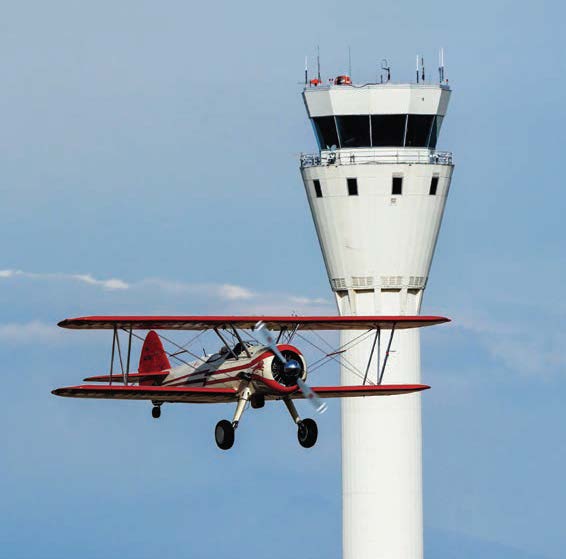
The author says the panoramic view from an ATC tower can be peaceful. [Credit: Adobe Stock]
After a quick thumbs-up from the local controller, I respond, “Wind is 300 at 7. How about Runway 33?” which is conveniently just ahead. They agree and are soon off to the northwest between two west runway departures with almost no delay and less of a turn on course to boot. To better expedite all departures, I suggest the northwest runway for most light and medium aircraft headed west, north, and east unless conflicting traffic exists north of the airport.
During the past couple of hours, the airport’s surface has been my universe, and my full focus has been on the traffic using it. Things slow a bit now and I’m off for a break. A bit of good-natured joking ensues to reduce barometric pressure in the tower cab.
Midmorning Rush
Next, I take the local control (tower) position. My new and expanded universe are the active runways and nearby airspace, roughly 4 miles laterally and up to 1,500 feet msl. The terminal radar approach control (TRACON) is two levels below me and controls the surrounding airspace, a 40-ish mile radius up to 10,000 msl. They feed me arrivals (Approach or Final Approach control) and take my departures (Departure control). Ground control feeds me departures and takes my arrivals once clear of the active. We talk often, coordinating traffic movement in the airspace and on the surface. Any deviation from standard operating procedure requires a request and approval among us. It’s truly a team effort.
The clock seems to accelerate as 10 a.m. approaches. The tower radar display above begins to light up with an increasing number of inbound traffic targets. Traffic flow peaks and ebbs, and is almost never evenly spaced out—often everyone seems to come at us at once. We are spring-loaded and ready for the peaks. The ground controller ramps up his pace as the midmorning departures get rolling and weave their way among the arrivals. At my request, approach spreads the arrivals out to 4-5 mile spacing so I can squeeze more departures out between the arrivals. We are hustling now, between gulps of coffee or tea, moving a good percentage of the day’s traffic into a compressed time period.
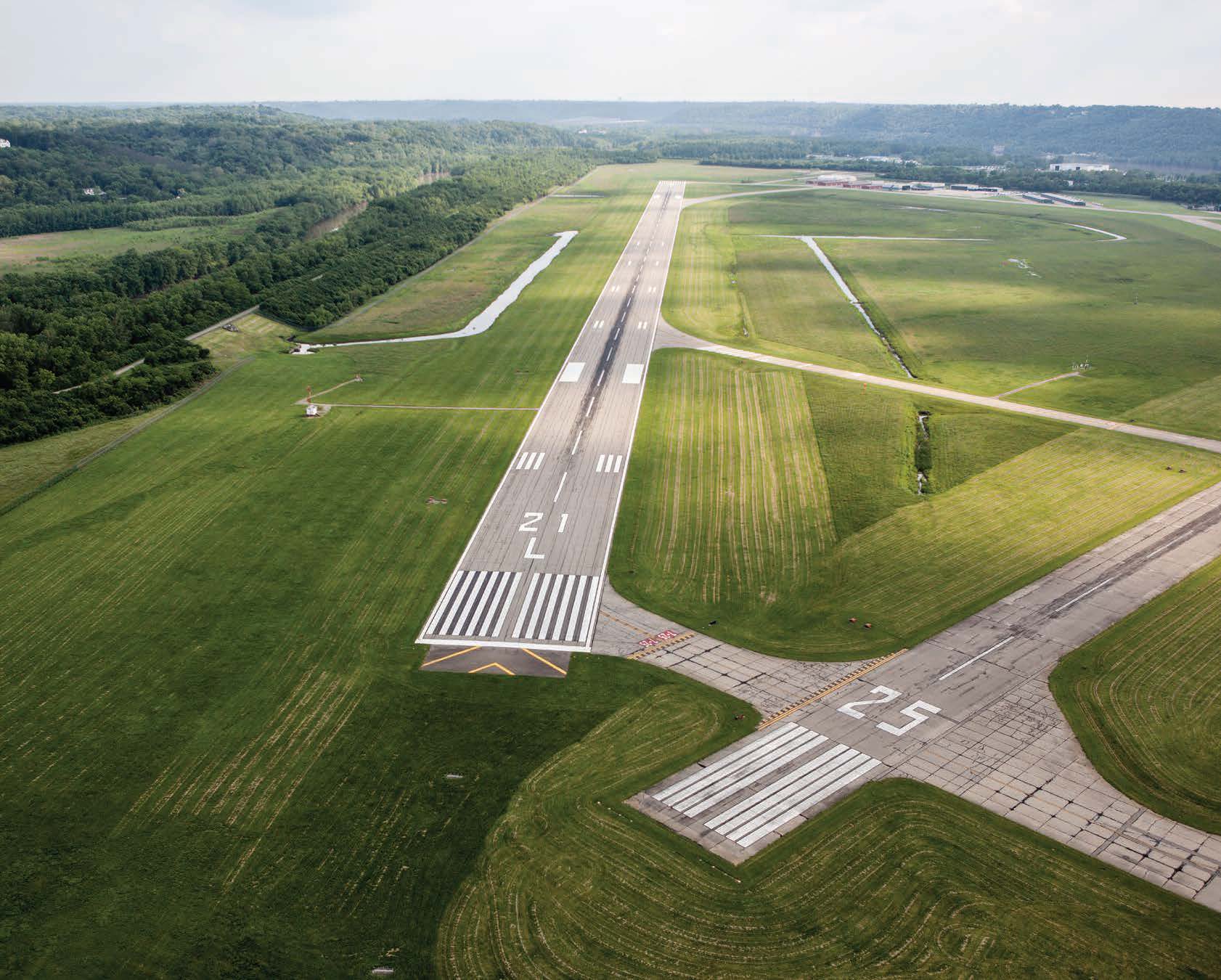
Cincinnati Municipal Airport-Lunken Field (KLUK) in Ohio caters to private aviation. [Credit: Adobe Stock]
Approach requests some arrivals to the northwest intersecting runway as well as 28, based on either a pilot request or that they need to squeeze in more arrivals to avoid delaying vectors or holding. I approve them, but also shut down my secondary runway departure options for a time.
A twin is inbound from the north and coming fast. I see on the radar display that the lineup on final east of the airport is quite long, and more inbounds are headed toward the localizer course from the south. I offer the southeast runway for landing but to hold short of the runway intersection (LAHSO), and the twin agrees. I issue landing clearances that include advisories to each aircraft about the other, and that the southeast arrival will hold short of the intersection to avoid undue pilot anxiety. Two simultaneous arrivals, and everyone is happy.
Traffic eases until multiple Air National Guard F-16s return from one of the MOAs. Approach has broken them into single-ship flights and sends them to me four at a time. They request 360 overhead approaches, following each other. Approach has built a 10-mile gap in the arrival sequence to accommodate. Departures all but stop until the last fighter clears the active. At least I have no Cessna 150s in the pattern.
I get a few more departures out before the next four military planes arrive. One is an itinerant Navy F-8 who stopped for fuel. He thrills us with a clean, crisp aileron roll shortly after rotation—our own airshow.
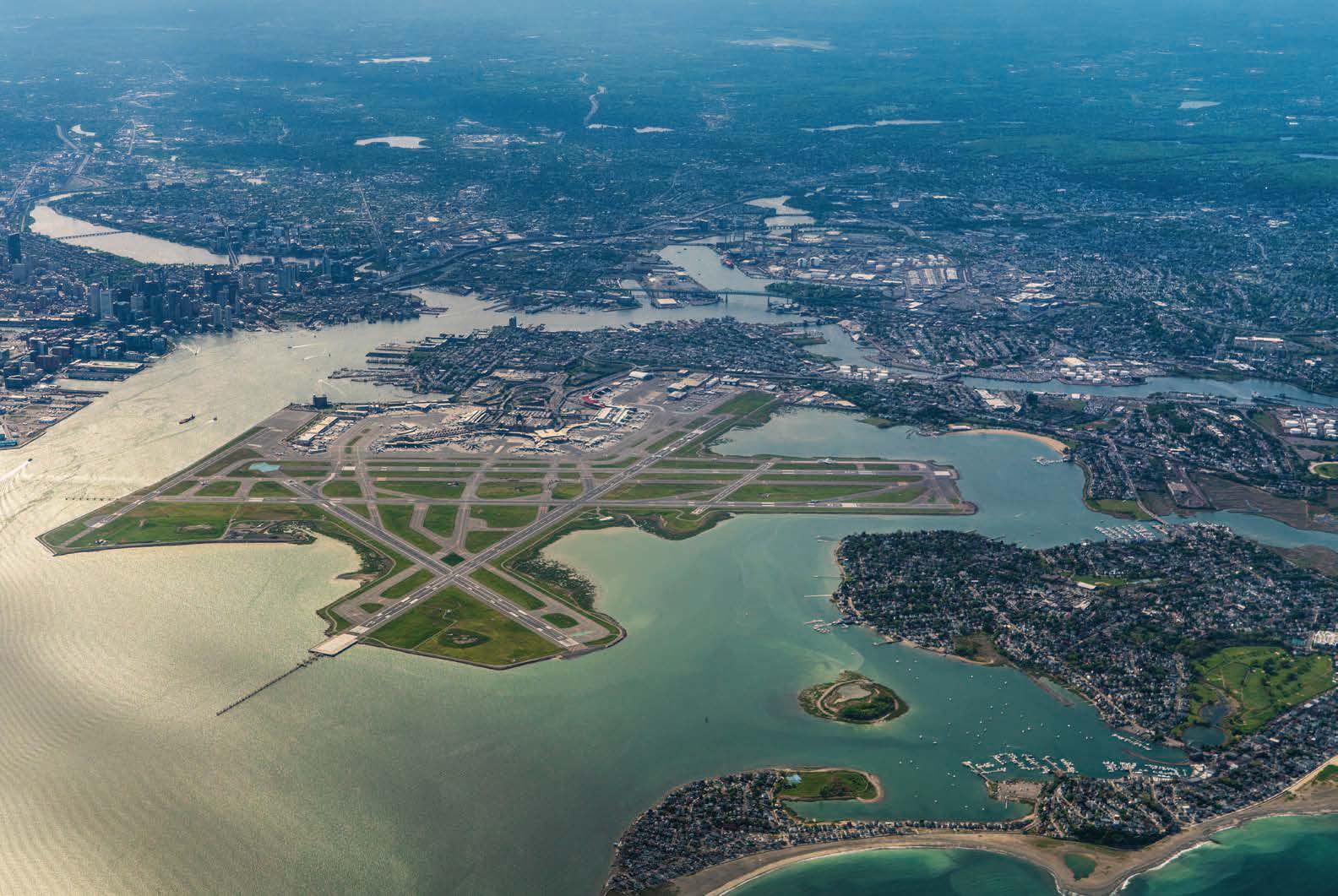
Boston Logan International Airport (KBOS). [Credit: Adobe Stock]
The Army helicopters are now doing autorotations, and a traffic survey aircraft returns from over the city. Some of these operations have Letters of Agreement (LOAs) between the FAA, airport management, and operators that define procedures, lateral boundaries, and altitudes to keep things safe while minimizing traffic disruption and radio communications.
The arrivals dwindle some, so I accept a couple of aircraft in the pattern for touch and goes. I use slightly extended downwind legs, 360s on downwind, and short approaches as needed to fit them into the traffic flow. Generally, slower flight on downwind allows me to be more accommodating about pattern work. If I start to get that bad feeling about being able to stay on top of everything going on, it’s time for a full-stop landing or for them to depart the area.
Time moves quickly when fully immersed in your work. I’m soon being relieved for lunch and to recharge for my afternoon in the TRACON. Regardless of shift, the goal remains the same—moving airplanes safely, efficiently, and with flexibility when conditions allow.
When everything comes together, it’s deeply rewarding to smooth the flow of a complex operation.
Airport Configurations
Intersecting Runways
Many airports GA aircraft use frequently have intersecting runways. There’s typically a primary runway—the longest, hopefully best-aligned with prevailing surface winds, and served by instrument approach(es). One or more secondary runways intersect the primary. GA airports may be of older design and have either grown or shrunk in a piecemeal manner over time. Whatever the configuration, air and ground traffic procedures are designed to optimize safety, capacity, and efficiency for the airport and nearby airspace configuration. Roughly, the need to operate at reduced capacity on only a single runway due to strong winds happens around 20 percent of the time, though this can vary widely. During normal operations, airport traffic capacity and efficiency can be enhanced with the use of multiple runways. The secondary runways offer pilots and controllers operational alternatives that improve efficiency and minimize delays, depending on traffic congestion.
Nonintersecting Secondary Runways
Some airports have a secondary runway that is fairly perpendicular to but does not intersect the primary runway. This can provide a huge increase in airport capacity. At Centennial Airport (KAPA) near Denver, Runway 10/28 is east of the other north-south runways. ATC will routinely assign light aircraft departures off Runway 10 to other than west-northwest bound aircraft, and arrivals from the east will be assigned Runway 28 with no disruption to the traffic flow elsewhere.
Parallel Runways
Airports with parallel runways raise airport capacity and efficiency to a much higher level, offering ATC huge flexibility. Segregating itinerant and local traffic, and employing tools such as opposite traffic patterns, parallel approaches, and side-step maneuvers, allow for the rerouting of traffic to optimize flow and resolve pending conflicts in a safe, efficient manner. If necessary, the airport can function as two separate smaller airports, each with its own tower controller. It’s vital to be familiar with both published and ATIS—based arrival and departure procedures. Never overshoot your turn from base to final as it can and has resulted in some very bad outcomes.
Single Runway, Multiple Type Aircraft
Airports with a single runway that serve many aircraft types, including air carriers, have limited capacity and little flexibility on runway assignment. Although there is less traffic, they do get busy and experience delays. Air carrier and other IFR traffic can bottleneck ground operations, occasionally sitting at the approach end of the runway awaiting IFR release from the controlling ARTCC to be relayed through the tower. Once released and on their way, resulting wake turbulence delays for subsequent departures add to the mix. VFR arrivals and departures may be delayed to allow IFR departures to take off within their release window. Don’t expect to consistently zip in and out of these airports without delay. At Aspen/Pitkin County Airport (KASE) in Colorado, the single runway location and usable airspace is dictated and constrained by much higher surrounding terrain. It’s one way in (Runway 15) and one way out (Runway 33) for high-performance and large-category aircraft. ATC uses a cool “wrap” departure procedure that first offsets a departing aircraft east, then up a left climbing turn behind and/or over the inbound aircraft on approach. Limited surface capacity can cause ramps to fill, and air carriers pushback into the only taxiway. Diversions and delays are not uncommon during peak traffic. ATC does a great job there in a complex environment. To ensure safe and smooth operation, pilot familiarity and compliance with procedures is vital.
Always Use Vigilance
Users at multiple-runway airports must be highly focused on safety. “See and avoid” collision awareness is our primary responsibility, but we know it has limitations. While inbound or once airborne, secondary runway operations can put you in conflict with other aircraft using the primary runway. Climbing on runway heading off a southwest runway will aim you toward inbound traffic entering left downwind to a west runway. ATC will help, but you must maintain an extra-sharp lookout. The level and accuracy of traffic advisory service provided by ATC to VFR aircraft in Class D airspace can vary depending on whether or not the tower has radar. Towers with radar will give basic radar service on a workload-permitting basis. But do not assume the tower will automatically steer you away from conflicting traffic, or issue advisories. The tower controller issues instructions to establish and maintain the spacing and sequencing necessary for takeoff and landing, and issues advisories only as workload permits, sometimes based solely on pilot position reports. In over 50 years of flying, my two closest calls both occurred in Class D airspace during secondary runway operations at a towered airport with no radar. If I regularly operated at a Class D airport, where secondary runway operations were routine, I would definitely be equipped with ADS-B In. Be vigilant, and very careful with these types of operations.
Know When to Use Your Options
Alternate Departure Runways
If you’re VFR, consider requesting an alternate departure runway, when conditions permit and the primary runway is stacked up with awaiting departures, wake turbulence delays are anticipated, or the runway is not aligned with your direction of flight. Less flexibility may be afforded IFR departures due to more restrictive IFR separation requirements. You are expected to comply with any minimums and (obstacle) departure procedures that apply.
Alternate Arrival Runway, Land and Hold Short (LAHSO)
GA arrivals are generally best served with the primary arrival runway since secondary runways are more often used to expedite departures. However, this can vary widely. If a secondary runway arrival seems optimal and will fit into the traffic flow, the controller may approve it. Simultaneous arrivals to both runways using LAHSO can improve efficiency and capacity. ATC approval is subject to several conditions not apparent to the pilot, such as landing distance available and aircraft gross weight. The Aeronautical Information Manual (AIM) offers good guidance on its use.
This feature first appeared in the March Issue 968 of the FLYING print edition.
原文來源: 查看原文