Airobotics and the Evolution of Autonomous Aerial Security Surveillance
Israeli drone company Airobotics has developed a fully automated, closed-loop drone-in-a-box system that requires no human pilot to complete takeoff, patrol, return, and recharging cycles. Designed for industrial sites, ports, airports, and smart cities, the platform transforms drones into permanent, self-managing infrastructure. Airobotics was acquired by Ondas Holdings to accelerate global expansion.
Highlights
- Airobotics, an Israeli drone company, developed a fully closed-loop drone-in-a-box system that autonomously completes takeoff, patrol, return, and battery swapping with no human pilot required.
- The ground docking station handles automated battery replacement and data upload, enabling continuous 24/7 operations between missions without manual maintenance.
- The system is deployed across industrial facilities, ports, airports, and smart cities for persistent aerial security surveillance and rapid incident response.
- Airobotics was acquired by Ondas Holdings to drive global expansion and integrate its technology into industrial communications infrastructure.
- The command and control software supports real-time video streaming, automated patrol scheduling, instant alerts, and integration with security operations centers.
Airobotics is an Israeli drone company focused on developing fully automated drone systems for security surveillance across industrial, urban, and critical infrastructure environments. Its solutions require no human pilot, enabling continuous aerial monitoring and rapid incident response — transforming drones from occasional tools into permanent operational infrastructure.
Airobotics has built a closed-loop drone system capable of fully autonomous operation. Without relying on trained pilots or manual launch procedures, the drone can independently complete takeoff, execute missions, return to base, recharge, and prepare for the next deployment. This high degree of automation allows organizations to maintain continuous situational awareness, improve security efficiency, and reduce dependence on human operators.
The company positions itself at the intersection of security, robotics, and industrial intelligence, serving demanding environments that require real-time information.
Drone-in-a-Box System
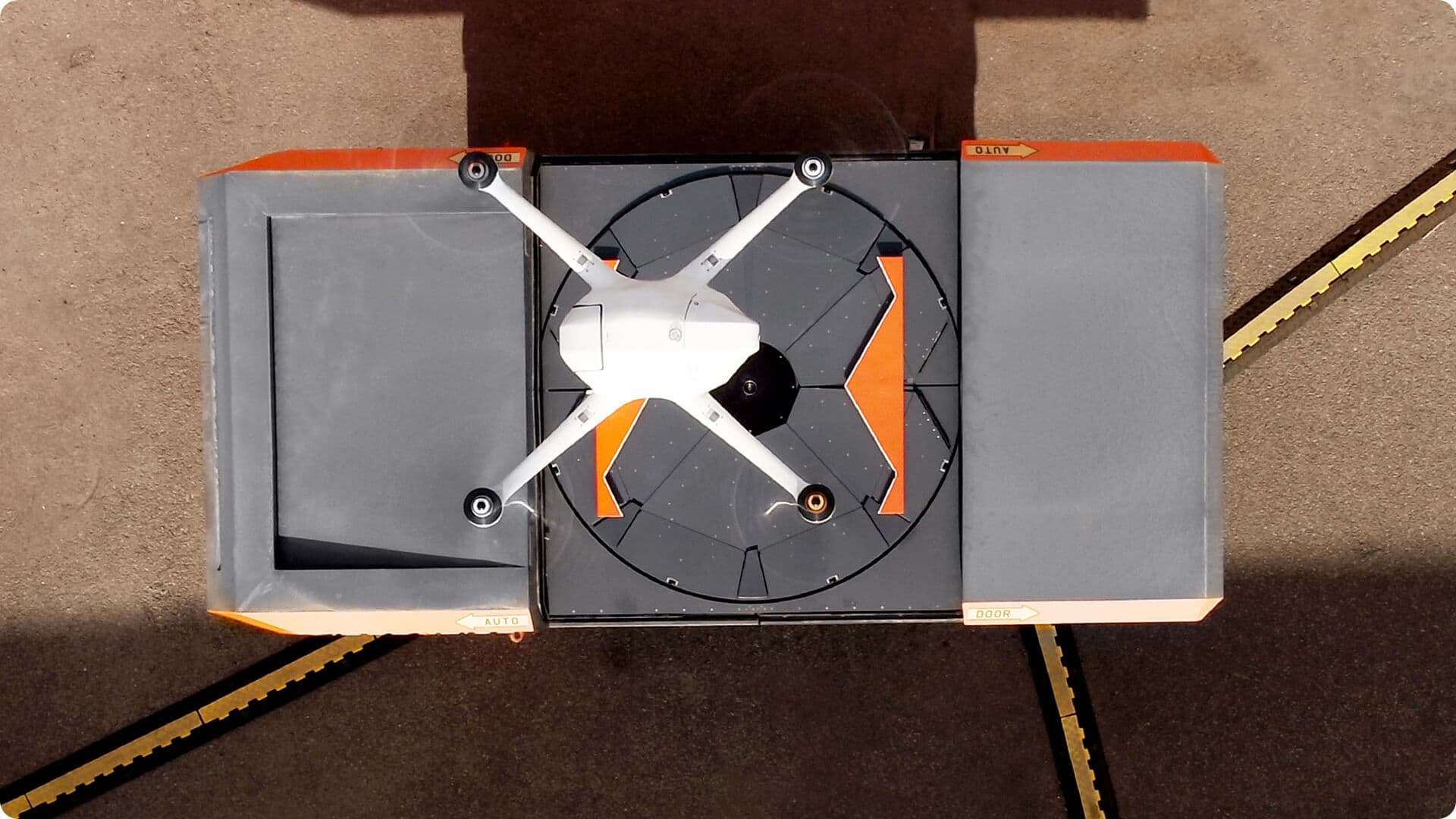
The core innovation behind Airobotics is its drone-in-a-box design. Each system includes a drone and a ground station responsible for storage, charging, maintenance, and communications.
How It Works
- The drone is stored inside a ruggedized docking station.
- Upon receiving a command, the system automatically dispatches the drone to conduct a patrol or inspection mission.
- After the mission is complete, the drone autonomously returns to the docking station.
- The station automatically swaps the battery and uploads the collected data.
This workflow eliminates human intervention from routine drone operations, enabling a fully automated 24/7 cycle.
Core System Components
The Drone
The aircraft is engineered for industrial-grade reliability and typically equipped with:
- Optical and thermal imaging cameras for day and night surveillance
- Autonomous navigation sensors
- Real-time video streaming capability
The airframe is designed to operate reliably in outdoor environments and across extended operational cycles.
The Ground Docking Station
The docking station provides:
- A protective storage unit
- A fully automated charging and battery-swap system
- A communications hub linking the drone to the cloud-based control network
This design allows the system to remain operational between missions without any manual maintenance.
Command and Control Software
Operators interact with the system through a centralized platform that offers:
- Real-time mission views and live video streams
- Automated patrol scheduling
- Instant alerts and data analytics
- Integration with security operations centers
The software supports both hands-on monitoring and fully unattended automated modes.
Use Cases
Industrial Facilities
Large industrial sites use Airobotics to strengthen security management, monitor restricted zones, and rapidly confirm incident status from the air.
Ports and Airports
The system covers vast open areas that are difficult to patrol manually, while providing video documentation for investigations and regulatory compliance.
Smart Cities and Public Safety
Airobotics supports urban surveillance strategies, emergency response deployment, and continuous observation of key public areas.
Market Positioning
Airobotics was acquired by Ondas Holdings to enable global expansion and deeply integrate its technology into industrial communications networks. This partnership positions the company not merely as a drone manufacturer, but as a provider of large-scale autonomous security infrastructure solutions.
Conclusion
Airobotics represents a decisive shift from manually piloted drone flights to fully automated operations. By making drones always-ready, self-managing systems, the company enables organizations to achieve stronger situational awareness, faster incident response, and more reliable security coverage.
Drones have become embedded infrastructure — no longer tools that require a human operator to deploy.
原文來源: 查看原文
FAQ
Reviewed and published by the LAETimes editorial desk ·