AT&T and Ericsson Demo 5G Drone Detection Technology Outside AT&T Stadium
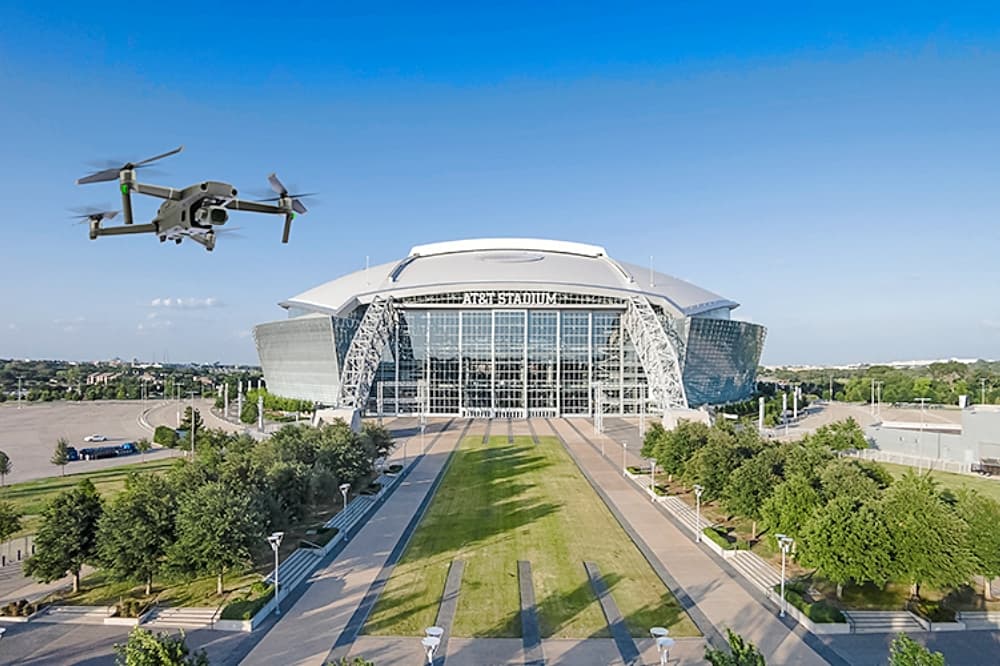
AT&T and Ericsson have jointly demonstrated advanced 5G network sensing technology capable of detecting drones in authorized airspace outside AT&T Stadium in Arlington, Texas. The demo, conducted during one of the world's largest sporting events, shows that capabilities previously associated with future 6G systems can already be realized using existing 5G infrastructure.
Highlights
- AT&T and Ericsson demonstrated 5G-based drone detection using Network Sensing technology in authorized airspace outside AT&T Stadium in Arlington, Texas.
- The system detects drones by analyzing signals from existing 5G base stations, eliminating the need for dedicated radar or additional detection hardware.
- The demo proved that sensing capabilities previously considered exclusive to future 6G systems can already be delivered on current 5G infrastructure.
- The demonstration was conducted during one of the world's largest sporting events, highlighting the technology's applicability to high-risk, large-scale public venues.
- The collaboration signals growing telecom-sector involvement in Unmanned Traffic Management (UTM) and lays groundwork for 6G-era sensing networks.
AT&T and Ericsson have jointly demonstrated an advanced drone detection system powered by 5G network sensing, proving that capabilities widely regarded as features of future 6G systems can already be delivered using today's existing 5G infrastructure.
Venue and Context
The demonstration took place in authorized airspace outside AT&T Stadium in Arlington, Texas, and was timed to coincide with one of the world's largest sporting events. The choice of venue underscored the technology's potential for security management at major public gatherings, while also validating the real-world feasibility of 5G network sensing in complex, high-density environments.
Core Technology: Network Sensing for Drone Detection
The demo leveraged Ericsson's technology alongside AT&T's 5G network infrastructure, employing Network Sensing techniques that use existing mobile network signals to detect drone activity in surrounding airspace — without the need to deploy dedicated radar systems or additional detection hardware.
Key advantages of the technology include:
- Integration with existing infrastructure: Airspace monitoring is performed directly through 5G base stations, significantly reducing deployment costs.
- Real-time detection capability: The system can track unauthorized drone movements in real time at high-risk venues such as large-scale public events.
- 6G technology foresight: The demonstration shows that sensing functions associated with next-generation communications can be brought forward and realized in the 5G era.
Industry Significance
As drones proliferate worldwide, airspace security management at large public venues is attracting growing attention. The AT&T–Ericsson collaboration signals that telecommunications operators are actively entering the Unmanned Traffic Management (UTM) space, extending safety monitoring functions through networks they already operate.
The demonstration also suggests that 5G networks are evolving well beyond high-speed data transmission, expanding into environmental sensing, public safety, and smart city applications — laying the groundwork for the fully integrated sensing networks envisioned for the 6G era.
原文來源: 查看原文
FAQ
Reviewed and published by the LAETimes editorial desk ·


