DJI Launches AP100 Parachute System Designed for EU and UK Regulatory Compliance
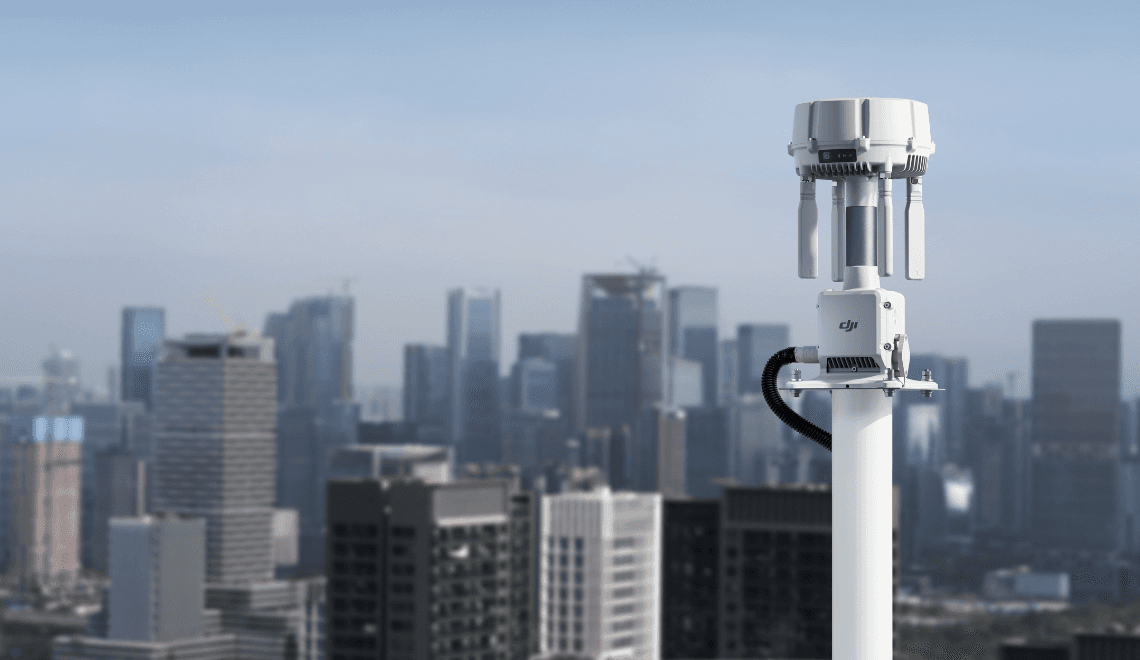
DJI has introduced the AP100 parachute system, purpose-built for the Matrice 400 drone. The device features an independent flight control system, dual-redundant power supply, and a Flight Termination System (FTS) with a response time under 600 milliseconds. Once installed, the Matrice 400 can meet EASA C5/C6 and UK CAA UK5/UK6 classifications, enabling operators to obtain STS-01 and STS-02 authorizations for flights over populated areas and BVLOS operations without purchasing a new aircraft.
Highlights
- DJI launched the AP100 parachute system exclusively for the Matrice 400, featuring a Flight Termination System with a response time under 600 milliseconds.
- The AP100 enables the Matrice 400 to achieve EASA C5/C6 and UK CAA UK5/UK6 safety classifications required for advanced commercial airspace access.
- Operators with an existing Matrice 400 can qualify for STS-01 and STS-02 authorizations by adding the AP100, eliminating the need to purchase a new compliant aircraft.
- The system includes an independent flight controller and dual-redundant power supply, ensuring emergency activation even if the primary aircraft systems fail.
- The AP100 offers a cost-effective compliance path for European operators in surveying, infrastructure inspection, and logistics delivery sectors.
DJI AP100 Parachute System: A Standalone Safety Device Built for Compliant Operations
For commercial drone operators working in Europe and the United Kingdom, the biggest barrier to scaling operations is often not payload capacity or flight endurance — it is airspace access.
Standard Scenario STS-01 permits flight over populated urban areas, while STS-02 allows beyond visual line of sight (BVLOS) operations. However, qualifying for either scenario requires a drone to meet specific safety classification thresholds — standards that most existing platforms do not meet out of the box.
AP100: Closing the Compliance Gap
The DJI AP100 parachute system is designed precisely to address this challenge. Built specifically for the Matrice 400, the unit features a rear-mount installation and integrates three core functions:
- Independent Flight Control System: Operates separately from the host aircraft's primary flight controller, ensuring autonomous activation capability in emergency situations
- Dual-Redundant Power Supply: Increases system reliability and reduces the risk of single-point failure
- Flight Termination System (FTS): Response time under 600 milliseconds, meeting stringent EU regulatory requirements for emergency intervention
The rear-mount design does not compromise the Matrice 400's full operational capabilities, including battery swap convenience, payload flexibility, and compatibility with the aircraft's original carry-on case.
Dual-Track Compliance: EU and UK Regulations
With the AP100 installed, the Matrice 400 can satisfy the following regulatory classifications:
- European Union Aviation Safety Agency (EASA): C5 / C6 class certification
- UK Civil Aviation Authority (UK CAA): UK5 / UK6 class certification
These classifications mean operators can legally apply for STS-01 and STS-02 authorizations without purchasing a purpose-built compliant aircraft or making additional platform investments — significantly lowering the barrier to entry for high-value commercial operations.
Business Case: Modular Upgrade Over Full Fleet Replacement
For enterprises that have already invested in the Matrice 400, the AP100 offers a more cost-effective path to compliance. Rather than procuring an entirely new regulatory-compliant aircraft, operators can achieve critical airspace authorizations through a modular add-on device. This represents concrete, practical value for operators building out surveying and mapping, infrastructure inspection, or logistics delivery businesses across European markets.
原文來源: 查看原文
FAQ
Reviewed and published by the LAETimes editorial desk ·