B-2 vs. B-21 Raider: How America's Next-Generation Stealth Bomber Redefines Strategic Airpower
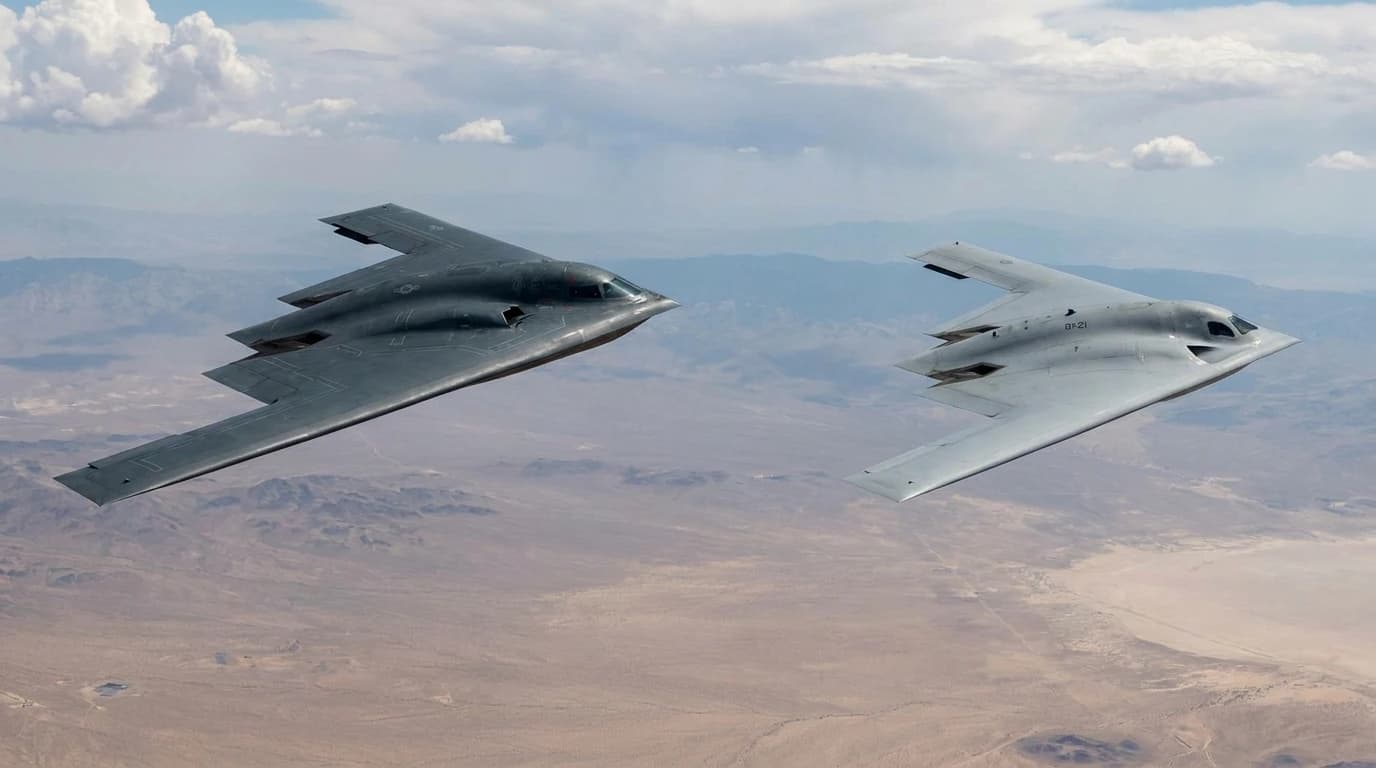
The B-2 Spirit has defined penetrating stealth strike capability for decades, but the new B-21 Raider is now poised to take over. The two aircraft differ significantly in stealth generation, operational flexibility, maintainability, and unit cost — with implications that extend well beyond a simple generational upgrade, reflecting the U.S. Air Force's strategic calculus for future high-end conflict.

Highlights
- B-21 Raider 估計單機造價約 6.92 億美元,遠低於 B-2 Spirit 的約 21 億美元,使美國空軍得以規劃採購至少 100 架。
- B-2 Spirit 於 1989 年首飛、1997 年服役,共採購 21 架,是全球首款實戰化匿蹤轟炸機。
- B-21 Raider 於 2022 年 12 月公開亮相、2023 年首飛,採開放式系統架構,可快速整合新型武器與感測器。
- B-21 設計支援選配無人駕駛模式,可在高風險 A2/AD 環境中執行任務而無需機組員承擔風險。
- B-21 的出現直接針對中俄近年建立的整合防空系統(IADS),代表美國維持全球精確打擊能力的戰略回應。
B-2 vs. B-21 Raider: How America's Next-Generation Stealth Bomber Redefines Strategic Airpower
Imagine a bomber that vanishes from radar screens, penetrates thousands of miles into contested airspace, delivers precision-guided munitions, and returns home without fighter escort. For decades, that capability has been real — made possible by the B-2 Spirit.
Now, a successor is emerging. The B-21 Raider is set to inherit the B-2's strategic role, and the differences between the two aircraft go far beyond a routine generational upgrade. They reflect how the U.S. Air Force is thinking about survival and lethality in tomorrow's most contested environments.
B-2 Spirit: A Trailblazing Stealth Pioneer
Developed by Northrop Corporation, the B-2 Spirit first flew in 1989 and entered service in 1997. Its iconic flying-wing configuration was not merely an aerodynamic statement — it was the foundational design philosophy for achieving a dramatically reduced radar cross-section (RCS).
Yet the B-2 was a product of its era. Late Cold War manufacturing constraints and materials science produced a per-unit cost of approximately $2.1 billion and maintenance demands that were notoriously burdensome. The aircraft's stealth coatings are highly sensitive to temperature and humidity, requiring specialized climate-controlled hangars. As a result, the U.S. Air Force ultimately procured just 21 airframes — far fewer than originally planned.
B-21 Raider: Built for Contemporary Threats
Developed by Northrop Grumman, the B-21 Raider made its public debut in December 2022. Visually, it shares the flying-wing lineage of the B-2, but the underlying engineering, materials, and systems architecture have been comprehensively modernized.
Key Comparisons at a Glance
| Attribute | B-2 Spirit | B-21 Raider |
|---|---|---|
| First Flight | 1989 | 2023 |
| Estimated Unit Cost | ~$2.1 billion | ~$692 million |
| Stealth Generation | First-generation stealth bomber | Next-generation stealth design |
| Maintenance Requirements | Highly sensitive; requires specialized facilities | Designed for improved maintainability |
| Crewed / Uncrewed | Crewed only | Optionally uncrewed capable |
| Procurement Target | 21 aircraft (actual) | At least 100 aircraft (planned) |
Why This Matters Strategically
The B-21 was designed from the outset to operate in Anti-Access/Area Denial (A2/AD) environments — precisely the layered air defense architectures that China and Russia have invested heavily in developing. Modern Integrated Air Defense Systems (IADS) are far more capable of detecting low-observable aircraft than anything the B-2 faced when it entered service, raising the bar considerably for stealth performance.
Critically, the B-21 incorporates an open systems architecture at its core. This enables rapid integration of new sensors, weapons, and electronic warfare suites — addressing one of the B-2's most persistent limitations: the difficulty of upgrading a closed, proprietary system architecture over a multi-decade service life.
The B-21's optionally uncrewed capability is also strategically significant. In the most high-risk mission scenarios, removing the aircrew from the equation could be decisive — both operationally and politically.
Conclusion
The B-2 Spirit is an engineering milestone that proved the strategic viability of the stealth bomber concept. The B-21 Raider builds on that legacy with a comprehensive evolution tailored to 21st-century threat environments — more affordable, more maintainable, more adaptable, and potentially uncrewed.
As the B-21 advances through flight testing toward Initial Operational Capability (IOC), air forces around the world are watching closely. This generational transition may well redefine the rules of long-range strike warfare for decades to come.
原文來源: 查看原文
FAQ
Newsletter
Subscribe to our Low-Altitude Industry Newsletter
Daily curated news on low-altitude economy and drone industry, delivered to your inbox.