UDD Selects Ohio for First U.S. FPV Drone Factory, Pentagon Contract to Create 300 Jobs
Ukrainian Defense Drones (UDD) has chosen Holland, Ohio, as the site of its first U.S. assembly and manufacturing center. The company plans to invest $18.4 million and create at least 300 jobs in Lucas County by the end of 2029. The move follows UDD's F-Drones subsidiary finishing sixth in the Pentagon's Gauntlet I competition under the Drone Dominance Program, earning a prototype order for 2,000 FPV drones.

Highlights
- UDD will invest $18.4 million in a Holland, Ohio facility and create at least 300 jobs in Lucas County by the end of 2029.
- The factory stems from UDD's F10 platform finishing sixth (score: 72.9) in the Pentagon's Gauntlet I competition and winning a prototype contract for 2,000 FPV drones.
- F-Drones is the first Ukrainian drone manufacturer to receive Ukrainian government authorization to export drone systems to U.S. military customers.
- Rep. Marcy Kaptur introduced the bipartisan Strategic Unmanned Systems Partnership Act to formalize U.S.-Ukraine drone co-development and co-production.
- Ohio's Tax Credit Authority approved a nine-year, 1.642% Job Creation Tax Credit for the UDD project, supported by the state's 130,000-strong advanced manufacturing workforce.
UDD Selects Ohio for First U.S. FPV Drone Factory, Pentagon Contract to Create 300 Jobs
Ukrainian Defense Drones (UDD) — the U.S. representative entity for Ukraine's F-Drones — has selected the village of Holland in northwest Ohio as the site of its first American assembly and manufacturing center. Ohio Governor Mike DeWine and Representative Marcy Kaptur announced the project on Monday, June 29, alongside state economic development agency JobsOhio. UDD plans to invest $18.4 million and create at least 300 jobs in Lucas County by the end of 2029.
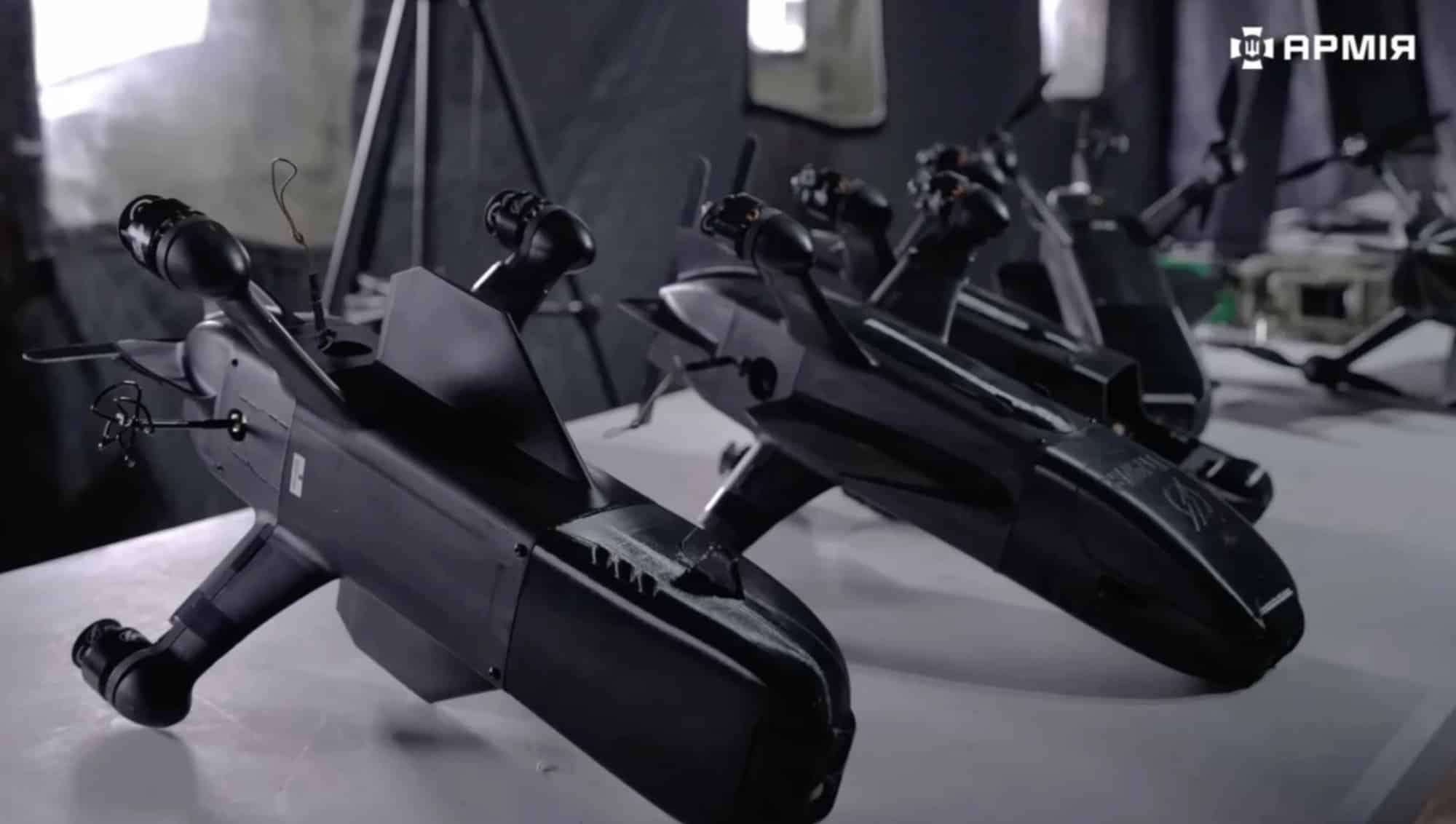
The facility traces directly to UDD's first Pentagon contract. In the inaugural stage of the Pentagon's Drone Dominance Program Gauntlet competition, UDD entered its combat-proven F10 platform under the F-Drones brand, finishing sixth and earning a U.S. government prototype order for 2,000 first-person view (FPV) drones. DroneXL reported on the leaderboard results in March, as well as Pentagon officials testifying before Congress that Ukrainian competitors had committed to establishing U.S. manufacturing facilities. Sixteen weeks later, the first factory has been officially announced.
The Holland facility will produce FPV drones and other unmanned systems for the U.S. military and allied customers, covering training, testing, and dual-use commercial applications. F-Drones states it is the first Ukrainian drone manufacturer to receive Ukrainian government authorization to export drone systems to the U.S. military.
A Sixth-Place Finish That Built a Factory
UDD's path to Ohio began with the Pentagon's Drone Dominance Program — a $1 billion initiative aimed at procuring more than 200,000 low-cost attack drones by 2027. The F10 placed sixth in the Gauntlet I flight competition and earned a prototype contract for 2,000 FPV drones.
Gauntlet I was held from February through early March at Fort Benning, Georgia, where approximately 100 soldiers evaluated systems from 25 competing vendors in simulated combat scenarios. Skycutter took first place with a score of 99.3; UDD scored 72.9 for sixth place, making it one of at least two Ukrainian-affiliated companies among the 11 vendors to receive orders.
The contract carries significance beyond the hardware itself. Program director Travis Metz told the Senate Armed Services Committee on March 5 that Ukrainian companies were "likely to receive orders" and had committed to establishing U.S. manufacturing facilities. The Holland project, confirmed by Kaptur's office, is the fulfillment of that commitment. The facility is structured around production, workforce training, supply chain localization, hardware and software integration, customer demonstrations, and long-term U.S. business expansion.
Three Years of Ukrainian Battlefield Experience Comes to Lucas County
The Holland facility will assemble FPV drones and other unmanned systems for U.S. and allied requirements, drawing on more than three years of F-Drones' wartime operational experience in Ukraine. The F10 underwent development, testing, iteration, and live deployment throughout that period against adversaries continuously updating their countermeasures.
F-Drones CEO Stas Khutor said Ukraine "didn't just adapt to drone warfare" but helped invent it, forging drones into a central pillar of resistance against a much larger aggressor. He described the Ukrainian government-approved export authorization as a historic first and said the next step is manufacturing these drones on American soil.
That export authorization did not exist for much of the war. Ukrainian law had required defense companies to deliver all production to domestic forces until President Zelensky approved the "Drone Deals" export framework on April 28 — a development DroneXL previously covered in the context of Gulf states seeking Ukrainian interceptor drones. UDD is the first company to extend that export license all the way to U.S. military customers.
Ohio also provided tangible incentives. The Ohio Tax Credit Authority approved a nine-year, 1.642% Job Creation Tax Credit for the project. Kaptur's office notes the region has more than 130,000 advanced manufacturing workers. UDD joins Anduril and Joby Aviation among defense and aerospace companies establishing operations in Ohio. JobsOhio President and CEO JP Nauseef emphasized the region's deep manufacturing base as the key factor enabling defense firms to move rapidly from prototype to production.
Retired Rear Admiral Michael Hewitt, who chairs U2D2 — the organization that helped UDD navigate the entire process — said his organization works with more than twelve Ukrainian and Eastern European companies that collectively produce more than 10,000 drones per day. He positioned the Ohio facility as a starting point and predicted the state will become "a vertically integrated manufacturing hub for all types of unmanned systems."
Kaptur's Bipartisan Bill: Turning One Factory Into Policy
The day after the Holland announcement, Kaptur introduced the Strategic Unmanned Systems Partnership Act, a bipartisan bill that would establish a Pentagon-led working group to co-develop and co-produce combat-proven drone and counter-drone technologies with Ukraine. The goal is to accelerate low-cost procurement for U.S. forces and distribute manufacturing work to communities across the country.
Co-sponsors include Representatives Brian Fitzpatrick, Mike Quigley, Michael McCaul, Jim Costa, and Don Bacon, with a Senate companion bill introduced by Senators Jacky Rosen and Mike Rounds. Kaptur, who co-chairs the Congressional Ukraine Caucus, framed the initiative in historical terms, noting that the region's factories "formed the backbone of the Arsenal of Democracy during World War II."
The legislation points to a larger unresolved question — the bilateral "drone deal" Ukraine has pushed since Zelensky first proposed a large-scale drone agreement in July 2025, which remains unsigned. Despite Ukrainian experts assisting in the defense of U.S. military bases and Ukrainian-derived hardware filling a growing share of Pentagon orders, the agreement has stalled. As recently as May, Zelensky told CBS the deal needed just one thing: Trump's signature.
DroneXL Analysis
The drone deal framework Ukraine has pursued for nearly a year remains unsigned on the president's desk. Yet the Holland factory demonstrates that the deal's substance is being assembled piece by piece: an export license from Kyiv, a Pentagon prototype contract, a state tax credit, a bipartisan bill.
This is the pattern we signaled in March. When the Gauntlet I leaderboard was published, the most telling detail was not Skycutter's 99.3, but Metz telling senators that Ukrainian companies had committed to U.S. manufacturing. Holland is that commitment converted into building permits and payroll.
Expect it not to be the last. The Drone Dominance participant roster we covered in June included a second Ukrainian-affiliated company holding orders.
Sixth place built a factory — that is the point worth sitting with. Drone Dominance is buying an industrial base, not a scoreboard ranking, and a mid-table finish with combat lineage translates into production capacity as effectively as first place. UDD's qualification was earned in an open flight competition scored by the soldiers who will eventually operate the equipment. Compared to the other well-known path to market advantage in this industry — lobbying to have competitors added to government blacklists — I will take the flight competition over the blacklist every time. That is what fair competition looks like.
Two things will now determine whether Holland becomes a template or an exception. One is whether the Strategic Unmanned Systems Partnership Act clears committee with its full bipartisan co-sponsor list intact. The other is whether the F10's combat pedigree holds up in subsequent Gauntlet test phases — which will add GPS jamming and electronic warfare challenges, as we flagged in March, alongside prohibitions on Chinese-made motors and batteries. If both break in UDD's favor, that unsigned framework agreement will begin to look like a retroactive formality. This deal is being built from the bottom up, contract by contract, factory by factory. When the signature Zelensky has been waiting for finally arrives, it will largely be ratifying what places like Holland have already built.
Sources: Office of Representative Marcy Kaptur, JobsOhio, WTVG 13abc
DroneXL uses automated tools to assist with research and data retrieval. All reporting and editorial commentary is written by Haye Kesteloo.
原文來源: 查看原文
FAQ
Newsletter
Subscribe to our Low-Altitude Industry Newsletter
Daily curated news on low-altitude economy and drone industry, delivered to your inbox.