U.S. Navy Requires 1,000 Nautical Mile Combat Radius for Future Carrier-Based Tactical Drone Fleet
The U.S. Navy has issued a Request for Information (RFI) through NAVAIR seeking carrier-based tactical drones capable of operating at least 1,000 nautical miles from a carrier without aerial refueling. The RFI outlines eight mission categories — including surface warfare, strike, ASW, and electronic warfare — and reflects the Navy's goal of having unmanned systems comprise more than 60% of future carrier air wings.
Highlights
- NAVAIR's AWOTF RFI requires future carrier-based tactical drones to achieve a minimum 1,000 nautical mile combat radius from the carrier without aerial refueling.
- The RFI specifies eight mission areas: surface warfare, strike, ASW, air warfare, electronic warfare, ISR&T, mobility, and logistics.
- The Navy's long-term goal is for unmanned systems to make up more than 60% of the future carrier air wing composition.
- Anduril, Boeing, General Atomics, and Northrop Grumman are under contract for CCA concept designs; Shield AI's VTOL X-BAT targets a 2,000 nm maximum range.
- MQ-25A Stingray IOC has slipped from 2024 to no earlier than 2027, and will serve as the pathfinder for carrier-based unmanned aviation.
U.S. Navy Requires 1,000 Nautical Mile Combat Radius for Future Carrier-Based Tactical Drone Fleet
The U.S. Navy is planning to build a future carrier-based unmanned aircraft force capable of striking enemy targets at least 1,000 nautical miles (approximately 1,151 miles, or 1,900 km) from an aircraft carrier without aerial refueling — a range that can be extended further with tanker support. The requirement was made public this week through a Request for Information (RFI) for a "Family of Systems" under the Air Wing of the Future (AWOTF) program, issued by the Naval Air Systems Command (NAVAIR). The document offers the clearest public picture yet of the Navy's capability expectations for future carrier-based combat drones.
Eight Mission Areas Spanning the Full Spectrum of Combat Operations
NAVAIR's RFI seeks unmanned aircraft designs capable of executing any combination of the following missions:
- Surface Warfare
- Strike Warfare
- Anti-Submarine Warfare (ASW)
- Air Warfare
- Electronic Warfare
- Intelligence, Surveillance, Reconnaissance & Targeting (ISR&T)
- Mobility
- Logistics
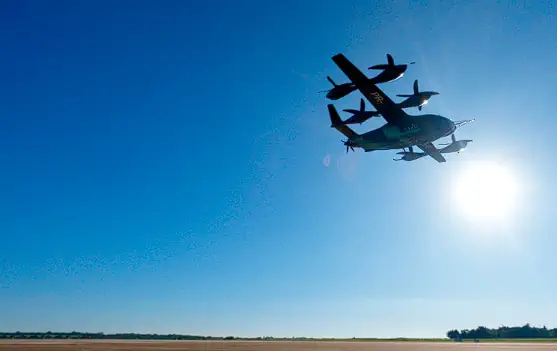
The Navy noted that the AWOTF family of systems already includes the MQ-25A Stingray aerial refueling drone (with a secondary ISR role) and a future Collaborative Combat Aircraft (CCA). Specific performance requirements for the carrier-based CCA remain in early definition stages.
1,000 Nautical Miles: A Critical Threshold Requirement
The RFI states directly: *"For missions targeting adversaries, the system must be capable of delivering effects at a minimum of 1,000 nautical miles from the carrier (CVN) without refueling."
Additionally, the drones must be "fully compatible with the catapult launch and arrested recovery systems of Nimitz-class and Ford-class carriers" and must "demonstrate superior combat effectiveness compared to existing fourth-generation platforms within the same spot factor."
The spot factor refers to the physical deck space a platform occupies — a critical consideration given the severe space constraints on carrier flight decks and below-deck hangars.
Strategic Context: Countering A2/AD Threats
As adversary Anti-Access/Area Denial (A2/AD) defensive perimeters continue to expand, carriers and their air wings will be compelled to operate at ever-greater distances from target areas, making long-range strike capability in both manned and unmanned aircraft increasingly vital.
The ability to conduct missions without relying on tanker support also carries significant strategic weight. Aerial refueling capacity is chronically constrained during sustained combat operations — particularly in high-intensity conflicts against near-peer competitors such as China — and tanker aircraft themselves become high-priority targets for adversary forces.
The RFI addresses this reality directly: "Aligned with the 2025 National Security Strategy (NSS), the 2026 National Defense Strategy (NDS), and the Chief of Naval Operations' Navigation Plan, the Navy is seeking capability improvements to accelerate the transition from a fourth-generation-centric carrier air wing to a fifth/sixth-generation manned-unmanned teamed AWOTF. Unmanned systems are essential to increasing carrier strike group (CSG) strike capacity, extending air wing range, and executing naval aviation missions in highly contested environments (HCE)."
Comparison with Existing Carrier Aircraft and Sixth-Generation Fighters
The current carrier air wing backbone remains the fourth-generation F/A-18E/F Super Hornet and its electronic warfare variant, the EA-18G Growler, with the fifth-generation F-35C being progressively integrated into rotations. The Navy is also planning to procure the sixth-generation F/A-XX fighter, with a design selection expected within the coming months.
The 1,000 nautical mile combat radius target broadly aligns with the Navy's range aspirations for F/A-XX. The service has previously stated that the sixth-generation fighter would offer a 25% range improvement over current tactical aircraft. Based on the F-35C's current combat radius of approximately 670 nautical miles (roughly 1,241 km), a 25% increase yields approximately 837.5 nautical miles — just over 1,551 km.
For context, the U.S. Air Force has publicly disclosed that its new sixth-generation F-47 fighter and its first-batch CCA drones have combat radii of "1,000+" and "700+" nautical miles, respectively.
CCA Development Status and Industry Participation
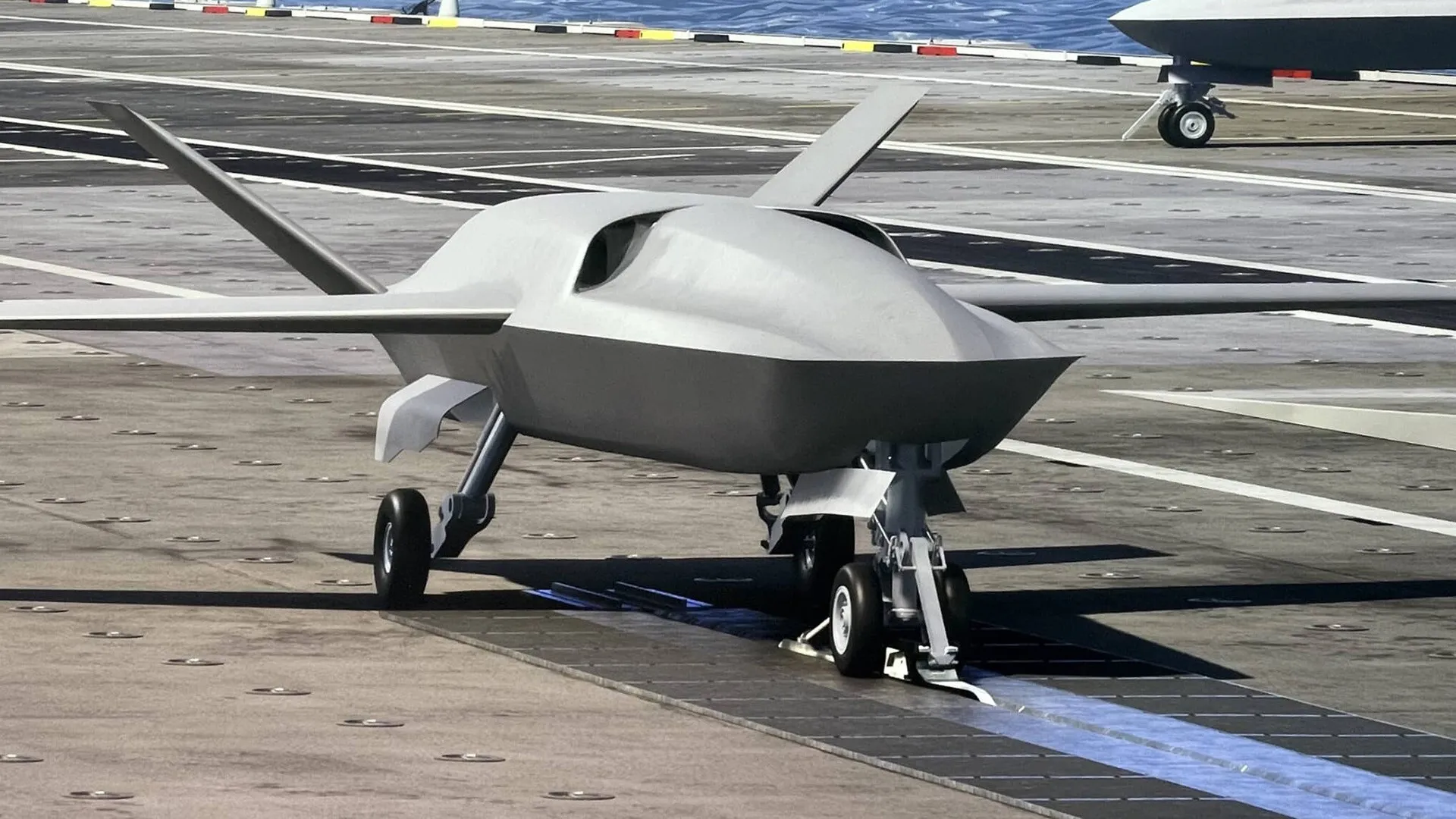
Anduril, Boeing, General Atomics, and Northrop Grumman have all received contracts to develop concept designs. Most publicly revealed designs use conventional catapult launch and arrested landing systems. Notable highlights include:
- General Atomics has publicly showcased the Gambit 5, the carrier-based variant of its highly modular Gambit series.
- Boeing has released renderings of a carrier-based version of the MQ-28 Ghost Bat, developed by its Australian subsidiary.
- Shield AI's X-BAT stealth jet drone uses a vertical take-off and landing (VTOL) design, with a maximum range target of 2,000 nautical miles.
Long-Term Unmanned Transition Goals
Senior Navy officials have explicitly stated that the goal for the future carrier air wing is for unmanned systems to constitute more than 60% of its composition. However, the Navy has also acknowledged that it lags significantly behind the Air Force and Marine Corps in developing carrier-based CCAs.
In the near term, the Navy's top priority remains completing the long-delayed deployment of the MQ-25 Stingray, which is intended to serve as the pathfinder for subsequent unmanned aircraft integration aboard carriers. Initial Operational Capability (IOC) is currently targeted for no earlier than 2027 — a timeline that was originally set for 2024.
What is now clear is that the Navy has designated a minimum 1,000 nautical mile combat radius as a key threshold requirement for its future carrier-based unmanned tactical aircraft fleet.
原文來源: 查看原文
FAQ
Reviewed and published by the LAETimes editorial desk ·