U.S. Army's 101st Airborne Division Uses Drones to Throw Grappling Hooks, Breach Wire Obstacles — Estimates 1,000–1,500 Drones Per Brigade Per Week
The 101st Airborne Division tested drone-delivered grappling hooks and wire-breaching munitions at the Joint Readiness Training Center in Louisiana, completing a fully robotic trench assault using just 35 drones. Brigade commander Col. Ryan Bell stated that sustained operations require 1,000–1,500 drones per brigade per week, and urged the military to treat drones as expendable ammunition.
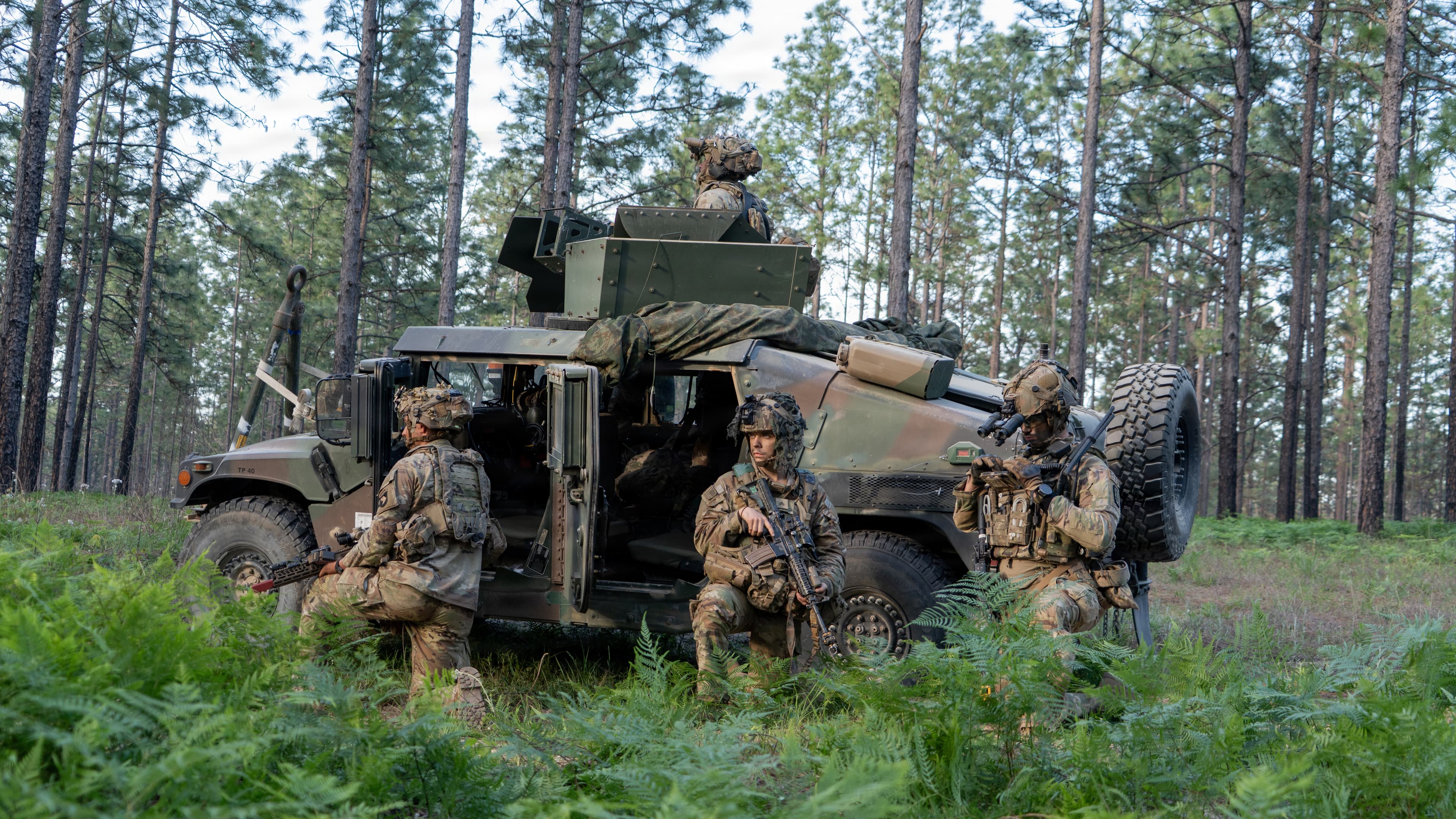
Highlights
- The 101st Airborne Division's 3rd Brigade Combat Team brought over 500 drones — including ~150 one-way attack drones — to a training rotation at JRTC Fort Polk, Louisiana in April 2025.
- Col. Ryan Bell estimated that a brigade conducting sustained combat operations requires 1,000–1,500 drones per week, and urged the Army to manage drones as expendable ammunition.
- The unit's ABE 1.01 drone, fitted with a 3D-printed grappling hook attachment developed by RAID at Fort Campbell, can breach wire obstacles from a safe standoff distance without exposing soldiers.
- A fully robotic trench assault was completed using just 35 drones and approximately 100 pounds of C4 — at a lower cost than three 155mm artillery barrages — with the breach lane cleared before riflemen arrived.
- Col. Bell called on the defense industry to solve the mass production challenge, noting that division-level units lack the organic capacity to manufacture drones at the required scale.
U.S. Army's 101st Airborne Uses Drone-Thrown Grappling Hooks to Breach Wire, Reshaping Modern Assault Tactics
The U.S. Army's 101st Airborne Division has significantly expanded its combat drone capabilities during a recent training rotation, developing new applications and drawing important conclusions about how drones should be integrated into the force — and in what quantities. Army officials disclosed the results this week.
Designated since 2023 as the Army's lead experimentation unit for air assault capability and strategic mobility, the 101st Airborne conducted field tests this past April at the Joint Readiness Training Center (JRTC) at Fort Polk, Louisiana. The division's 3rd Brigade Combat Team brought more than 500 drones to the rotation, approximately 150 of which were one-way attack drones assembled by the unit itself.
'Treat Drones Like Ammunition'
Brigade commander Col. Ryan Bell addressed the issue of scale at a media roundtable on Thursday, framing it as a fundamental shift in how the Army must think about drone employment.
"We need drones at scale — they have to be managed like ammunition," he said. "Based on our analysis, a brigade conducting sustained combat operations needs 1,000 to 1,500 drones per week."
The unit's self-assembled drones have been designated the Attritable Battlefield Enabler (ABE) 1.01. They are continuously refined in response to operational requirements with 3D printing and manufacturing support from the Robotics and Autonomous Integration Directorate (RAID) at Fort Campbell, Kentucky.
Drone-Delivered Grappling Hooks Keep Soldiers Out of the Line of Fire
"We had drones, but we were still sending soldiers forward with grappling hooks to breach obstacles," Bell said. "RAID designed and manufactured a grappling hook attachment for the ABE 1.01, allowing us to drop hooks from a safe standoff distance — without exposing soldiers to direct fire."
The same facility also 3D-printed a specialized munition enabling drones to blast through triple-strand concertina wire, eliminating another key obstacle. Additionally, a "mothership" capability was integrated onto medium-range reconnaissance (MRR) drones to extend the operational range of deployed ABEs.
35 Drones Complete Fully Robotic Trench Assault
These innovations point toward an emerging Army vision: a fully robotic front line that clears obstacles and neutralizes threats before human riflemen ever arrive.
Col. Bell recounted ordering a company commander to execute a completely robotic trench breach.
"I told him: 'I want that breach lane uncontested when the riflemen arrive,'" Bell said.
According to Bell, the company commander first used MRR drones to destroy electronic warfare sensors and jammers and eliminate priority targets. Twenty-five ABEs then systematically cleared individual fighting positions. Two additional ABEs breached the concertina wire, and finally the Army's experimental Hunter WOLF unmanned ground vehicle (UGV) used C4 explosive charges to clear mines and remaining wire obstacles.
"When the riflemen arrived, the breach lane was uncontested," Bell said. "Every target had been engaged. No engineers or assault pioneer teams had to rush forward with grappling hooks, crawl under wire, or carry Bangalore torpedoes. The entire operation used 35 drones and just over 100 pounds of C4 — at a cost lower than three 155mm artillery barrages."
Scaling Up: The Challenge Passed to Industry
The findings outline a comprehensively transformed way of fighting, but realizing it requires a massive and sustained drone supply chain backed by coordinated defense industry response.
"The division doesn't have the organic capacity to scale production to those numbers," Bell said. "I'm not speaking for the Army, but if our experience of needing 1,000 drones per week scales across the force, you can do the math yourself. We're trying to iterate, define the capabilities we need to fight, and let industry help us solve the production problem."
原文來源: 查看原文
FAQ
Reviewed and published by the LAETimes editorial desk ·