France Breaks Ground on $12B Nuclear Carrier — Then Its Next-Gen Fighter Program Collapses Three Months Later
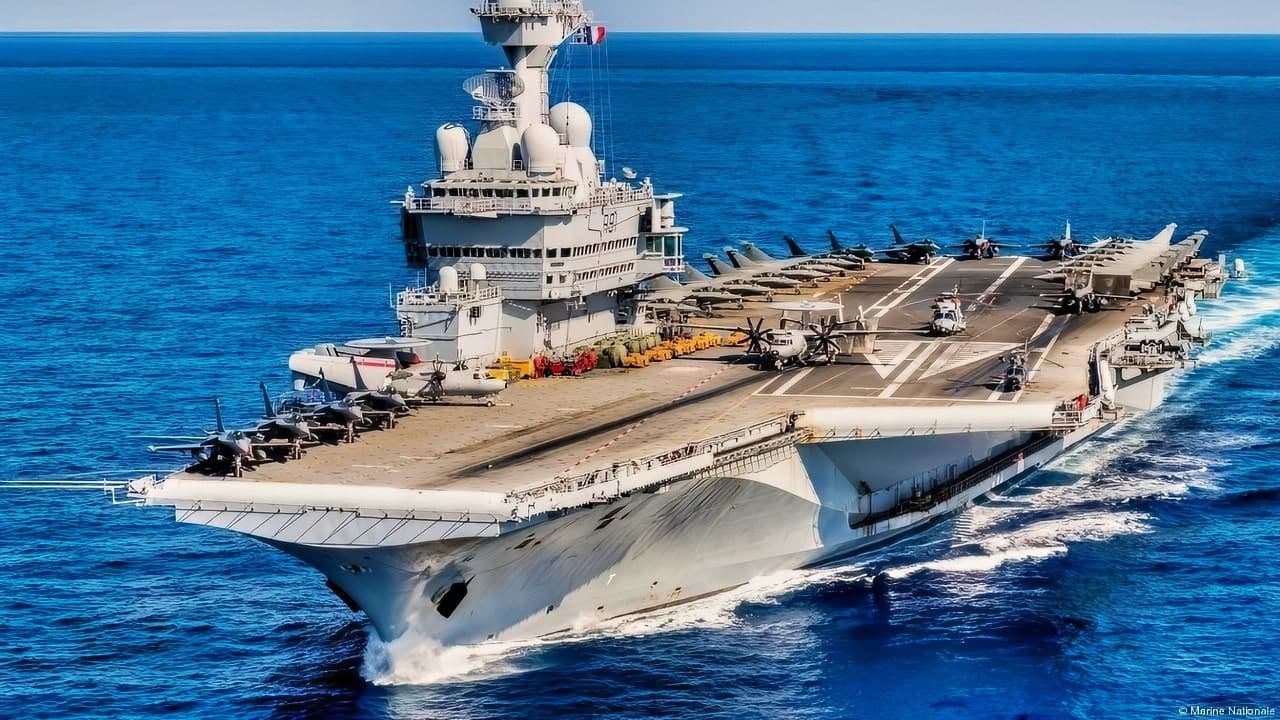
In March 2026, France officially launched construction of the nuclear-powered aircraft carrier France Libre, an 80,000-tonne vessel designed to operate sixth-generation stealth fighters and combat drones. Just three months later, the Franco-German Future Combat Air System (FCAS) fighter program collapsed after nine years of industrial disputes, leaving Europe's most advanced carrier — set to commission in 2038 — without a matching next-generation aircraft.
Highlights
- France officially named and began the construction program for the nuclear-powered aircraft carrier France Libre on 18 March 2026, with a budget of up to €15 billion (~$12 billion USD) and a planned commissioning date of 2038.
- The Franco-German Future Combat Air System (FCAS) Next Generation Fighter — the primary combat aircraft the France Libre was designed to operate — was officially terminated on 8 June 2026, just three months after the carrier program launched.
- The France Libre displaces approximately 80,000 tonnes, is 310 metres long, and features TechnicAtome K22 nuclear reactors and American-made General Atomics EMALS electromagnetic catapults supplied via Foreign Military Sales.
- France has chosen to develop a sixth-generation fighter independently through Dassault after the collapse of FCAS, but a carrier-capable naval variant faces an uncertain timeline relative to the carrier's 2038 service entry.
- The Global Combat Air Programme (GCAP) — led by the UK, Italy, and Japan — is already building technology demonstrators, leaving France's solo sixth-generation effort significantly behind its nearest rivals.
A Carrier Under Construction, Waiting for an Air Wing That May Never Come
France is building an aircraft carrier for an air wing that does not yet exist — and after this summer, when that air wing arrives, or whether it arrives at all, has become an open question. The France Libre will replace the Charles de Gaulle by the end of the next decade and stands as one of the most ambitious naval undertakings Europe has seen in generations. Yet the deterrent value of any warship ultimately depends on the aircraft it carries, and the France Libre was designed around a next-generation fighter that has just been cancelled. The carrier is about to be laid down; the sixth-generation jet is now in limbo. That gap is the central dilemma facing France's most expensive shipbuilding program in modern history.
Europe's Most Ambitious Warship
It is worth understanding what France is actually building, because the ambition is genuine. On 18 March 2026, President Emmanuel Macron traveled to the Naval Group shipyard near Nantes to formally name the vessel long known by its program designation — Porte-Avions de Nouvelle Génération (PANG) — the France Libre, a reference to the Free France movement that Charles de Gaulle led from London after France's fall in 1940. Macron framed the name as a direct line of descent from the Gaullist tradition and summarized the ship's purpose in a single sentence: a nation that wishes to remain free must make others fear it. The name deliberately echoes the carrier it replaces and carries the same sovereignty statement that has defined French carrier strategy for four decades.
By European standards, the scale is extraordinary. The France Libre displaces approximately 80,000 tonnes — nearly twice the Charles de Gaulle's roughly 42,000 tonnes — and at 310 metres in length will be the largest warship France has ever built and the largest military vessel in Europe by volume. That size is not vanity. A flight deck of approximately 17,200 square metres gives deck crews room to spot, arm, and cycle aircraft, and for the first time allows simultaneous launch and recovery operations that the cramped Charles de Gaulle could never achieve. Under high-tempo conditions, the ship is expected to generate around 60 sorties per day, a significant increase over its predecessor.
The propulsion plant also addresses the Charles de Gaulle's most persistent weakness. That ship used two K15 reactors derived from French submarines — notoriously underpowered for its displacement. The France Libre will use two new TechnicAtome K22 reactors, each rated at approximately 220 megawatts thermal compared with the K15's 150 MW. Interestingly, the additional power does not translate into a meaningful speed increase — maximum speed remains around 27 knots, comparable to the Charles de Gaulle. The extra energy goes instead to powering the ship's extensive electrical systems, particularly the electromagnetic catapults, and extends reactor refueling intervals to roughly ten years.
The program is valued at more than €10 billion, with some estimates reaching €15 billion (approximately $12 billion USD). It will involve around 800 French suppliers and is expected to support up to 14,000 jobs, with the overwhelming majority of expenditure staying within France. Construction is expected to begin at the Chantiers de l'Atlantique shipyard around 2031, with sea trials in 2036 and commissioning in 2038 — the same year the Charles de Gaulle is due to retire.
Built for a Fighter That No Longer Exists
Here is where the problem begins. The France Libre was not designed around France's current aircraft. It was designed around a future carrier air wing — and Naval Group's publicly released renderings make this explicit. Alongside Dassault's Rafale M and the E-2 Hawkeye airborne early warning aircraft, the official imagery features a sixth-generation stealth fighter presumed to be a derivative of the Future Combat Air System (FCAS), accompanied by unmanned combat aerial vehicles (UCAVs). The larger flight deck, more powerful reactors, and electromagnetic catapults were all sized to operate heavier, more advanced aircraft and to integrate the manned-unmanned teaming that is central to sixth-generation air combat doctrine.
The ship was a bet on a specific vision of the future of naval aviation. That vision had a clear shape.
Then the fighter died. On 8 June 2026, German Chancellor Friedrich Merz confirmed that the centerpiece of FCAS — the Next Generation Fighter (NGF) intended to replace both the Rafale and the Eurofighter Typhoon — had been terminated. The program, valued at more than €100 billion, collapsed under the weight of nine years of industrial disputes between Airbus and Dassault Aviation over work-share and program leadership. No prototype was ever built. No technology demonstrator ever flew. The program that was supposed to provide the France Libre's primary combat aircraft ceased to exist approximately three months after the carrier was formally named and construction was announced.
This is a failure that has reshaped European air power, and its naval implications fall most heavily on the France Libre — because the value of an aircraft carrier is, in the end, only as great as the aircraft it carries. Europe's most sophisticated flight deck is worth considerably less without a compatible carrier-capable aircraft to fill it, and the fighter around which the France Libre was designed now has no shared development path with any French partner. The collapse of FCAS has turned the ship's core design assumption into an unanswered question.
France Chooses to Go It Alone
Following the collapse of the joint program, France has opted to develop a sixth-generation fighter independently. Dassault will pursue a French next-generation aircraft, drawing in part on funding originally allocated to the Rafale F5 upgrade standard, and Paris has made clear it intends to advance this capability on a sovereign basis rather than seek new partners.
This decision is consistent with France's long-standing tradition of maintaining independent combat aircraft development — the same tradition that produced the Rafale after France withdrew from the Eurofighter program in the 1980s. But going it alone carries real risks. Sixth-generation development costs are enormous, and France must now absorb alone what was originally intended to be shared among France, Germany, and Spain.
The timeline is the sharpest uncertainty. France's independent sixth-generation program is only beginning, and there is no guarantee that a carrier-capable naval variant — historically the most demanding and the last to be completed in any fighter development program — will be ready by the time the France Libre commissions in 2038. The United Kingdom, Italy, and Japan's Global Combat Air Programme (GCAP) already has years of lead time and is building technology demonstrators. France now has no partner program to benchmark against. The nation that prizes independence most has ended up furthest behind — with a carrier coming and no next-generation fighter on a confirmed path to service.
The Rafale Fallback and the Catapult Irony
France's contingency is the Rafale — specifically the forthcoming Rafale F5 standard — around which the France Libre's initial carrier air wing will be built. The F5 is a genuine upgrade, adding sensors, weapons, and the ability to control accompanying UCAVs, and is designed to remain combat-effective into the 2040s. But it is still an evolution of the same fourth-generation-plus platform the Charles de Gaulle has operated since the 2000s.
If the France Libre commissions in 2038 with an air wing of Rafale F5s and drones, it will be a capable force — but not the leap in carrier aviation the ship was designed to deliver. Europe's most advanced carrier will embark a direct successor to the fighter its predecessor was already flying at the time of its own commissioning.
There is a second irony embedded in the program, and it cuts directly against the sovereignty ethos the France Libre is meant to embody. The ship's electromagnetic catapults and advanced arresting gear are not French-made. They are General Atomics' Electromagnetic Aircraft Launch System (EMALS) and Advanced Arresting Gear (AAG) — the same systems used aboard the U.S. Navy's Gerald R. Ford-class carriers — supplied to France under a Foreign Military Sales agreement. France selected the American systems because no European equivalent exists. Compatibility testing between the Rafale M and EMALS is already underway in the United States. For a warship named after France's wartime independence movement and designed to guarantee France's ability to act alone, depending on American technology for the single system that lets its aircraft fly is a notable compromise — and one Paris has acknowledged with quiet unease, given France's traditional wariness about relying on foreign suppliers for critical military capabilities.
The Case for the Defense
None of this proves the France Libre is a mistake, and the arguments in its favor remain substantial. A carrier has a design service life of roughly 45 years — far longer than any single generation of aircraft — so the ship will inevitably outlast its initial air wing, and France has time, if less than expected, to resolve the next-generation aircraft question before the current Rafale fleet becomes obsolete.
A Rafale F5 paired with UCAVs is already a serious combat force, and the unmanned portion of the sixth-generation vision may materialize on schedule even if the manned aircraft does not — France and others are pursuing UCAV development on independent tracks. Building a larger, more powerful, more capable carrier is worthwhile regardless of which aircraft ultimately fill its hangar, and the France Libre genuinely addresses deficiencies that plagued the Charles de Gaulle throughout its service life.
It is also worth remembering that the Charles de Gaulle was widely mocked during its troubled construction period, yet became Europe's most operationally active carrier, seeing service from Afghanistan to Libya to operations against the Islamic State. France has bridged the gap between carrier ambition and available aircraft before, and may do so again.
The issue is one of sequencing and risk. France has committed $12 billion to a supercarrier optimized for a specific next-generation carrier air wing, and the centerpiece of that air wing collapsed before the ship's keel is even laid.
The France Libre will still be Europe's most powerful carrier when it arrives. But it now risks entering service as a 21st-century warship carrying a 20th-century air wing, waiting for the aircraft it was actually built to fly.
It is a monument to French strategic autonomy whose fate now depends on France's ability to build — alone and on time — the sixth-generation fighter that nine years of international collaboration failed to deliver.
That is a very heavy bet to place on a flight deck that will not be completed until 2038, for an aircraft that currently exists only as a rendering with no program behind it.
原文來源: 查看原文
FAQ
Reviewed and published by the LAETimes editorial desk ·


