Ukrainian Drones Strike Bashkortostan Oil Pipeline Hub 1,500 km Inside Russia
Ukraine's Security Service (SBU) announced that on the night of July 8, 2026, long-range drones struck the Cherkassy Linear Production Dispatch Station (LPDS) in Russia's Republic of Bashkortostan, approximately 1,500 km from the Ukrainian border. At least eight drones reached the target, igniting fires in storage areas at a facility that processes nearly two million tonnes of petroleum products annually.
Highlights
- On July 8, 2026, at least 8 Ukrainian long-range drones struck the Cherkassy LPDS in Russia's Bashkortostan, approximately 1,500 km from the Ukrainian border.
- The targeted facility processes nearly 2 million tonnes of petroleum products annually and has 27 storage tanks with a combined capacity exceeding 385,000 cubic metres.
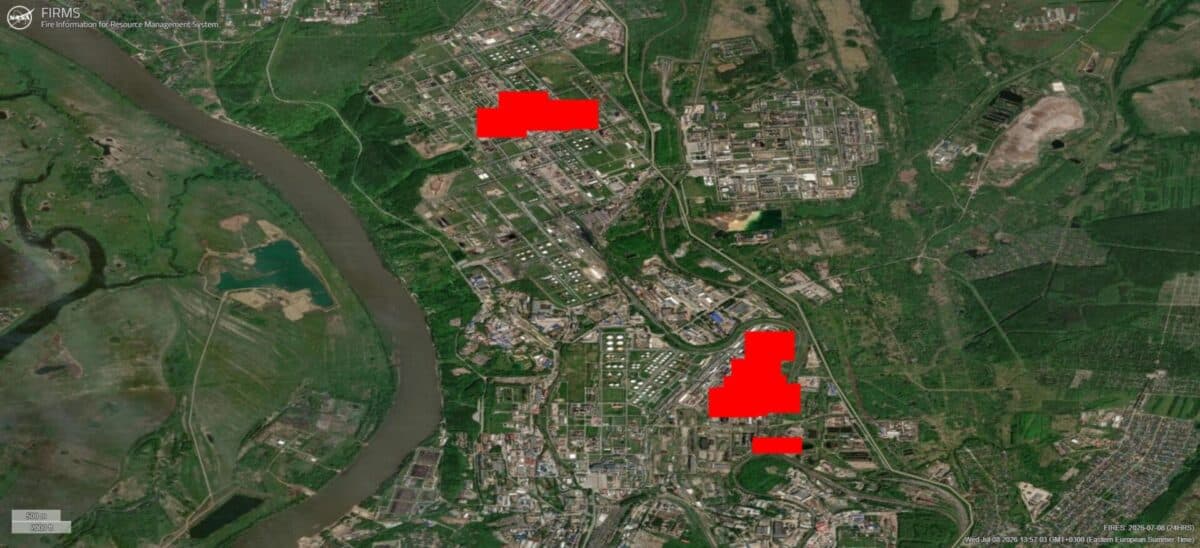
- OSINT analysts attributed the attack to the AN-196 'Liutyi' one-way attack drone; NASA FIRMS satellite data confirmed active fire hotspots in the Ufa refinery area on the same night.
- The strike was part of one of the largest single-night drone offensives against Russian oil infrastructure, which also included hits on a Rosneft refinery in Saratov, the Nizhnekamsk industrial zone, and two oil tankers in Taganrog Bay.
- The Bashkortostan strike followed Ukraine's first successful hit on the Omsk refinery in Siberia on July 6, 2026, as part of a sustained campaign that has triggered fuel rationing in parts of Russia.
Ukraine's Security Service (SBU) announced that on the night of July 8, 2026, it launched long-range drones that successfully struck the Cherkassy Linear Production Dispatch Station (LPDS) in Russia's Republic of Bashkortostan — a key node in the Transneft-Ural pipeline network — located approximately 1,500 kilometres from the Ukrainian border.
According to an SBU statement, at least eight drones reached the target facility, igniting fires in the storage area and production infrastructure on site. The SBU stated that the operation was carried out under a standing directive from Ukrainian President Volodymyr Zelensky, aimed at systematically degrading Russia's military-economic capacity.
A Logistics Chokepoint for the Ufa Refining Hub
The Cherkassy station is located near Ufa, the capital of Bashkortostan, and serves as a reception, storage, and pumping hub for light petroleum products refined at the Ufa refinery cluster, feeding them into Russia's main finished-product pipeline network. The SBU noted that the station processes nearly two million tonnes of petroleum products per year, with a storage area comprising 27 tanks and a total capacity exceeding 385,000 cubic metres.
The SBU assessed that destroying such facilities would complicate fuel logistics across central and eastern Russia and disrupt supply chains supporting the Russian military-industrial complex.
SBU Director Yevhenii Khmara stated: "SBU operations extend across all of Russia. Even deep in the rear, there is no longer any safe zone for the occupiers. Every long-range strike makes the invaders pay a higher price for this war against Ukraine."
Russian Telegram channels and open-source intelligence (OSINT) analysts reported explosions and large plumes of smoke over the Ufa industrial zone that night. Monitoring channels attributed the attack to the AN-196 "Liutyi" one-way attack drone.
NASA's Fire Information for Resource Management System (FIRMS) satellite fire-detection data also recorded multiple active hotspots in the Ufa refinery area of Bashkortostan on July 8, 2026, consistent with reported industrial fires in the district.
Bashkortostan lies approximately 1,200 to 1,500 kilometres from Ukraine and has been struck multiple times since May 2024, including hits on the Ufa refinery and the Salavat petrochemical complex operated by Gazprom.
Part of a Broader Campaign Against Russian Fuel Infrastructure
The strike on the Cherkassy station occurred during what monitors described as one of the largest single-night drone offensive waves against Russian oil infrastructure to date. Russian officials and monitoring channels also reported a fire at a Rosneft refinery in Saratov — with the regional governor confirming one fatality — as well as strikes on the Nizhnekamsk industrial zone in Tatarstan and damage to two oil tankers in Taganrog Bay.
The operation followed Ukraine's first successful strike on the Omsk refinery in Siberia on July 6, 2026. Taken together with a series of attacks over preceding months, the campaign has contributed to fuel rationing and long queues at petrol stations reported across various parts of Russia this summer.
原文來源: 查看原文
FAQ
Reviewed and published by the LAETimes editorial desk ·