US Air Force Chief Pushes for Supplemental Budget and $1.5 Trillion Defense Spending Target Amid GOP Debate
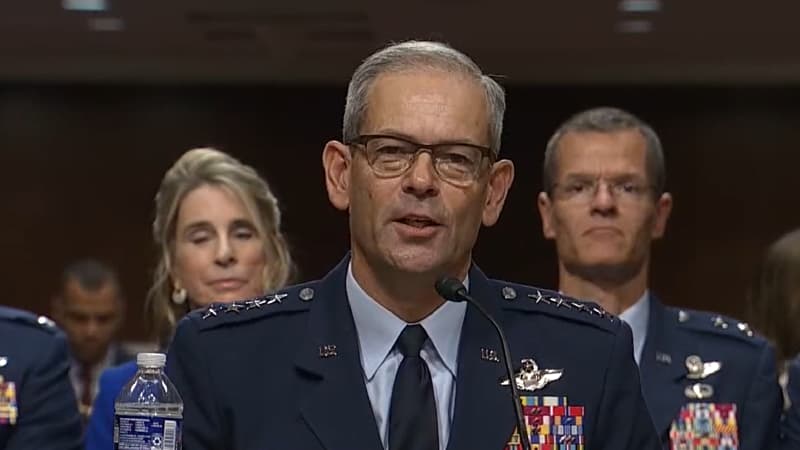
Gen. Kenneth Wilsbach, Chief of Staff of the US Air Force, has publicly called for a supplemental budget and endorsed a $1.5 trillion overall defense budget target. He revealed that the Air Force has been forced to cut spending in multiple areas to cover costs associated with the 'Epic Fury' exercise, highlighting growing funding gaps under the current budget framework.
Highlights
- US Air Force Chief of Staff Gen. Kenneth Wilsbach publicly called for a supplemental budget, stating the service has halted spending in multiple areas to fund 'Epic Fury' exercise costs.
- The 'Epic Fury' exercise generated substantial logistics and equipment attrition expenses that are straining the Air Force's existing annual budget.
- Gen. Wilsbach endorsed raising total US defense spending to $1.5 trillion, up from the current annual range of approximately $800–$900 billion.
- Republican lawmakers remain divided over whether to significantly expand defense spending, intensifying individual service branch budget lobbying efforts.
- The Air Force's public budget push reflects broader Pentagon concern that the current base budget is insufficient to sustain Indo-Pacific readiness and global forward deployments.
At a politically sensitive moment when Republican lawmakers are engaged in internal debate over the scale of defense spending, US Air Force Chief of Staff Gen. Kenneth Wilsbach has gone on record with the media to advocate for an annual supplemental budget and to back raising overall defense spending to $1.5 trillion.
'Epic Fury' Exercise Strains Air Force Finances
In an interview with Breaking Defense, Gen. Wilsbach candidly acknowledged that the Air Force has been forced to pause or scale back numerous planned expenditures in order to cover the substantial costs associated with the 'Epic Fury' exercise.
"To pay for the things associated with 'Epic Fury,' we've stopped spending money on a lot of things," Wilsbach told Breaking Defense. "That's why we need a supplemental this year."
'Epic Fury' is one of the US military's larger recent exercise operations, and the associated logistics and equipment attrition costs have placed significant pressure on the Air Force's annual budget.
Growing Urgency for Supplemental Funding
Wilsbach's public remarks reflect the widening funding gaps facing US military branches under the current budget framework. As the US military continues to strengthen readiness in the Indo-Pacific theater and maintain forward deployments at multiple locations worldwide, the annual base budget has become increasingly insufficient to fully cover all operational readiness requirements.
The Air Force leadership's decision to publicly call for supplemental funding at this juncture signals concern within the Pentagon over the current budget review process — particularly as divisions within the Republican Party over whether to significantly expand defense spending have emboldened the individual services to intensify their own budget advocacy efforts.
The $1.5 Trillion Defense Budget Goal
Beyond the supplemental funding request, Gen. Wilsbach also expressed support for proposals to raise the total US defense budget to $1.5 trillion, arguing that such a level is necessary to ensure the US military maintains sufficient technological advantage and operational readiness against strategic competitors including China and Russia.
The current annual US defense budget stands at approximately $800–$900 billion. Reaching the $1.5 trillion target would require a dramatic increase in investment — a move that continues to face considerable resistance in congressional budget deliberations.
Source: Breaking Defense
原文來源: 查看原文
FAQ
Reviewed and published by the LAETimes editorial desk ·