Iowa-Class Battleship 16-Inch Guns: Why the Mark 7 Is Considered the Greatest Naval Gun in History
The Iowa-class battleships' 16-inch/50-caliber Mark 7 guns, while smaller in bore than Japan's 18.1-inch Yamato guns, achieved near-equivalent armor penetration through superior shell design, advanced fire control, and radar integration. Armed with the 2,700-lb Mark 8 armor-piercing shell and the Ford Mark 8 Rangekeeper fire control computer, the Mark 7 outperformed its Japanese rivals in accuracy and remained combat-effective for over 50 years, firing its last rounds during Operation Desert Storm in 1991.
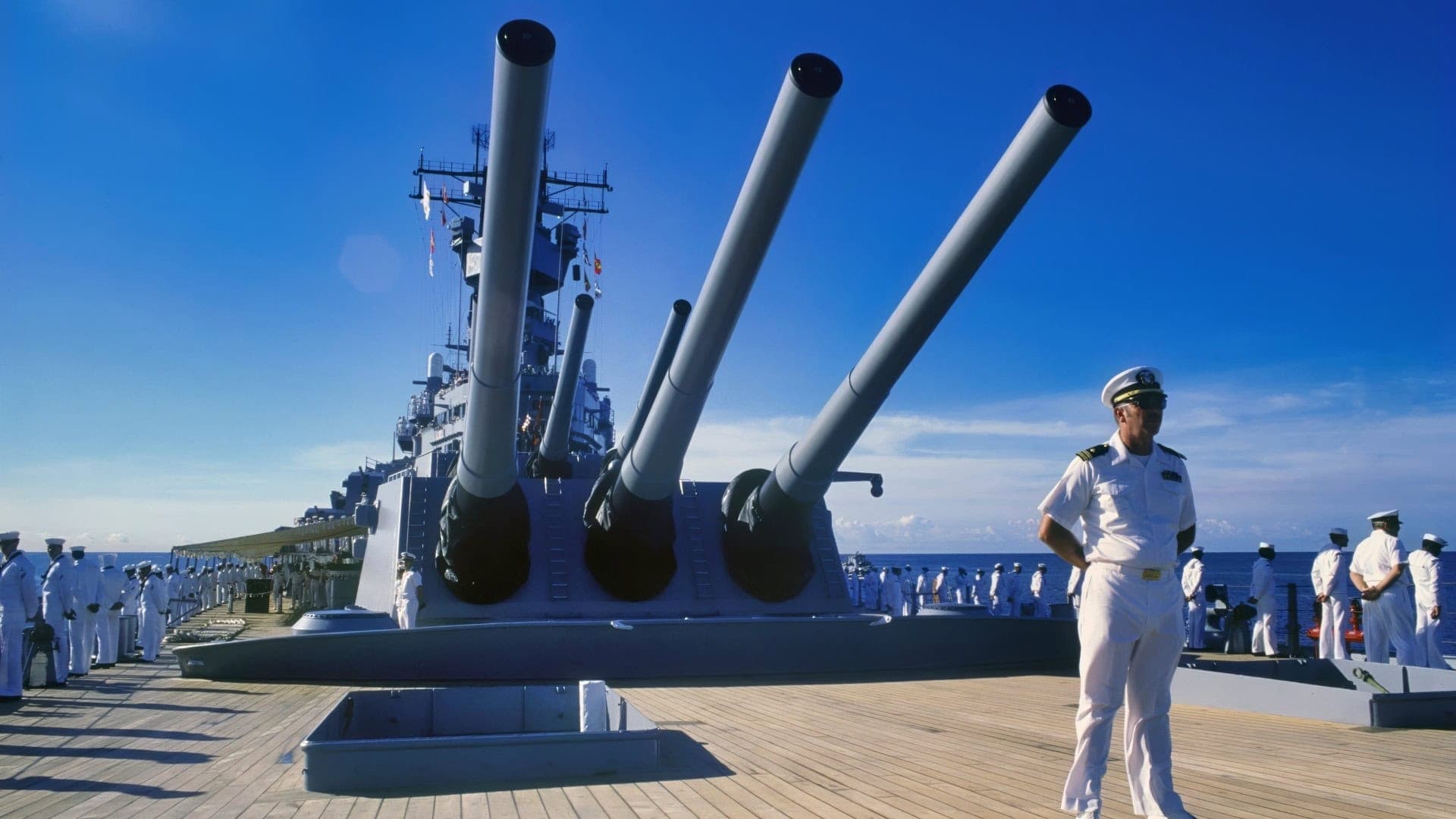
Highlights
- The Iowa-class Mark 7 16-inch gun fired a 2,700-lb Mark 8 superheavy armor-piercing shell — 460 lb heavier than its originally designed round — achieving armor penetration nearly equal to Japan's 18.1-inch Yamato guns.
- The Ford Instrument Company Mark 8 Rangekeeper analog fire control computer, integrated with radar, gave the Iowa class a decisive accuracy advantage over Japanese battleships in World War II.
- 1980s modernization added DR-810 muzzle-velocity radars and the Mark 160 digital fire control system, making the Mark 7 what NavWeaps calls 'the most accurate battleship-caliber gun ever to serve.'
- USS Missouri and USS Wisconsin fired over 1,000 16-inch rounds during Operation Desert Storm in 1991, the last combat use of American battleship guns, with Wisconsin's final salvo on May 16, 1991.
- The USS Iowa Turret Two explosion in April 1989 killed 47 sailors and prompted a comprehensive U.S. Navy review of propellant-handling safety procedures.
Why the Iowa-Class Battleship Guns Were So Special
When people picture battleship firepower, they typically think first of gun caliber — by that measure, the Iowa class appears to come up short. The Imperial Japanese Navy's Yamato and Musashi mounted 18.1-inch guns firing shells weighing 3,200 pounds each, and the U.S. Navy never deployed a comparable caliber on any warship. Yet the Iowa-class main battery tells a different story: caliber is not the same as combat capability, and the smaller American gun is widely regarded by naval historians as the finest of its type ever built.
The Mark 7 16-inch gun excelled in three areas Japan never matched: shell design, the computing "brain" behind that shell, and the disciplined system surrounding both.
The Superheavy Shell: The Key to Performance
The most consequential decision was made before Iowa's keel was laid. The Mark 7 was originally designed for a 2,240-lb armor-piercing shell, but the U.S. Navy redesigned the entire ammunition-handling system before construction began to accommodate the 2,700-lb "superheavy" Mark 8 armor-piercing projectile. That heavier round is the foundation of the gun's reputation.
According to the NavWeaps naval weapons reference database, the superheavy shell gave these guns armor-penetration performance nearly equal to the Yamato class's 18.1-inch guns, despite the American shell being far lighter than the caliber difference would suggest.
The physics are elegant. A shell's ability to defeat armor depends largely on its sectional density — the weight it carries per square inch of cross-section. By making the 16-inch shell unusually heavy and elongated, American engineers gave it exceptional sectional density, allowing it to maintain higher velocity for its diameter and penetrate more armor than a lighter projectile of the same caliber.
The U.S. Naval Institute's professional journal, analyzing naval superheavy shells, noted that the 2,700-lb, 72-inch-long Mark 8 projectile would achieve armor penetration nearly equal to Yamato's larger 18.1-inch shells in a hypothetical Iowa-versus-Yamato engagement. Naval historians William Garzke and Robert Dulin reached the same conclusion: due to superior end-on sectional density, the Mark 7 could match the combat armor-penetration performance of the Japanese 18.1-inch gun.
The destructive effect was staggering by any measure. NavWeaps records that the armor-piercing shell could penetrate nearly 30 feet of reinforced concrete depending on range and angle; the high-capacity bombardment shell could excavate a crater 50 feet wide and 20 feet deep. During the Vietnam War, the recommissioned USS New Jersey sometimes needed only a single high-capacity round into jungle to clear a 200-yard-diameter helicopter landing zone, flattening trees for hundreds of yards around.
The Brain Behind the Gun: Fire Control
A powerful gun that cannot hit its target is worthless. This is where the Mark 7 truly left its Japanese counterparts behind. Lobbing a projectile the weight of a small car from a ship rolling in open ocean to strike another moving ship more than 20 miles away is a profoundly complex mathematical problem.
The Iowa class solved it with the Ford Instrument Company's Mark 8 Rangekeeper, an analog mechanical computer that continuously calculated firing solutions accounting for the target's speed and heading, the shell's long time of flight, wind, air resistance, the Earth's rotation, and even barrel wear.
This was the American edge Japan never closed. Through radar input, the system could track and engage targets with greater accuracy in day or night, clear weather or dense fog. The U.S. Navy's integration of radar with automated fire control gave it a decisive advantage in the latter half of World War II, as Japanese radar-directed gunnery never reached the same level. Yamato might hurl a slightly heavier shell, but Iowa was far more likely to achieve a hit on the first salvo — and in a gunnery duel, the side that gets the range first usually wins.
Accuracy continued to improve over time. During the Reagan-era naval buildup of the 1980s, all four Iowa-class ships underwent modernization; each turret received DR-810 radars to measure the precise muzzle velocity of each barrel and feed data into the modern Mark 160 fire control system. Combined with more uniform modern propellant, these upgrades made the Mark 7 what NavWeaps calls "the most accurate battleship-caliber gun ever to serve" — a weapon conceived in the 1940s firing with late-20th-century precision.
The Disciplined System
The gun itself is a masterwork of concentric construction, comprising a bore liner, barrel, jacket, and a series of hoops and locking rings, with a chrome-lined bore to extend barrel life. Each gun weighs approximately 239,000 lb without its breech, and the three triple turrets are among the most mechanically complex structures ever installed on a warship, with shell and propellant handling machinery running from deep magazine spaces up through the hull to the muzzle.
The turrets also represent the gun's darkest chapter: in April 1989, an explosion in USS Iowa's Turret Two killed 47 sailors, triggering an extensive Navy investigation and a comprehensive review of propellant-handling safety procedures.
What is most remarkable about the entire system is its extraordinary longevity. A weapon conceived in 1938 for a fleet duel that never came remained combat-relevant for fifty years because its combination of armor-piercing shells, precision fire control, and massive blast radius proved ideally suited to shore bombardment — a mission the designers considered secondary. In Korea, Vietnam, and Lebanon, the guns fired only at land targets; when the battleships recommissioned in the 1980s, Tomahawk and Harpoon missiles joined the arsenal, but the 16-inch guns remained the preferred weapon against coastal targets.
The Last Shots
The Mark 7's combat career ended with the battleship era itself. During Operation Desert Storm in 1991, USS Missouri and USS Wisconsin moved into Kuwaiti waters and fired more than 1,000 16-inch rounds at Iraqi bunkers, artillery positions, and troop concentrations — the last time American battleships fired in combat. The missile age cast its shadow even then: an Iraqi Silkworm anti-ship missile nearly struck Missouri before being destroyed by a British destroyer's missile. Wisconsin fired the last rounds of the era on May 16, 1991, clearing her barrels and closing a chapter on nearly a century of big-gun naval warfare.
The 16-inch Mark 7 is extraordinary not because it was the largest gun — it was not. It is extraordinary because American engineers understood that a well-designed shell, paired with superior fire control, could out-perform a larger-caliber rival. They built a gun that outperformed its caliber and could consistently hit what it aimed at. That philosophy of precision and ingenuity over brute force gave the United States the finest battleship main battery ever built, and kept it combat-relevant across fifty years — far beyond anyone's expected service life for the battleship itself.
The author, Harry J. Kazianis (@Grecianformula), is the former Senior Director of National Security Affairs at the Center for the National Interest (CFTNI), a think tank founded by Richard Nixon and headquartered in Washington, D.C. Some photographs accompanying this article were taken during an August 2025 visit to the museum ship USS Iowa.
原文來源: 查看原文
FAQ
Newsletter
Subscribe to our Low-Altitude Industry Newsletter
Daily curated news on low-altitude economy and drone industry, delivered to your inbox.
Reviewed and published by the LAETimes editorial desk ·