Pentagon's Drone Dominance Program Selects 19 Vendors for Gauntlet II Finals, with $300 Million in Production Contracts at Stake
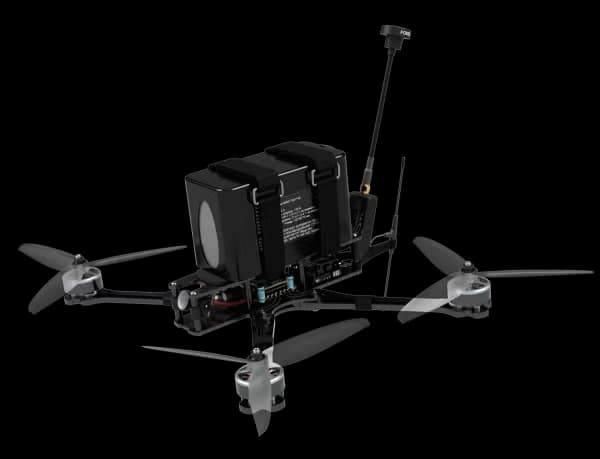
The U.S. Department of Defense's Drone Dominance Program (DDP) announced on July 1 that 19 vendors have been invited to compete in the Gauntlet II finals at Fort Carson, Colorado, in August. Competitors have approximately five weeks to deliver 120 drones equipped with lethal payloads for combat-scenario testing. Winners stand to receive production orders totaling up to $300 million.
Highlights
- The Pentagon's DDP selected 19 vendors on July 1, 2025, to compete in the Gauntlet II finals at Fort Carson, Colorado, in August, with up to $300 million in production contracts at stake.
- Each finalist must deliver 120 lethal-payload-equipped drones within approximately five weeks and will be paired with one of five pre-selected payload suppliers including Northrop Grumman.
- The 19 finalists were narrowed down from 49 vendors that competed at Camp Grayling, Michigan, in June, across long-range strike and close-range tactical assault mission categories.
- Gauntlet II production orders range from 4,000 drones for 5th place to 8,000 drones for 1st place in each mission area.
- Gauntlet I runner-up Neros has already completed delivery of 2,400 drones, while Gauntlet I champion Skycutter and third-place finisher Napatree have yet to begin production scale-up or shipping.
Pentagon's Drone Dominance Program Selects 19 Vendors for Gauntlet II Finals
The U.S. Department of Defense's Drone Dominance Program (DDP) announced on July 1 that 19 vendors have been invited to the final stage of the Gauntlet II competition, set to take place in August at Fort Carson, Colorado. Winners could receive production contracts totaling up to $300 million.
The 19 Invited Vendors
The vendors selected to compete at Fort Carson are: Ascent Aerosystems, Auterion Government Solutions, Griffon Aerospace, Grim Tech, Hyperscale, ModalAI, Mountain Horse Solutions and AG3 Labs (as a team), Neros Technologies, ORQA US LLC, Perennial Autonomy, Renegade UxS, Skycutter, Stellarion, Swarm Defense, Teal Drones, Ukrainian Defense Drones (UDD), Vector, Wilcox Cherry Defense, and XTEND Reality.
Competition Rules and Contract Scale
Each vendor has approximately five weeks to deliver 120 drones equipped with lethal payloads for the Gauntlet II finals. Drone manufacturers will be paired with one of five pre-selected lethal payload suppliers: Bravo Ordnance, Kela Defense US Inc., Kraken Kinetics, Mountain Horse LLC, and Northrop Grumman [NOC] SUkrystems Corp.
According to the Gauntlet II Request for Solutions published in April, rankings in each mission area correspond to the following production order quantities:
- 1st place: 8,000 prototype drones
- 2nd place: 7,000 drones
- 3rd place: 6,000 drones
- 4th place: 5,000 drones
- 5th place: 4,000 drones
Narrowed Down from 49 to 19 Finalists
The 19 finalists were selected from 49 vendors that competed in a qualification round held in June at Camp Grayling, Michigan. The qualifier featured approximately 79 unique drone systems competing across two mission areas: long-range strike and close-range tactical assault.
At Fort Carson, the drones will be evaluated in mission-relevant scenarios under electronic warfare conditions.
Gauntlet I Review and Current Status
In March, the DDP selected 11 top performers from Gauntlet I, held at Fort Benning, Georgia. Of those, Skycutter, ModalAI, Auterion, UDD, Ascent Aerosystems, and Griffon Aerospace have all advanced to compete for Gauntlet II contracts.
Neros, which placed second in Gauntlet I, has already completed delivery and acceptance of 2,400 drones under its DDP contract. As of June 18, DDP had accepted 80 drones from Ascent under a production order for 1,600 units.
Most other Gauntlet I vendors that received prototype contracts have begun shipping or are ramping up production. The exceptions are Gauntlet I champion Skycutter and third-place finisher Napatree, neither of which has begun scaling production or shipping.
DDP's Strategic Objectives
The core mission of the DDP is to help the United States build a domestic industrial base capable of mass-producing small, relatively low-cost, attritable drones for Department of Defense use. Notably, not all competing vendors are U.S.-based companies — Skycutter is headquartered in the United Kingdom, and Grim Tech is from Ukraine. UDD, which represents Ukrainian drone company F-Drones, is currently establishing a manufacturing facility in northwestern Ohio.
Portions of this article are adapted from content originally published by sister publication Defense Daily.
原文來源: 查看原文
FAQ
Newsletter
Subscribe to our Low-Altitude Industry Newsletter
Daily curated news on low-altitude economy and drone industry, delivered to your inbox.
Reviewed and published by the LAETimes editorial desk ·