Germany Signs Contract for High-Energy Laser Weapon System, Targeting 2029 Service Entry to Counter Drone Threats
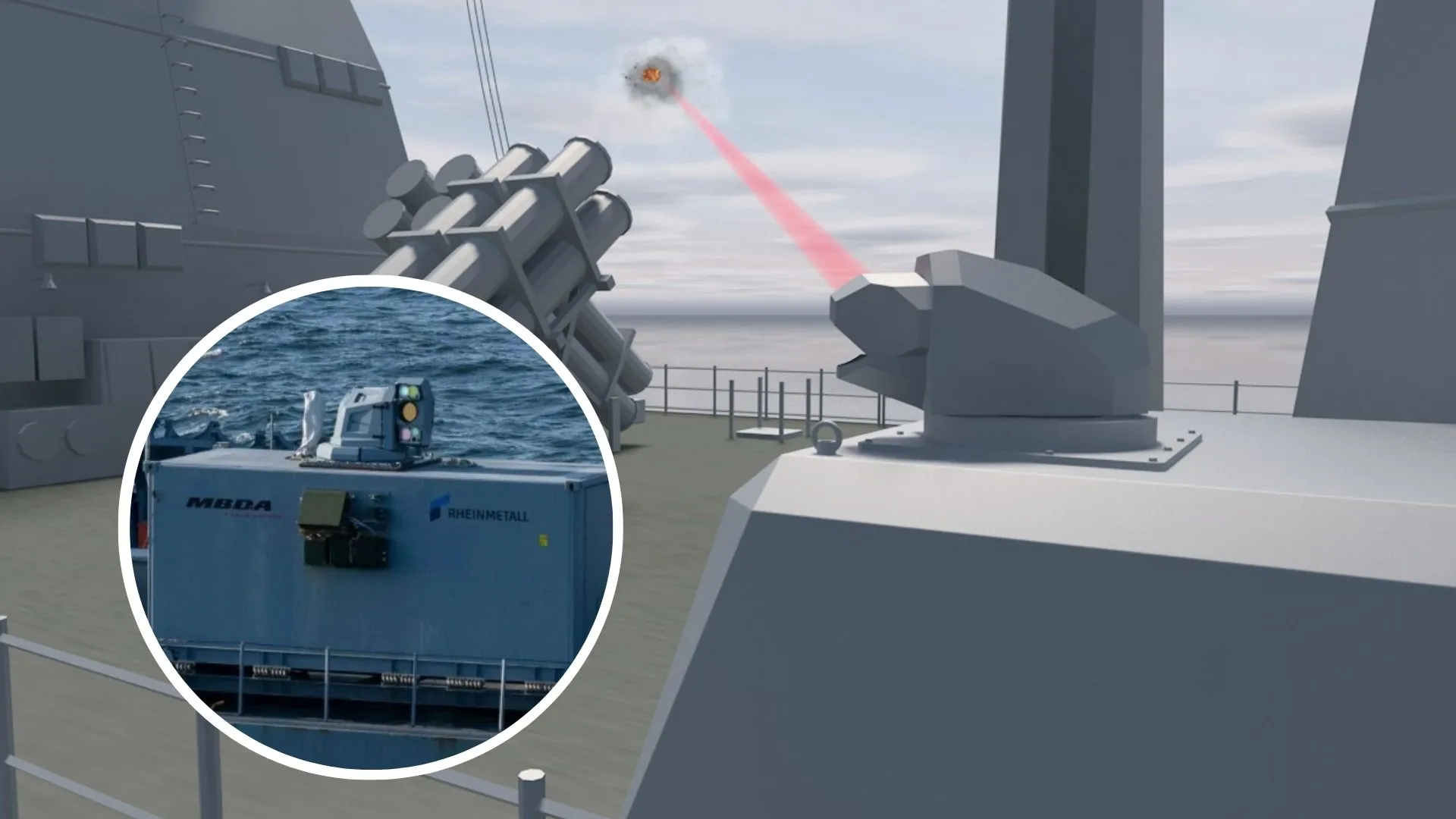
Germany's Federal Office of Bundeswehr Equipment, IT and In-Service Support (BAAINBw) signed a contract on July 9 with the ARGE HEL consortium—comprising MBDA Deutschland and Rheinmetall Waffe Munition—to develop a naval high-energy laser (HEL) weapon system. Scheduled to enter service in 2029, the system will be capable of intercepting drones, missiles, and a range of aerial, surface, and ground targets, with most production carried out in Germany.
Highlights
- Germany's BAAINBw signed a contract on July 9 with the ARGE HEL consortium (MBDA Deutschland and Rheinmetall Waffe Munition) to develop a naval high-energy laser weapon system.
- The laser weapon system is scheduled to enter operational service with the German Navy in 2029.
- The programme builds on a prior HEL demonstrator that successfully completed one full year of testing aboard a German Navy frigate, validating target tracking and engagement capabilities.
- Most production of the laser weapon system will take place within Germany, reinforcing the domestic defence industrial base and national technological sovereignty.
- The system will counter drones, missiles, and aerial, surface, and ground targets; a modular containerised effector version is also planned for port security applications.
Germany's Naval High-Energy Laser Weapon System Enters Development Phase
Germany has taken a significant step toward integrating directed-energy weapons into its naval forces. On July 9, the Federal Office of Bundeswehr Equipment, Information Technology and In-Service Support (BAAINBw) formally signed a contract with the High-Energy Laser Naval Demonstrator consortium (ARGE HEL) to develop a naval high-energy laser weapon system. ARGE HEL is a partnership between MBDA Deutschland and Rheinmetall Waffe Munition.
A New Laser Weapon System
The contract signing marks the transition of years of technology demonstration work into an operationally deployable system. The ARGE HEL consortium is also in the process of establishing a dedicated joint venture to oversee the programme.
According to Rheinmetall, the new laser weapon system is expected to enter service in 2029, representing a significant milestone in Germany's development of advanced directed-energy combat capabilities.
Roman Koehne, Head of Rheinmetall's Weapon and Ammunition division, said: "When two leading system integrators like Rheinmetall and MBDA combine their complementary capabilities to create a complete system, this demonstrates the level of technological maturity that can be achieved. The laser weapon system will provide significantly better protection for soldiers deployed on naval vessels, particularly against drone threats. Most production will take place in Germany, creating new training opportunities and jobs. We are honoured to have been awarded this contract."
The development programme builds on a previously successful HEL demonstrator system that completed a full year of testing aboard a German Navy frigate. During these real-world operational trials, the system reportedly demonstrated effective engagement of multiple threat types, including aerial, surface, and ground targets under near-combat conditions.
A Flagship Technology Programme
The successful trials validated the system's target tracking, engagement, and system integration capabilities, giving German defence authorities the confidence to proceed to the next development phase.
Thomas Gottschild, Managing Director of MBDA Deutschland GmbH and MBDA Executive Vice President for Strategy and Future Growth, stated: "The laser weapon system jointly developed by MBDA and Rheinmetall is a highly sophisticated flagship technology programme. It meets the specific requirements of the Bundeswehr and will significantly enhance the German Navy's defensive capabilities against aerial, surface, and ground targets. The modular containerised laser effector will also offer a cost-effective solution for port security and other applications."
Laser Weapons: A Key Component of Future Naval Air Defence
Laser weapons are increasingly regarded as a core element of future naval air defence, owing to their ability to intercept drones, incoming missiles, and other emerging threats at the speed of light. Unlike conventional missile-based intercept systems, laser systems theoretically offer near-unlimited "magazine depth" as long as sufficient power is available, while dramatically reducing the cost per engagement.
For modern navies facing growing challenges such as drone threats and swarm attacks, directed-energy weapons represent a highly attractive complement to traditional missile and gun-based defence systems.
Rheinmetall confirmed that the majority of production will take place in Germany, helping to strengthen the country's domestic defence industrial base and securing national technological sovereignty in this strategically important domain.
The collaboration combines MBDA's expertise in precision-guided weapon systems with Rheinmetall's extensive experience in sensors, fire control systems, and high-energy laser technology. Both companies believe the programme will position Germany among the world's leading nations in the development of operationally ready naval laser weapons.
原文來源: 查看原文
FAQ
Newsletter
Subscribe to our Low-Altitude Industry Newsletter
Daily curated news on low-altitude economy and drone industry, delivered to your inbox.
Reviewed and published by the LAETimes editorial desk ·