J-20S vs. F-47: China Puts a Human in the Back Seat Where America Is Betting on AI
China and the United States agree that the decisive aircraft in future air combat will be the one directing drone swarms — not the one pulling the trigger. But they disagree sharply on who should sit in the command seat. In July 2025, the PLAAF officially commissioned the J-20S, the world's first twin-seat stealth fighter, placing a human Mission Systems Officer in the rear cockpit to manage electronic warfare and drone coordination. The U.S., by contrast, is keeping its F-35, F-22, and forthcoming F-47 single-seat, betting that AI autonomy can do the same job without a second crew member.
Highlights
- In early July 2025, the PLAAF officially commissioned the J-20S, making it the world's first operationally deployed fifth-generation stealth fighter with a tandem two-person crew.
- The J-20S rear-seat Mission Systems Officer is tasked with electronic warfare, drone coordination, and tactical data processing — not training — and can reportedly manage four to six loyal wingman drones simultaneously.
- The U.S. Air Force plans to deploy approximately 1,000 Collaborative Combat Aircraft (CCAs) guided by AI autonomy alongside roughly 500 manned single-seat fighters, including the forthcoming F-47.
- The J-20S retains WS-10C engines as the more capable WS-15 remains in development, representing a known propulsion shortfall that is more critical for the heavier twin-seat airframe.
- The core doctrinal question — whether a human back-seater or an AI autonomy suite better commands a drone swarm in peer combat — remains unresolved, as neither approach has been tested in high-intensity conflict.
J-20S: Why China Built a Twin-Seat Stealth Fighter While America Goes Single-Seat
The United States and China have reached the same conclusion about the future of air combat: the most decisive aircraft will not be the one that fires the missile, but the one that commands the drone swarm.
Yet on the question of who sits in that command seat, the two superpowers have arrived at diametrically opposite answers.
The U.S. is keeping its frontline stealth fighters single-seat, betting that artificial intelligence and sensor fusion can manage drone swarms without human help in the cockpit. China has built the J-20S — the world's first twin-seat stealth fighter — and placed a human crew member in the rear to do exactly that job.
That divergence, not the extra seat itself, is the real story. It represents a genuine wager on whether a human or an algorithm is better suited to command a drone swarm in peer combat. Neither side has the answer yet.
What China Actually Built
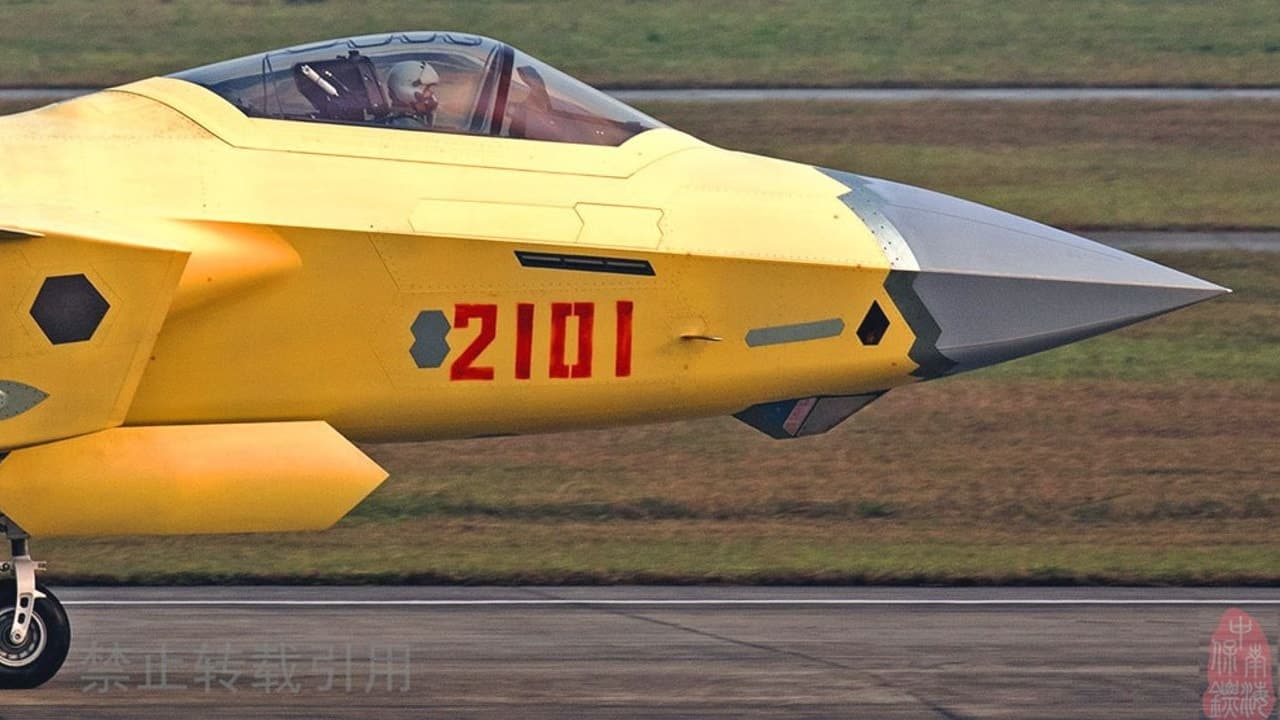
The J-20S is a tandem two-seat variant of the Chengdu Aircraft Corporation J-20 "Mighty Dragon," and its significance is documented, not speculative.
In early July 2025, the People's Liberation Army Air Force (PLAAF) officially announced the J-20S had entered operational service, making it the first fifth-generation stealth fighter in history to fly with a tandem two-person crew. Its operational status has been confirmed through observations related to China's September 2025 parade preparations, with new imagery showing the aircraft deployed with the 172nd Air Brigade at Cangzhou. The J-20S has been observed in test flights since 2021 and made its public debut in 2024 before entering squadron service.
The critical detail is what the rear seat is actually for. According to available reporting, the rear cockpit is not configured for training — it supports advanced operational functions including electronic warfare, drone coordination, and complex tactical data processing.
Accommodating the rear seat required a lengthened fuselage and redesigned internal systems layout. The rear station is fully digitized, with the crew member accessing radar data, electronic warfare feeds, and datalink transmissions from connected drones. This is not a trainer with combat utility bolted on — it is an aircraft designed from the outset around a two-person crew, something no other operational stealth fighter can claim.
One caveat must be stated clearly, because it has been a persistent weakness of the program: the J-20S is currently powered by two WS-10C (Woshan-10C) engines. The more capable domestically developed WS-15 remains under development and has not yet entered full-rate production. Engine reliability and performance have dogged the J-20 family for years, and the twin-seat variant inherits that concern. A more powerful engine is critical for the heavier, longer airframe of the two-seat version — and China is not there yet.
What the Back-Seater Actually Does
The second crew member in the J-20S is a Mission Systems Officer (MSO), and that role is the entire point of the aircraft's existence. Chinese state media and associated commentators have been direct about the division of labor: the front-seat pilot focuses on flying the aircraft and making engagement decisions; the rear-seat operator handles electronic warfare, sensor coordination, and drone management.
In this configuration, the J-20S functions less as a fighter and more as an airborne forward command post. Chinese state television has described the aircraft as an aerial forward tactical command node.
The drones the rear-seat operator directs come from China's growing family of "loyal wingman" combat aircraft. One operator is estimated to be able to coordinate four to six drones simultaneously, managing their flight paths, identifying targets, and potentially directing weapons employment — a task that is bandwidth- and processing-intensive, and a clear rationale for China splitting the workload between two people.
A commentator associated with the Aviation Industry Corporation of China (AVIC) has claimed the J-20S carries strong situational awareness capabilities, can act as a small early-warning platform, guide drones to strike targets, and extend the formation's detection and engagement range. These are Chinese claims about Chinese capabilities and should be treated as manufacturer framing, not verified performance. But the doctrinal intent is unmistakable: China is moving toward manned-unmanned teaming and placing a human in charge of the unmanned end.
America's Opposing Bet: Let the Algorithm Command the Swarm
The United States is pursuing the same operational concept with the opposite crew decision.
The F-35 is single-seat. The F-22 is single-seat. The forthcoming F-47, the manned core of the Air Force's Next Generation Air Dominance (NGAD) program, is also designed as a single-seat aircraft.
The drone management role that China assigns to a second crew member, the United States intends to hand to software. The F-35's sensor fusion already integrates data from multiple sources into a single tactical picture, and the Air Force's bet is that the same approach, scaled up and paired with mature autonomy, will allow a single pilot to command an entire drone swarm without a back-seater.
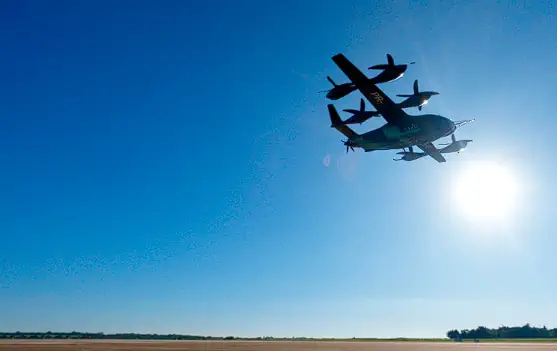
The drone side of the equation is the Collaborative Combat Aircraft (CCA) program, and its scale reflects how seriously Washington takes the concept. The Air Force's planning baseline calls for roughly 1,000 CCAs paired with approximately 500 manned fighters — a ratio of two loyal wingmen per crewed aircraft. Two competing prototype designs, the YFQ-42A and YFQ-44A, are currently in testing, carrying onboard autonomy software to execute real-time missions alongside manned fighters.
The premise is that the drones carry sufficient AI to handle their own flight, sensing, and coordination, leaving the human in an oversight role rather than a direct control role. In the American concept, the F-47 can cycle through target acquisition, confirmation, and sensor-to-shooter pairing faster than a human crew member could, keeping manned aircraft at standoff range while autonomous wingmen penetrate contested airspace. China retains human involvement at that step; the United States is betting it can remove the human entirely.
Doctrinal Insight or Technical Workaround?
The honest question is whether China's rear-seat design represents genuine doctrinal insight or a stopgap for technology it has not yet mastered. Both arguments hold.
The case for insight is straightforward: drone swarm operations in a contested environment will be chaotic, electronic warfare and drone control are cognitively demanding, and a dedicated human operator may simply be better than current AI at managing that load — especially when jamming and deception degrade the datalinks that autonomous systems depend on. A human back-seater can exercise judgment, adapt to unexpected conditions, and make decisions in scenarios that no algorithm has been trained on. By this logic, China has recognized something the United States is underweighting: the fog of war in drone swarm operations requires a human, and American confidence in automation is a bet that the technology will mature in time.
The case for workaround is equally compelling. A sober assessment of the J-20S points directly to the second operator as evidence of a fundamental gap relative to American standards — an approach that relies on human intervention rather than software, a transitional paradigm before full automation, a hybrid model that may lack the flexibility needed for large-scale operations in high-intensity conflict.
By this logic, China crews the rear seat because its automation and sensor fusion are not yet advanced enough to dispense with human hands. The twin-seat J-20S is a transitional solution that Beijing will discard once the software catches up. The rear-seat crew member is also a cost: an extra seat to train, an additional life at risk, and a longer and more complex airframe to accommodate the station. If AI can do the job, the single-seat solution is cheaper, lighter, and more scalable — and China's choice reflects a follower compensating for a gap, not a leader innovating ahead of the curve.
Both arguments are coherent. That is precisely the point. The divergence is real, the stakes are high, and the evidence to resolve the argument does not yet exist.
Conclusion: A Wager Neither Side Can Yet Validate
The divergence between the J-20S and the F-47 is one of the sharpest doctrinal splits between the world's two leading air forces, and it cannot be resolved through analysis alone. Whether a human back-seater or an AI autonomy suite is better suited to command a drone swarm is a question that can only be answered in a peer conflict — and neither approach has faced that test.
China's bet retains the human at the point of greatest uncertainty. America's bet removes the human in exchange for gains in cost, weight, and scale. In hindsight, one of those bets will look prescient and the other will look like a miscalculation — but no war has yet revealed which is which.
The scales tilt toward the United States on the basis of demonstrated results: American sensor fusion is mature and combat-proven on the F-35; the CCA program is flying real prototypes at scale; decades of operational experience underpin the networked approach. China's twin-seat solution is operational and deserves serious attention, but many of the capabilities the rear-seat operator is claimed to enable remain in the realm of Chinese state media assertions rather than verified performance, and the engine shortfall signals a program still resolving foundational problems.
The most likely truth is that both countries are hedging against the same uncertainty from opposite directions — China trusting humans until the machines are ready, America trusting machines and accepting the risk that they are not ready yet.
Whichever side guesses correctly will hold a genuine advantage in the most demanding form of air combat ever conceived. The world will only get the answer in a war nobody wants to see happen. Until then, the rear seat of the J-20S remains one of the most consequential open questions in military aviation.
Author: Harry J. Kazianis, former Senior Director of National Security Affairs at the Center for the National Interest (CFTNI), holds a Master's degree in International Affairs from Harvard University, and has contributed to The New York Times, The Washington Post, The Wall Street Journal, and CNN.
原文來源: 查看原文
FAQ
Reviewed and published by the LAETimes editorial desk ·