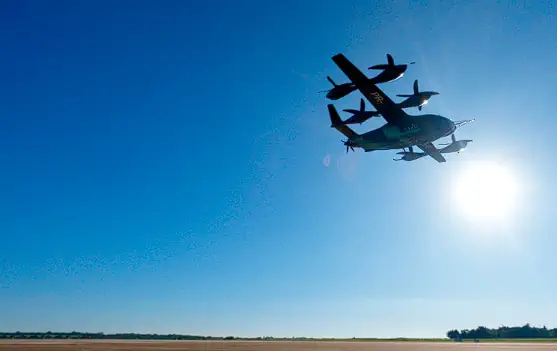
Taiwan Opposition Blocks NT$210 Billion Domestic Drone Budget as Island Awaits US$14 Billion US Arms Sale
Taiwan's opposition-controlled legislature on Friday blocked President Lai Ching-te's proposed NT$210 billion (US$6.6 billion) special budget for domestically produced drones. The Kuomintang and Taiwan People's Party said they would introduce their own versions of the bill. Meanwhile, Lai urged Washington to swiftly approve a pending US$14 billion arms sale package, reaffirming Taiwan's rejection of unification with China.
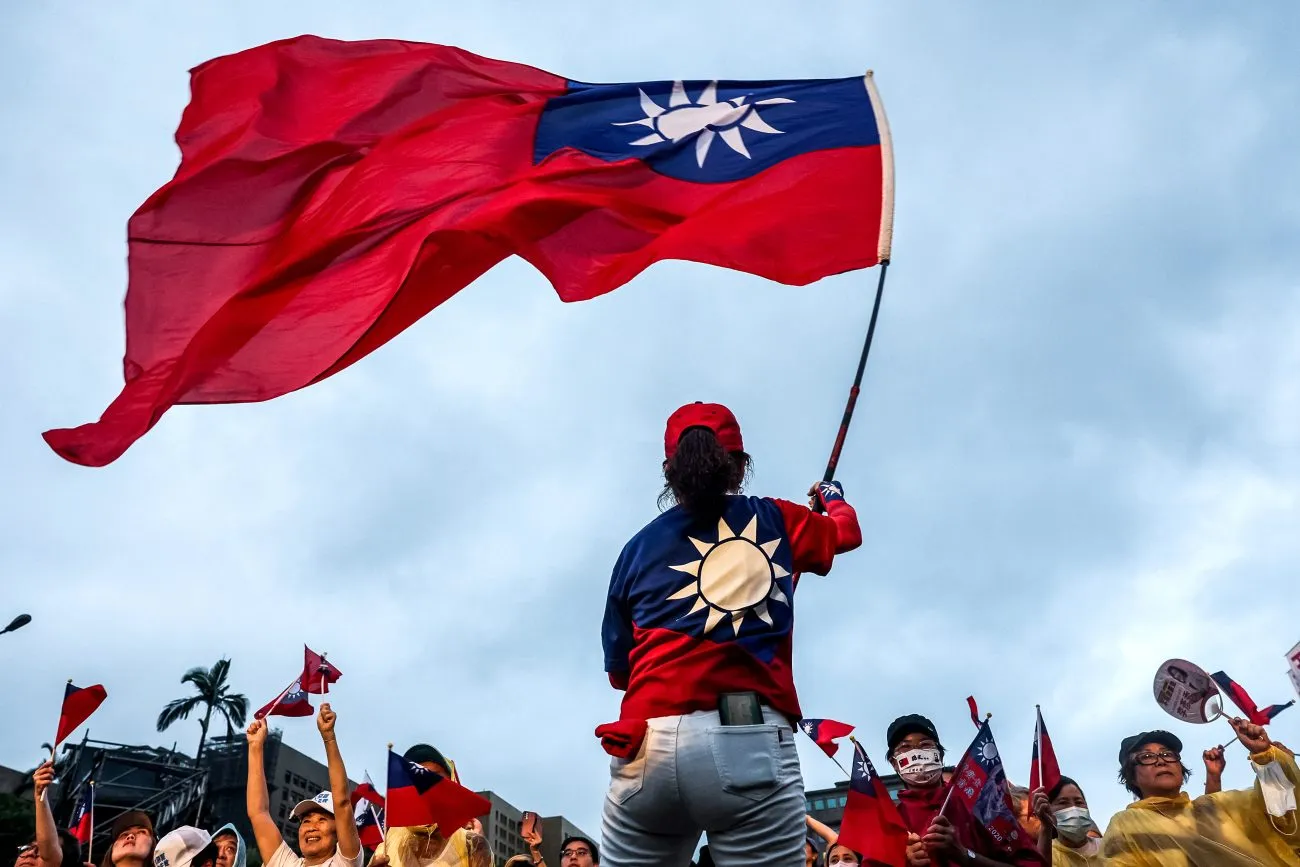
Highlights
- Taiwan's opposition KMT and TPP blocked the Lai administration's NT$210 billion (US$6.6 billion) special budget for domestically produced drones in the Legislative Yuan on Friday, June 2025.
- The blocked budget would have funded Taiwan-made surveillance drones, attack drones, and unmanned surface vessels over a period of five or more years.
- In May 2025, the opposition-controlled legislature passed a US$25 billion special defense budget — one-third less than the DPP's request — cutting approximately US$15 billion in domestic drone and defense funding.
- President Lai Ching-te urged the US to approve a pending US$14 billion arms sale 'as soon as possible,' with Secretary of State Marco Rubio confirming the package remains 'under review.'
- The Lai administration has pledged to raise total defense spending above 3% of GDP in 2025, backed by a NT$1.25 trillion weapons procurement plan covering both US-sourced and domestically produced systems.
Taiwan's opposition-controlled legislature on Friday blocked the Lai Ching-te administration's proposed NT$210 billion (approximately US$6.6 billion) special budget for domestically produced drones — a measure intended to bolster the island's defenses against the threat from China.
Legislative Deadlock Over Defense Spending
For months, the Lai administration has been locked in a dispute with the Kuomintang (KMT) and the Taiwan People's Party (TPP) over the scale of funding needed to strengthen the island's defense capabilities. China claims Taiwan as part of its territory and has threatened to use force to take it if necessary.
The Lai government had sought up to NT$210 billion over five or more years to procure Taiwan-made unmanned vehicles, including coastal surveillance drones, attack drones, and unmanned surface vessels.
However, the KMT and TPP — which together hold a majority in the Legislative Yuan — refused to put the bill to a vote on Friday, stating they would each introduce their own versions instead.
KMT legislator Hsu Yu-ling said her party "supports the development of unmanned systems and the drone industry" and would propose its own bill. "We hope that after each side presents its own version, we can discuss them together," Hsu told AFP.
Democratic Progressive Party (DPP) legislator Chung Chia-pin criticized the opposition's delaying tactics. "If next week or the week after they submit their own version, will they then agree to let other versions enter review at the same time?" he said to AFP. "If that happens, it will only further prove they are laggards and cheats. They haven't even reached the starting line, yet they're stopping others from running."
KMT legislator Ma Wen-chun said her party "cannot accept" the government's latest bill. "It simply repackages the parts we opposed before," Ma told AFP. "For the overall development of the industry or the development of drones, we want them to present a concrete and complete vision and plan — essentially funding it through the annual budget rather than resorting to special budgets at every turn."
In May, the KMT and TPP passed a US$25 billion special defense budget that was cut by one-third from the DPP's original proposal. The opposition stripped out approximately US$15 billion that the government had earmarked for domestically produced drones and other defense enhancements.
Taiwan Awaits US$14 Billion US Arms Sale
Last week, President Lai said he hoped the United States would approve the US$14 billion arms sale "as soon as possible," reiterating that democratic Taiwan "rejects unification" with China.
Taipei relies heavily on Washington's support to counter growing pressure from Beijing, which claims Taiwan as part of its territory and has not ruled out taking it by force.
"We hope the arms procurement can be approved as quickly as possible," Lai told reporters in Taipei. "Taiwan's efforts to maintain national security, uphold its democratic and free way of life, and reject unification and rule by the Chinese Communist Party should not be seen as provocation toward China or as troublemaking in the region," he said.
US Secretary of State Marco Rubio said this month that the US$14 billion arms package "is under review," while officials also indicated in May that they are assessing whether American weapons stockpiles are sufficient following US military action against Iran.
In response to Lai's remarks, Chinese Foreign Ministry spokesman Lin Jian warned Taiwan that "seeking independence by relying on the US or by force is a dead end." Lai's comments "only expose his deep anxiety and sense of insecurity," Lin said at a press briefing.
Overall Defense Budget Target: Over 3% of GDP
The Lai administration has pledged to raise overall defense spending to more than 3% of GDP this year, and has put forward a NT$1.25 trillion (approximately US$40 billion) weapons procurement plan covering US-made arms and Taiwan-produced drones. However, Taiwan's legislators remain divided on how much to invest in strengthening defenses.
The opposition-controlled legislature last month passed a US$25 billion special defense budget — one-third less than what Lai's ruling party had requested. The opposition cut roughly US$15 billion that the government had planned to spend on domestically produced drones and other defensive measures.
Lai said US commitment to Taiwan's security "remains unchanged," adding that both sides are "jointly committed to strengthening security and accelerating efforts to enhance Taiwan's self-defense capabilities."
Taiwan's Executive Yuan had earlier approved an additional NT$210 billion (US$6.6 billion) budget for domestic unmanned systems procurement, after the Ministry of National Defense stated that the reduced budget was "insufficient to fully build the military's overall combat capabilities."
China's Pressure Across the Indo-Pacific
Lai also said China is "applying pressure" during ongoing maritime boundary negotiations between Japan and the Philippines in waters east of Taiwan. Tokyo and Manila announced in late May that they would begin formal negotiations to "delimit maritime boundaries" concerning their respective exclusive economic zones and continental shelves. China called those negotiations "illegal" and asserted exclusive jurisdiction over the relevant waters.
Taipei rejects Beijing's claims, insisting that Taiwan and China are "not subordinate to each other." "China is not only exerting pressure on Taiwan but also on other nations in the Indo-Pacific," Lai said on Thursday. He noted that China's military expansion in the East China Sea, South China Sea, and Taiwan Strait has extended into the Western Pacific, with "various forms of coercion continuing to escalate."
Shared concerns over China's maritime claims have drawn Japan and the Philippines closer together in recent years. Like most countries, neither formally recognizes Taiwan's statehood, but both maintain close unofficial ties with Taipei.
Reporting by Agence France-Presse (AFP), originally published in the Eurasian Times.
原文來源: 查看原文
FAQ
Reviewed and published by the LAETimes editorial desk ·