A 28,000-Ton Strategic Gamble: Russia's Admiral Nakhimov Spent Nearly 30 Years in Refit — and Could Still Fall to Cheap Drones and Missiles
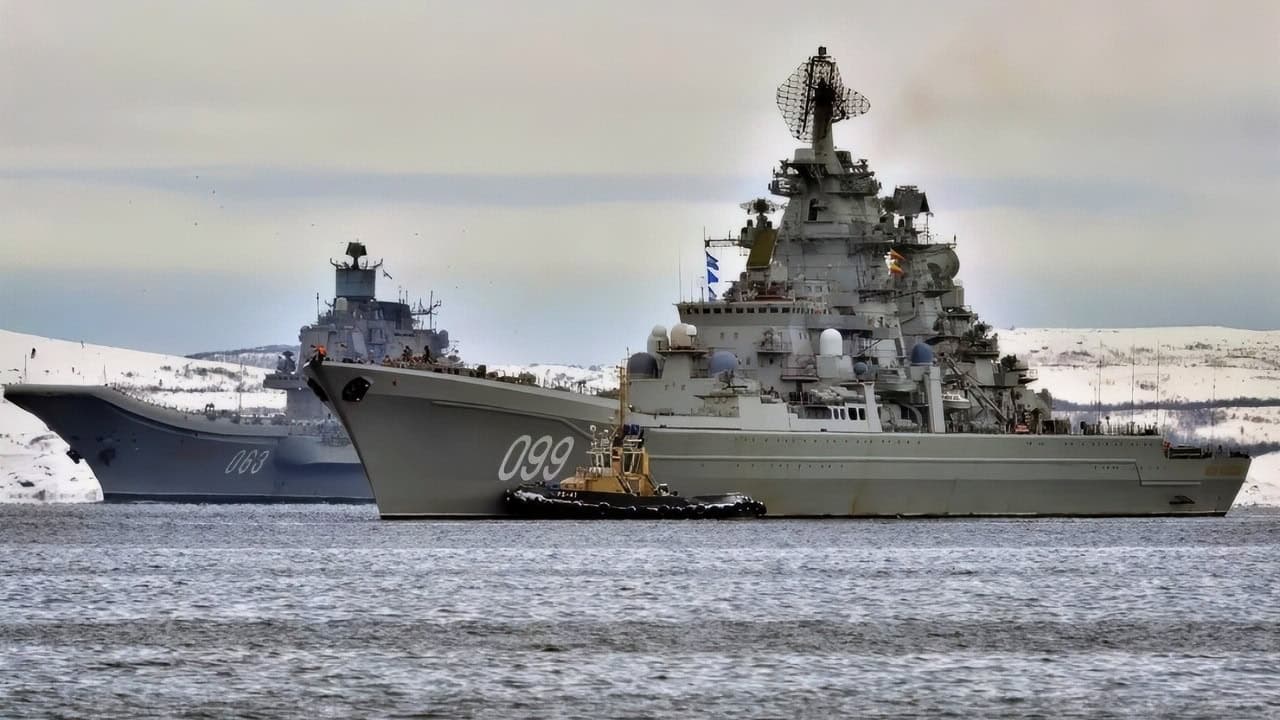
Russia has spent nearly three decades modernizing the Admiral Nakhimov, a Kirov-class battlecruiser, equipping it with over 170 vertical launch cells capable of firing Kalibr, Oniks, and Zircon missiles. Yet the Ukraine war has demonstrated that low-cost drones and anti-ship missiles can inflict devastating losses on expensive warships, casting serious doubt on the strategic value of this 28,000-ton giant.
Highlights
- 俄羅斯對納希莫夫海軍上將號的現代化改裝歷時近30年,改裝後配備超過170個垂直發射單元,可發射Kalibr、Oniks與Zircon飛彈。
- 基洛夫級戰鬥巡洋艦滿載排水量達28,000噸,以核動力驅動,艦員700至800人,是俄羅斯現役最大的水面戰艦。
- 烏克蘭戰爭中,烏克蘭以相對低廉的無人機與反艦飛彈重創俄羅斯黑海艦隊多艘昂貴艦艇,驗證了廉價無人系統對大型戰艦的致命威脅。
- 俄羅斯現役基洛夫級艦艇僅剩納希莫夫海軍上將號一艘,艦隊規模極為有限,難以形成規模化作戰效益。
- 現代海戰強調分散式殺傷力與無人系統運用,將大量資源集中於單艘高價值水面戰艦的戰略邏輯正受到嚴峻挑戰。
Russia has never matched the United States as a comprehensive naval power, but key capabilities — particularly its submarine fleet — have long allowed Moscow (and the Soviet Union before it) to contest American dominance at sea.
In recent years, Russia has revived several Soviet-era designs. The most striking example is the Russian Navy's Project 1144 Orlan — the Kirov-class battlecruiser. For decades, this class has served as a symbol of Russia's enduring naval ambitions, commanding the close attention of defense analysts and policymakers alike.
The central question, however, is not whether a refurbished Kirov-class vessel will perform as advertised — it will. The real issue is that in an era of drone and missile swarms, the limitations of such a platform should give naval strategists serious pause. This is especially true given how few of these ships exist: Russia currently has just one remaining in its fleet, the Admiral Nakhimov.
To put it plainly, Russia never planned to mass-produce Kirov-class battlecruisers. The situation is more that one was sitting in a drydock rusting away, and Vladimir Putin decided to make something of it.
A Soviet-Era Original Design
Project 1144 Orlan was conceived in the 1970s for a specific set of combat requirements.
Unlike the United States Navy, which was built around the aircraft carrier, Soviet naval planners assumed they would have to confront American carrier strike groups without equivalent carrier-based air power of their own.
The Soviet Navy's answer was to build an enormous nuclear-powered cruiser armed with enough missiles to overwhelm American Aegis defense systems. The Kirov class was designed to sink American nuclear-powered aircraft carriers. Because of its massive displacement, exceptional endurance, and heavy offensive armament, Western analysts classified it as a "battlecruiser" rather than a conventional cruiser.
Key Specifications
The Kirov-class battlecruiser is a true giant, unmatched within the Russian surface fleet. In fact, the only platforms larger than it are the American aircraft carriers it was designed to sink. Key specifications include:
- Displacement: 28,000 tons full load
- Propulsion: Two nuclear reactors driving steam turbines, providing virtually unlimited range
- Crew: 700–800 personnel
- Armament: 20 × P-700 Granit anti-ship missiles, long-range S-300F surface-to-air missiles, medium-range SAMs, torpedoes, anti-submarine rocket launchers, and large-caliber naval guns
This vessel was already a monster at sea. Russia's modernization program makes it even more formidable.
The refit equips the ship with over 170 vertical launch system (VLS) cells capable of firing Kalibr, Oniks, and Zircon missiles — a serious threat by any measure. That said, modern multi-layered defense systems and electronic countermeasures could still mitigate the risk of a missile saturation attack.
The Iowa-Class Connection
Harry Kazianis, national security expert and Editor-in-Chief of 19FortyFive, has previously noted the Cold War dynamic that motivated the Soviet Union to build the Kirov class. At the time, President Ronald Reagan was reactivating the Iowa-class battleships as part of his naval expansion pledges. The Soviets responded by pressing ahead with the Kirov-class battlecruiser program.
The Reagan administration believed certain firepower could only be delivered by a battleship. While it is difficult to establish a direct causal link between the reactivation of the Iowa class and the Soviet decision to build the Kirov class, the latter undeniably shaped how the outside world understood Soviet — and now Russian — intentions for countering American surface forces at sea.
Russia's Last Great Surface Warship
After nearly 30 years of modernization, Russia intends to make the Admiral Nakhimov the flagship of its storied Northern Fleet. The ship has received new radar systems, modern electronic warfare (EW) capabilities, updated weaponry, and a reactor overhaul — making it a genuinely modern and capable warship.
Yet serious challenges remain. Even at the height of Soviet power, maintaining just a handful of Kirov-class ships was a significant strain. Modern Russia performs better than it did in the 1990s, but sustaining these vessels will continue to test its resources.
The 'Battleship Dilemma'
Western criticism of the Kirov class is worth examining carefully. On one hand, such criticism could be dismissed as envy or denial from nations that lack comparable capabilities. On the other hand, there is a long-standing debate within Western defense circles against maintaining large surface combatants, precisely because — regardless of how capable their defenses are — such ships represent high-value targets that modern missiles and drone swarms find irresistible.
Russia's experience in the Black Sea has provided a brutal real-world validation of this concern. During the war in Ukraine, Ukrainian drones and anti-ship missiles have damaged or destroyed several expensive Russian naval platforms at relatively modest cost.
The Admiral Nakhimov does carry an impressive array of offensive and defensive weapons. But the laws of physics cannot be broken, only exploited. No matter how extensive Russia's defensive systems on the ship may be, those systems have limits.
Russian naval planners must honestly ask themselves: is it worth spending billions of dollars and decades of effort to produce a 28,000-ton battlecruiser that could potentially be neutralized by cheap drones or missiles?
Is This Ship Worth It?
The Kirov class remains one of the most impressive and costly warship designs in modern history. Its combination of nuclear propulsion, heavy armament, and layered defenses makes it a genuinely fearsome presence at sea.
However, the current strategic environment is not favorable to such platforms. Modern naval warfare demands distributed lethality, enhanced submarine capabilities and long-range precision strike weapons, and the use of unmanned systems to deliver persistent, low-cost attack capability and continuous intelligence, surveillance, and reconnaissance.
Concentrating combat power in a single, massively capable surface combatant may make for impressive visuals and effective propaganda, but it does not deliver the kind of victories Russia needs.
The Admiral Nakhimov is less a vision of the future of naval warfare than a window into an alternate history — what might have been had the Soviet Union not collapsed in 1991 and the Cold War continued to burn. It represents the apex of a Cold War design philosophy.
As a modern warship, it remains a threat. But that threat will ultimately be constrained by cheap, proliferating, and continuously evolving unmanned systems and missile technology.
Author: Brandon J. Weichert, Senior National Security Editor at 19FortyFive.com, and author of A Disaster of Our Own Making: How the West Lost Ukraine (Encounter Books).
原文來源: 查看原文
FAQ
Reviewed and published by the LAETimes editorial desk ·