Did Cuba Stockpile 300 Shahed Drones? That Number Has Never Been Officially Confirmed
Former Florida Governor Jeb Bush stood beside a captured Iranian Shahed-136 drone in Coral Gables on July 8, warning that Cuba holds approximately 300 such drones within striking distance of South Florida. However, the '300' figure was never confirmed by any official intelligence agency — it originated from media reports — raising questions about whether the event was driven by national security concerns or political theater.
Highlights
- 前佛羅里達州長傑布·布希於7月8日在科勒爾蓋布爾斯聲稱古巴儲有約300架伊朗沙赫德-136無人機,但該數字源自媒體報導,並非美國政府解密情報。
- 沙赫德-136彈頭重66至110磅,航程達1,550英里,可涵蓋南佛羅里達、關塔那摩灣美軍基地及亞特蘭大等目標。
- 每架沙赫德製造成本僅數萬美元,但攔截所需飛彈及有人駕駛機應對成本高達數百萬美元,形成對守方不利的不對稱經濟壓力。
- 俄羅斯已在韃靼斯坦自行量產仿製版「天竺葵-2」,沙赫德設計方案已全球擴散,不再依賴伊朗供應。
- 「聯合反對核武伊朗」執行長馬克·華萊士稱這批無人機在當前衝突爆發前數年已移往古巴,但未提供任何文件或具名機構評估報告佐證。
Former Florida Governor Jeb Bush appeared alongside a captured Iranian Shahed drone at the Biltmore Hotel in Coral Gables on July 8, warning that Cuba currently harbors approximately 300 such drones capable of reaching South Florida.
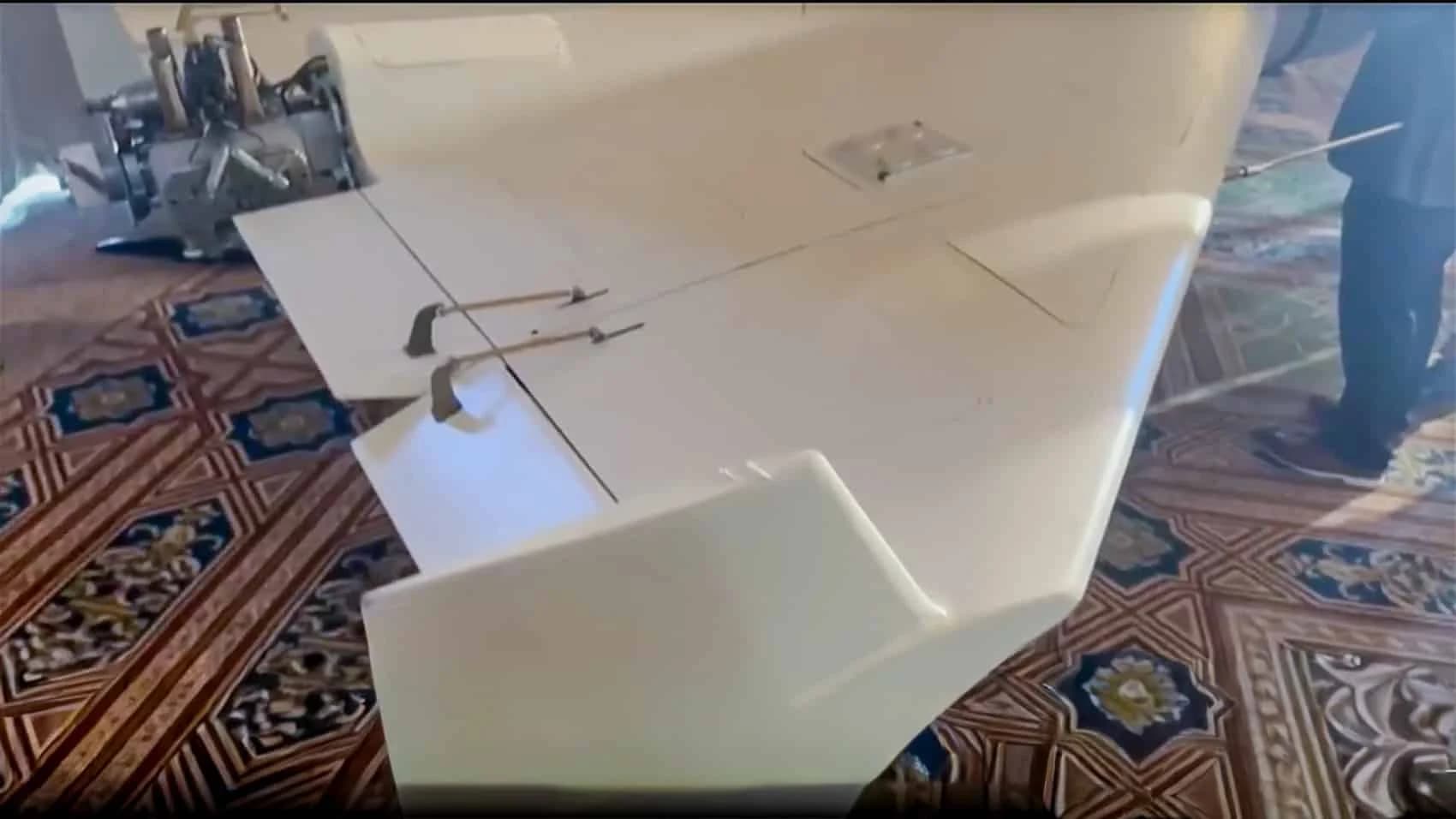
Florida Republican Congressman Carlos Gimenez stood at his side. The Shahed-136 displayed behind them is the same one-way attack munition DroneXL has tracked extensively on the Ukrainian battlefield. Throughout the event, no one clearly explained where the '300' figure actually came from.
Image credit: NBC Miami
Bush and Gimenez Frame the Drone as a Threat to Florida
The event was organized by United Against Nuclear Iran, an advocacy group that monitors Tehran's military relationships. Using a captured Shahed as a physical prop, both men argued that Cuba's deepening ties with Iran now extend to the American homeland.
Bush described the design as one of the most lethal weapons U.S. forces have faced in recent years. "Over the last 15 years, this is the single weapon that has caused the most casualties among American troops," he said.
Gimenez focused on the warhead's destructive power and range. He told those present that the variant carries "over 100 pounds of explosives," flies at approximately 115 miles per hour, and has a range exceeding 1,000 miles — putting South Florida, the U.S. naval base at Guantánamo Bay, Tallahassee, and Atlanta all within potential strike range.
"The impact is enormous," Gimenez said. "That's why they're called kamikaze drones — they fly straight into the target and detonate."
According to NBC Miami, Bush struck a more measured tone as he left, noting that the United States has "very strong defensive capabilities" and emphasizing that the event was "not a press conference designed to scare anyone." He also credited recent U.S. pressure for weakening Iran's regional military influence.
Shahed-136: Cheap, Slow, and Deliberately Expendable
The Shahed-136 is an Iranian-developed loitering munition that flies to a set of target coordinates and detonates on impact. According to publicly available defense data, its warhead weighs between 66 and 110 pounds (30–50 kg), its cruising speed is approximately 115 mph (185 km/h), and its maximum range is around 1,550 miles (2,500 km).
Image credit: NBC Miami
Those figures broadly match Gimenez's description, though his "over 100 pounds" figure sits at the upper end of the published warhead weight range rather than the midpoint. The airframe is roughly 11 feet (3.5 meters) long and powered by a piston engine reverse-engineered from an older German design. There is nothing high-tech about it — and that is by design.
Image credit: NBC Miami
Navigation relies on a commercial inertial measurement unit corrected by civilian GPS and GLONASS satellite signals — the same navigational foundation used in consumer drones, and also its greatest vulnerability. Civilian signals can be jammed or spoofed, which is why countering Shahed operations often looks more like electronic warfare than conventional air defense.
Iran has launched these drones in swarms across the Middle East and has exported thousands to Russia, which has used them to strike Ukrainian cities continuously since 2022. A single Shahed is slow enough that a trained shooter can bring it down; dozens arriving simultaneously are an entirely different problem — and that saturating effect is precisely what Gimenez was emphasizing when he spoke about overwhelming air defenses.
Is this a second Cuban Missile Crisis? Nothing has been confirmed to that effect.
It is also worth asking: does the U.S. military installation at Guantánamo Bay — situated right there — genuinely lack systems capable of detecting and destroying this class of drone shortly after launch?
The '300' Figure Comes From Media Reports, Not Official Confirmation
The number '300' dominated the entire discussion, yet Bush himself acknowledged during his remarks that the claim originates from "media reports" rather than a declassified U.S. government intelligence assessment.
Image credit: NBC Miami
That distinction matters. Mark Wallace, the organization's CEO and a former U.S. Ambassador to the United Nations, added that the drones had been moved to Cuba "years before the current conflict began." Yet neither man provided any documents, satellite imagery, or named institutional assessments to substantiate the figure.
This article does not argue that the drones do not exist. What it does note is that the public evidence presented at the July 8 event amounted to a round number, a warning, and a tangible physical prop. A captured Shahed on a table proves that the weapon exists — it cannot, by itself, prove that 300 of them are parked 90 miles from Key West.
Image credit: NBC Miami
Responsible reporting requires holding two judgments simultaneously: Iran's military ties with Cuba are documented and warrant continued scrutiny; but the specific claim that 300 armed drones are deployed against Florida remains an unverified figure attributed to unnamed reporting.
The Asymmetric Cost Problem Is What Planners Actually Lose Sleep Over
The strategic threat posed by the Shahed family was never really about whether a single drone is difficult to intercept. It is about the economics: each drone costs far less to produce than the missile required to destroy it, shifting the financial burden of air defense onto the defending side.
A Shahed is widely estimated to cost tens of thousands of dollars to manufacture. Intercepting it with surface-to-air missiles and manned aircraft can cost millions. For an attacking force that can absorb 99 losses and still put the 100th drone on target, the math has already been won — which is exactly why militaries from Ukraine to the Persian Gulf are racing to develop cheaper intercept options.
Russia has already begun manufacturing its own licensed copy, the Geranium-2 (Geran-2), at a factory in Tatarstan, eliminating its dependence on Iranian supply. That detail received the least attention at the Coral Gables event, yet may be the most consequential. Regardless of how many drones Cuba may or may not be storing, the Shahed's design has already proliferated globally and is indifferent to any single military base's defense budget.
DroneXL's Take
Something important went largely unsaid: the '300' figure was Bush's own words, and he explicitly attributed it to media reports rather than confirmed intelligence. Gimenez's "over 100 pounds of explosives" draws from the top of the publicly available range, not the median. Both claims could prove to be accurate — neither has been verified.
Consider the optics as well: a former governor and a sitting congressman, in an election year, photographed alongside a captured drone. This is the point where national security and politics converge. So where does a legitimate security warning end, and political theater begin?
Every detail of this story deserves scrutiny — and then some.
Image credit: NBC Miami
原文來源: 查看原文
FAQ
Reviewed and published by the LAETimes editorial desk ·


