Ukraine Deploys New Autonomous Interceptor Drone System at Just $3,500 Per Unit to Counter Russian Kamikaze Drones
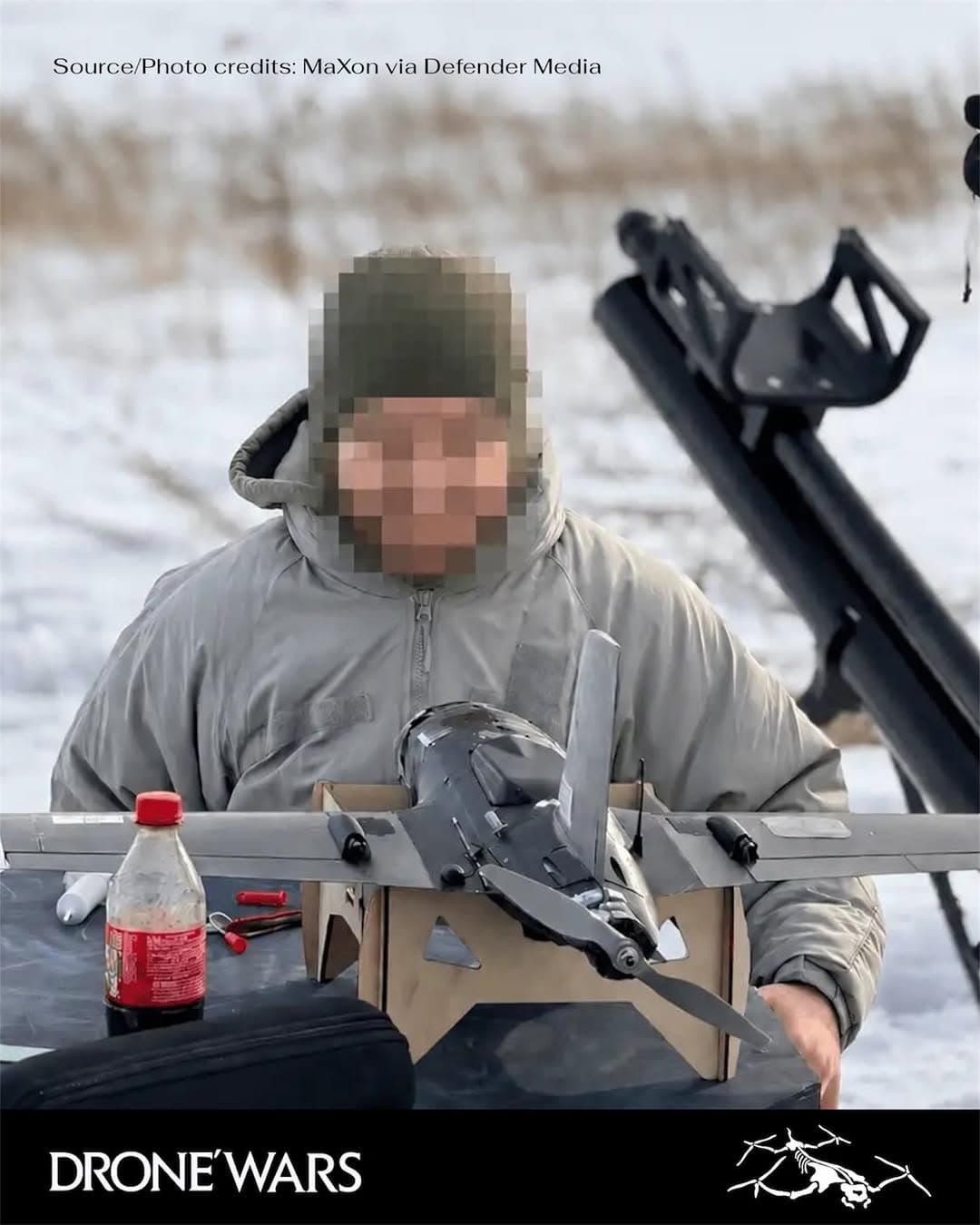
Ukraine's defense innovation platform Brave1 has confirmed that MaXon's fixed-wing interceptor drone is now operationally deployed. Costing approximately $3,500 per unit, with cruise speeds of 200–250 km/h and an AI-powered terminal guidance system, the drone achieved a 90–95% autonomous intercept success rate during testing in Kharkiv Oblast.
Highlights
- Ukraine has deployed MaXon's fixed-wing interceptor drone costing just $3,500 per unit to counter Russian kamikaze drones.
- The interceptor cruises at 200–250 km/h with a sprint speed of 300 km/h, a 30 km operational radius, and up to 70 minutes endurance.
- An AI terminal guidance system developed by a Dutch partner company handles final-phase detection, tracking, and kinetic impact.
- Testing in Kharkiv Oblast achieved a 90–95% autonomous intercept success rate with minimal operator intervention.
- The system uses beacon-based navigation instead of GPS, making it resistant to electronic warfare jamming.
Ukraine Counters Russian Long-Range Kamikaze Drones with Low-Cost Autonomous Interceptor
Ukraine has reportedly deployed a new autonomous interceptor drone system costing approximately $3,500 per unit, purpose-built for large-scale defense against Russian long-range kamikaze suicide drones. Ukraine's defense innovation platform Brave1 has confirmed the system's development progress and released operational footage showing the interceptor engaging targets in mid-air.
Specifications: A Small but Highly Effective Fixed-Wing Interceptor
Developed by MaXon, the interceptor is a compact fixed-wing drone capable of carrying a 1 kg (2.2 lb) payload with a maximum endurance of up to 70 minutes. Its cruise pursuit speed ranges from 200 to 250 km/h, with a short-burst top speed of up to 300 km/h. The operational radius is 30 km, matching the air defense zone it is designed to cover.
Operational Workflow: One-Button Launch, Autonomous Navigation
Operators need only press a single button to launch the interceptor. The system autonomously guides the drone to a preset altitude, where it holds in a standby pattern awaiting target assignment. Operators monitor data linked to radar feeds on their control station screens and initiate the engagement sequence once a target is selected.
Once activated, the interceptor flies toward the target in autopilot mode, with operators able to adjust approach speed and engagement method. During the final approach phase, an AI-powered terminal guidance system — reportedly developed by a Dutch partner company — takes over control, handling terminal-phase detection, tracking, and kinetic impact guidance.
Anti-Jamming Design: GPS-Free Navigation
Navigation throughout the entire mission relies on a beacon-based positioning system and onboard sensors rather than GPS satellite navigation, enabling the system to operate effectively even in intense electronic warfare or satellite navigation jamming environments. MaXon is responsible for developing the autopilot system that integrates beacon inputs and onboard sensor data, while the AI detection and terminal guidance software is provided by an unnamed Dutch partner company.
Combat Performance: 90–95% Autonomous Intercept Success Rate
According to test data from Kharkiv Oblast validated by Brave1, the system achieved a 90–95% autonomous intercept success rate, with operators requiring only minimal manual corrections during the engagement process.
The emergence of this low-cost interceptor drone offers Ukraine an economically viable air defense solution. Compared to conventional surface-to-air missile systems, the cost per intercept is dramatically lower, positioning the system to play a critical role in countering Russia's large-scale kamikaze drone offensives.
Source/Image: MaXon via Defender Media
原文來源: 查看原文
FAQ
Reviewed and published by the LAETimes editorial desk ·