3D-Printed Cruise Missiles: CoAspire Joins U.S. Air Force Program Targeting Fleet of 28,000 Weapons
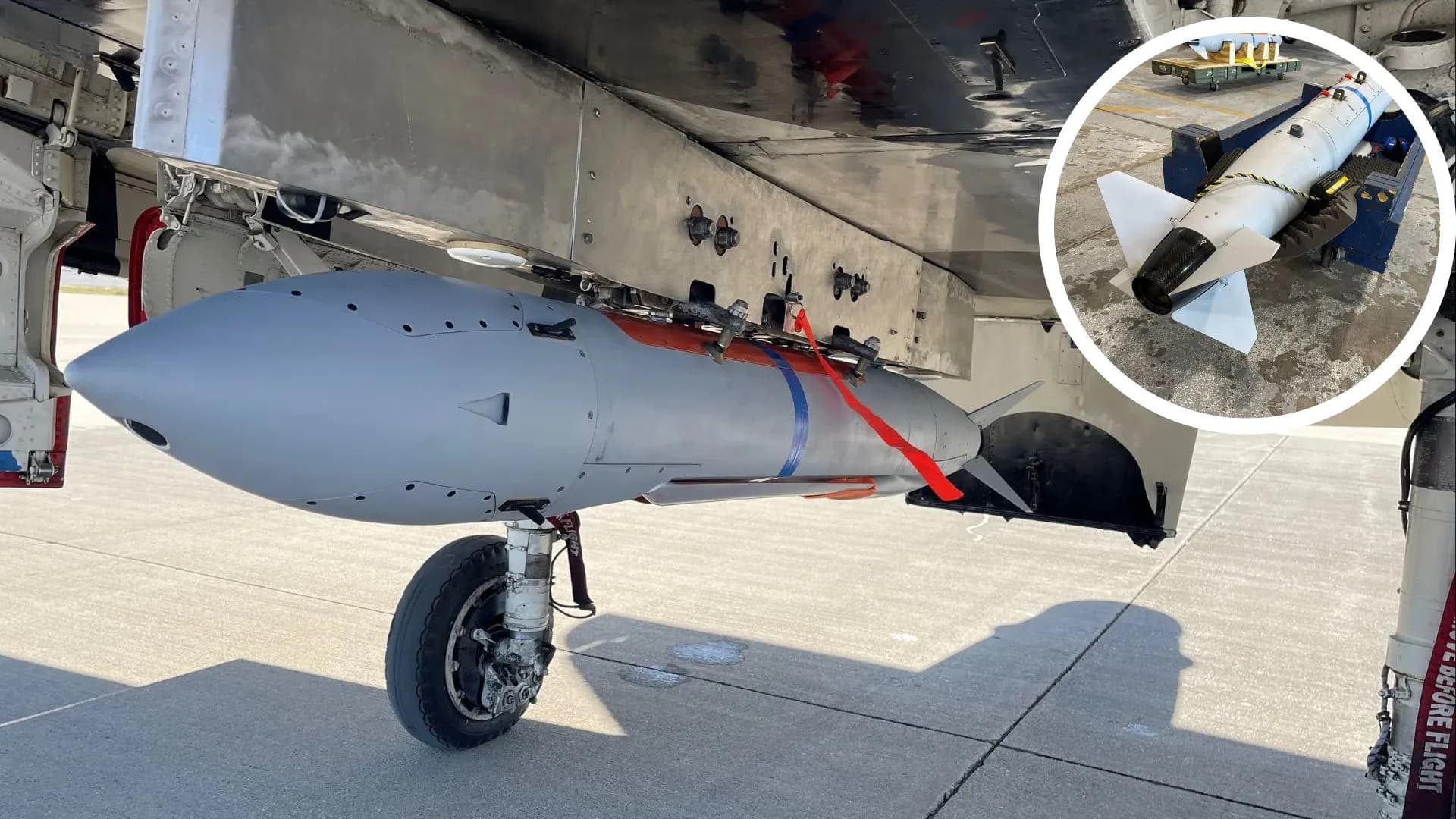
The U.S. Air Force has selected CoAspire — the only small business awarded a spot — for its Family of Affordable Mass Missiles (FAMM) multi-year indefinite-delivery framework. The program aims to produce up to 28,000 low-cost, long-range cruise missiles in its first five years, with CoAspire's 3D-printed RAACM offering air, surface, and ground-launch variants. Deployment could begin as early as fiscal year 2027, pending Congressional authorization.
Highlights
- The U.S. Air Force selected CoAspire as the only small business in the FAMM multi-year production framework for affordable long-range cruise missiles.
- The FAMM program targets delivery of up to 28,000 cruise missiles in its first five years, with production expected to begin in fiscal year 2027.
- CoAspire's RAACM uses a 3D-printed airframe, enabling faster design iteration and lower manufacturing costs compared to conventional methods.
- CoAspire's supplier network includes 56 Tier 1 suppliers across nearly every U.S. state, supporting large-scale domestic production.
- An extended-range variant, the RAACM-ER, is also available; both models can be sold to U.S. military branches and allied nations with DoD and State Department approval.
U.S. Air Force Advances Affordable Mass Missile Initiative
The U.S. Air Force has selected CoAspire to participate in the multi-year indefinite-delivery framework supporting the Family of Affordable Mass Missiles (FAMM) program — a major defense initiative aimed at producing thousands of low-cost, long-range cruise missiles for future combat operations.
CoAspire is the only small business included in the production framework. Subject to Congressional budget approval, the Air Force plans to begin fielding the missiles in fiscal year 2027 as part of a broader strategy to expand strike capacity and strengthen the U.S. defense industrial base.
An Affordable Missile for Mass Production
CoAspire will supply its Rapidly Adaptable Affordable Cruise Missile (RAACM) to the FAMM program. Development of the weapon began in late 2025 under an Other Transaction Agreement (OTA) awarded by the Air Force.
Ongoing work includes aircraft integration and flight testing. Progress during the development phase has helped secure CoAspire's position within the production framework, and the Air Force is evaluating the RAACM's potential for future procurement.
CoAspire states that its supplier network encompasses 56 Tier 1 suppliers spanning nearly every U.S. state. Should the program proceed, the company expects this network to support large-scale missile production.
"Our suppliers across the country are excited to support the Air Force in affordably procuring thousands of FAMM cruise missiles," said Doug Denneny, CoAspire's CEO, owner, and founder. He emphasized pride in being the sole small business selected for the production opportunity, describing it as a significant step toward expanding manufacturing jobs and enhancing the United States' affordable missile production capabilities.
Designed for Rapid, Large-Scale Production
The Department of Defense projects that the FAMM program could deliver up to 28,000 missiles in its first five years, though this remains contingent on Congressional authorization and appropriations. Production is expected to formally commence in fiscal year 2027.
Multiple defense organizations are backing the initiative, including the Office of the Under Secretary of Defense for Acquisition and Sustainment, the Armaments Acceleration Council, the Office of Strategic Capital, and the U.S. Air Force. Program management will be overseen by the Air Force Armament Directorate at Eglin Air Force Base, Florida.
Additive Manufacturing as a Competitive Edge
The RAACM is available in multiple configurations for air-launch, surface-launch, and ground-launch missions. The baseline variant can fly hundreds of miles and features a 3D-printed airframe designed to maximize internal fuel capacity.
CoAspire notes that additive manufacturing reduces the need for tooling and lowers labor costs, while allowing engineers to make design changes without halting the production line. This approach is expected to compress the development timeline for new missile variants from years to a matter of months.
The company also offers an extended-range variant, the RAACM-ER. Both missiles are available to all U.S. military branches and allied nations, subject to approvals from the Department of Defense and the Department of State.
The FAMM program reflects the U.S. Air Force's growing strategic emphasis on deploying affordable precision weapons at greater scale. Beyond building up missile stockpiles, officials also hope the initiative will attract non-traditional manufacturers into the defense sector, thereby creating a more resilient domestic supply chain.
原文來源: 查看原文
FAQ
Newsletter
Subscribe to our Low-Altitude Industry Newsletter
Daily curated news on low-altitude economy and drone industry, delivered to your inbox.
Reviewed and published by the LAETimes editorial desk ·