U.S. Air Force Awards AEVEX Aerospace $50M Contract to Develop GPS-Denied Long-Range Strike Drone
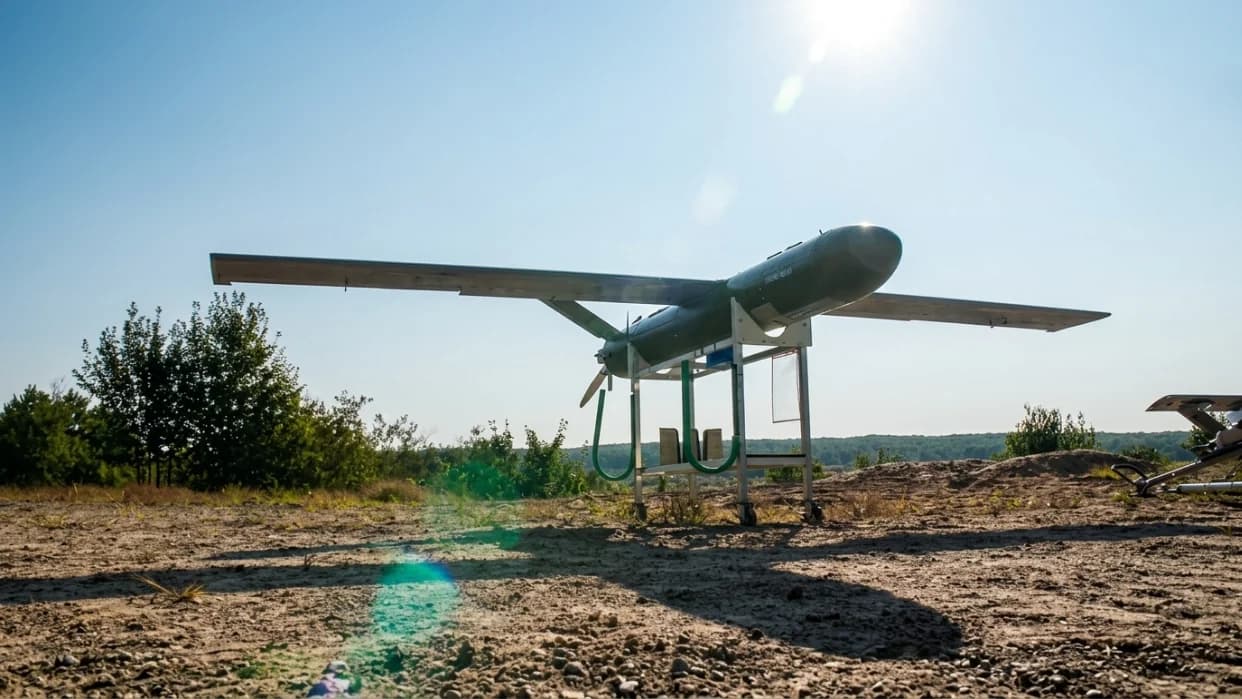
The U.S. Air Force has signed a $50 million contract with AEVEX Aerospace to develop an advanced long-range strike drone capable of operating autonomously in GPS-denied environments. The program aims to strengthen future precision strike capabilities and represents a key strategic move to counter growing electronic warfare threats from near-peer adversaries.
Highlights
- The U.S. Air Force signed a $50 million contract with AEVEX Aerospace to develop a long-range strike drone capable of autonomous operation in GPS-denied environments.
- The program addresses a critical vulnerability of GPS-dependent drones against electronic warfare jamming and spoofing by near-peer adversaries including China and Russia.
- Key navigation technologies include inertial navigation systems (INS), vision-aided navigation, multi-sensor fusion, and onboard AI autonomy.
- The contract marks a major breakthrough for AEVEX Aerospace in the military long-range strike UAS market, validating the company's autonomous systems expertise.
- The initiative reflects the Pentagon's broader strategy to develop resilient drone platforms capable of operating in Anti-Access/Area Denial (A2/AD) electromagnetic environments.
WASHINGTON — The U.S. Air Force has announced a $50 million contract with AEVEX Aerospace to develop an advanced long-range strike drone capable of executing missions in GPS-denied combat environments, marking a significant milestone for the company's Long-Range Strike UAS program.
Background and Strategic Significance
As electronic warfare and satellite signal jamming technologies become increasingly sophisticated on the modern battlefield, drone systems that rely on conventional GPS navigation face serious vulnerabilities in high-threat environments. The contract's core objective is to address this critical weakness — enabling unmanned aircraft to maintain autonomous flight and precision strike capabilities even when satellite positioning signals are jammed or spoofed.
The program is designed to bolster the U.S. military's future long-range precision strike capabilities, leveraging autonomous navigation technology to allow drones to complete missions independently in complex, GPS-degraded operational environments.
About AEVEX Aerospace
AEVEX Aerospace is a U.S. defense technology company specializing in unmanned aircraft systems and intelligence, surveillance, and reconnaissance (ISR) technologies. Securing this high-profile Air Force contract not only validates the company's expertise in autonomous drone technology, but also represents a significant breakthrough for AEVEX in the military long-range strike UAS market.
Technical Challenges and Development Directions
Achieving autonomous flight in GPS-denied environments requires integrating a range of alternative navigation technologies, including:
- Inertial Navigation Systems (INS): Using accelerometers and gyroscopes for dead-reckoning navigation
- Vision-Aided Navigation: Employing computer vision to identify terrain features for positioning
- Multi-Sensor Fusion: Combining data from radar altimeters, celestial navigation, and other diverse sources
- AI-Driven Autonomy: Allowing onboard artificial intelligence to independently determine flight paths when communications are disrupted or signals are jammed
Industry Outlook
This contract is a concrete manifestation of the Pentagon's recent push to develop operational capabilities for Anti-Access/Area Denial (A2/AD) environments. As potential adversaries such as China and Russia continue to advance their electronic warfare and anti-access capabilities, the U.S. military urgently needs drone platforms that can operate independently in complex electromagnetic environments.
The advancement of the AEVEX Long-Range Strike UAS program is expected to provide the U.S. Air Force with a more resilient long-range strike option in future high-intensity conflicts, and may have broad demonstrative implications for military applications of autonomous navigation technology.
Source: Defense Feeds, Washington
原文來源: 查看原文
FAQ
Newsletter
Subscribe to our Low-Altitude Industry Newsletter
Daily curated news on low-altitude economy and drone industry, delivered to your inbox.
Reviewed and published by the LAETimes editorial desk ·