India Approves $5.5 Billion Defence Procurement Package to Boost Counter-Drone and Air Defence Capabilities
India's Defence Acquisition Council (DAC), chaired by Defence Minister Rajnath Singh, has approved a defence procurement package worth approximately ₹520 billion (around $5.5 billion USD). Key acquisitions include the Akash Tarang counter-drone electronic warfare system, Medium-Range Surface-to-Air Missiles (MR-SAM), Very Short Range Air Defence Systems (V-SHORADS), and loitering munitions, as India continues to modernise its multi-layered air defence network across all three services.
Highlights
- India's DAC approved a defence procurement package worth approximately ₹520 billion ($5.5 billion USD) under the Acceptance of Necessity procedure, chaired by Defence Minister Rajnath Singh.
- The Akash Tarang counter-drone electronic warfare system — designed to jam and disable enemy UAVs — is among the highest-profile items approved in the package.
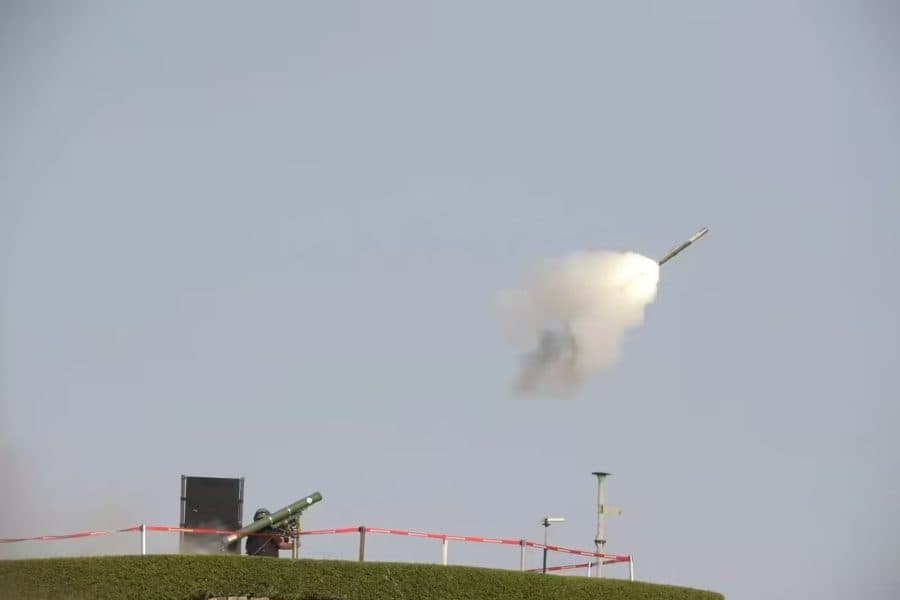
- V-SHORADS was approved following a successful DRDO test firing at the Integrated Test Range earlier in 2025, and features multi-spectral sensors for enhanced air target engagement.
- The Indian Navy was cleared to procure Naval Shipborne Unmanned Aerial Systems (NSUAS) to boost ISR and situational awareness capabilities from surface vessels.
- India's defence budget for 2026–27 stands at ₹7.85 trillion, a 15.19% year-on-year increase, supporting an accelerating multi-layered air defence modernisation programme.
India has taken a significant step in strengthening its air defence and counter-drone capabilities, with the Defence Acquisition Council (DAC) approving a series of procurement proposals totalling approximately ₹520 billion (around $5.5 billion USD). Chaired by Defence Minister Rajnath Singh, the DAC granted Acceptance of Necessity (AoN) for a broad package covering counter-drone systems, surface-to-air missiles, and various other air defence assets, as well as modernisation programmes for the Indian Navy and Air Force.
Counter-Drone and Air Defence Capabilities Prioritised
One of the most notable items in the package is the procurement of the Akash Tarang Counter-Drone Electronic Warfare System, designed to detect, track, and neutralise hostile drones through electronic countermeasures. According to India's defence research establishment, Akash Tarang targets the radio frequencies used to control unmanned aerial vehicles, enabling operators to disrupt or disable enemy drones.
The Indian Army has also been cleared to acquire a new Medium-Range Surface-to-Air Missile (MR-SAM) weapon system to strengthen protection against a range of aerial threats.
The DAC additionally approved the procurement of the Very Short Range Air Defence System (V-SHORADS), which integrates multi-spectral sensors to enhance resilience against countermeasures and improve engagement effectiveness against aerial targets. This approval follows the successful test firing of V-SHORADS by the Defence Research and Development Organisation (DRDO) at the Integrated Test Range earlier this year.
Additional Battlefield Capabilities Approved
Beyond air defence, the DAC approved the Army's acquisition of jet-powered loitering munitions (kamikaze drones), alongside man-portable anti-tank guided missiles and active protection systems for armoured vehicles.
The introduction of loitering munitions is intended to expand the Army's precision strike and electronic warfare options, while active protection systems aim to improve tank survivability in modern threat environments.
Naval and Air Force Modernisation
The Indian Navy received approval to procure Naval Shipborne Unmanned Aerial Systems (NSUAS), enhancing intelligence gathering, surveillance, and battlefield situational awareness through advanced airborne sensors. Other approved items include Multi Influence Ground Mines and the establishment of a land-based test facility for electric propulsion systems.
For the Indian Air Force, the DAC approved the acquisition of Fixed-Wing High-Altitude Pseudo-Satellites (FW-HAPS) for persistent intelligence, surveillance, and reconnaissance (ISR) missions, as well as telecommunications and remote sensing operations.
Continued Investment in Multi-Layered Air Defence
This latest procurement round is part of India's broader push to modernise its multi-layered air defence architecture. In March this year, the DAC had already approved procurement proposals worth approximately ₹2.38 trillion (around $25.1 billion USD), covering air defence track-and-chase systems and additional S-400 long-range surface-to-air missile systems.
On the budgetary front, the Indian government allocated ₹7.85 trillion to the Ministry of Defence in the Union Budget 2026–27, announced in February — a 15.19% increase over the previous year's budget, underscoring New Delhi's strong commitment to defence modernisation.
The latest approvals highlight India's sustained drive to enhance its capabilities for detecting, disrupting, and destroying aerial threats — particularly as drones and unmanned systems play an increasingly decisive role in modern conflict.
Image caption: DRDO conducts V-SHORADS test firing (Image credit: Indian Ministry of Defence)
原文來源: 查看原文
FAQ
Reviewed and published by the LAETimes editorial desk ·


