Michigan Drone Operator Convicted by Jury, Fined $575
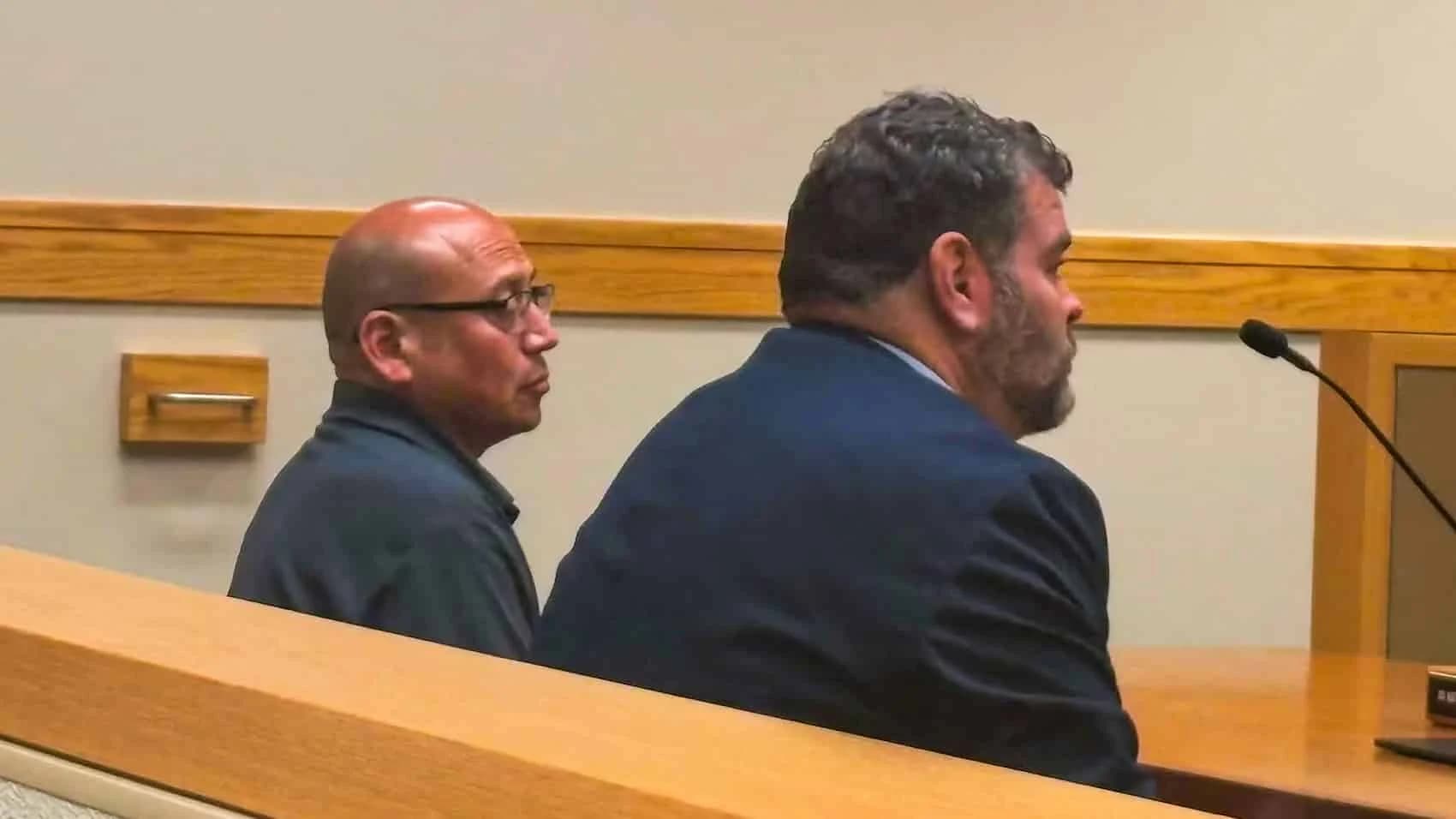
A six-person jury in Bay County, Michigan, convicted digital content creator Ray A. Rocha on May 1, 2026, for flying a drone and livestreaming to Facebook during an active police search operation in November 2024. Judge Timothy J. Kelly sentenced Rocha to a $575 fine on June 16 under Michigan's Unmanned Aircraft Systems Act of 2016, marking the first documented jury conviction under the law.
Highlights
- A six-person Bay County, Michigan jury convicted digital creator Ray A. Rocha on May 1, 2026, for interfering with an active police search operation by flying a drone in the same airspace and livestreaming to Facebook.
- Judge Timothy J. Kelly sentenced Rocha to a $575 fine on June 16, 2026, under Michigan's Unmanned Aircraft Systems Act of 2016 — the first documented jury conviction under that statute.
- A deputy testified that Rocha's uncoordinated drone forced him to disable the law enforcement drone's return-to-home function throughout the operation to avoid a potential mid-air collision.
- Rocha's Facebook livestream showed him zooming in on the police drone, which the prosecution argued could have revealed deputies' ground positions to fleeing suspects.
- Rocha's flight did not violate FAA regulations; he used a DJI Air 3 and DJI Mavic 3 Pro, but the jury found that federal compliance did not preclude criminal liability under Michigan state law.
Michigan Drone Operator Convicted by Jury, Fined $575
A six-person jury in Bay County District Court, Michigan, convicted Bay City digital content creator Ray A. Rocha on May 1, 2026. Rocha was charged with flying a drone in the same airspace as a police search operation on November 10, 2024, thereby interfering with law enforcement activity. Judge Timothy J. Kelly subsequently sentenced Rocha on June 16 to a $575 fine under Michigan's Unmanned Aircraft Systems Act of 2016 — the first documented jury conviction under that statute.
Background: The November 2024 Incident
The case stems from a foot-pursuit operation. Bay County Sheriff's deputies were tracking several suspects who had abandoned a stolen vehicle and fled on foot into a wooded area near the intersection of West Arnold Street and South Warner Street in Bay County. The Sheriff's Office deployed its own drone for aerial search and tracking. During the operation, Rocha launched a civilian drone in the same area and began livestreaming the scene to Facebook.
The deputy operating the law enforcement drone noticed a second aircraft in the airspace and began treating it as a hazard rather than a routine media presence. That deputy's trial testimony formed the cornerstone of the prosecution's case. Two drones, no coordination mechanism, no NOTAM, and ground personnel operating beneath both aircraft — these factors defined the legal context of the case.
Near-Collision and Livestream Content Proved Decisive
Two specific pieces of evidence elevated the case from a civil matter to a jury conviction.
The first was a near-miss incident. The deputy testified that had he activated the return-to-home function on the law enforcement drone at any point during the operation, the two aircraft could have collided mid-air. Because Rocha's drone was flying in the same airspace without coordination, the deputy was forced to forgo using that automatic safety feature throughout the entire operation.
The second was the livestream content itself. Rocha's Facebook livestream did not merely document the scene from above; according to the deputy's testimony, Rocha deliberately zoomed his camera in on the law enforcement drone, showing viewers how close his aircraft was to the police unit.
That close-up shot — broadcast publicly — revealed the position of the law enforcement drone and, by extension, the search area where deputies were operating on the ground. The prosecution argued — and the jury agreed — that the livestream could have exposed deputies' locations to anyone watching, including the fleeing suspects.
Defense Arguments Rejected by the Jury
According to MLive, defense attorney Joseph M. Albosta built his case around two constitutional arguments.
The first invoked the First and Fourteenth Amendments to the U.S. Constitution, arguing that Rocha's drone filming and livestreaming constituted protected newsgathering activity — specifically, a digital creator documenting a public safety event.
The second was a federal preemption argument: that exclusive jurisdiction over U.S. airspace belongs to the FAA, not a local sheriff's office, and therefore county-level law enforcement had no authority to characterize a civilian drone flight as interference.
The six-person jury rejected both arguments. The legal mechanics are worth noting: the Michigan Unmanned Aircraft Systems Act of 2016 does not directly regulate airspace — which would have triggered an FAA preemption dispute — but instead criminalizes specific conduct that interferes with public safety operations from the ground or air. The First Amendment question is more nuanced, and the defense may pursue an appeal, but at the trial level, the jury's conclusion was that obstructing an active law enforcement operation does not constitute protected speech.
It is worth noting that Rocha was livestreaming from a safe distance permitted by his equipment, and his public channel shows he used a DJI Air 3 and a DJI Mavic 3 Pro — the latter equipped with 7x to 28x optical zoom. The flight itself did not violate any FAA regulations.
The jury's answer was clear: even if the camera's flight complied with federal rules, using a drone to interfere with an active police search still constitutes a criminal offense. Whether the collision risk asserted under oath by the deputy is consistent with what the operator himself recorded will likely be a central point of contention if the case goes to appeal.
Michigan's Unmanned Aircraft Systems Act of 2016, Explained
Michigan's Unmanned Aircraft Systems Act was passed in 2016 and stands as one of the earlier state-level drone laws in the United States. The Act includes a specific offense — drone interference with public safety — defined broadly enough to cover Rocha's conduct: flying, recording, or transmitting imagery near the airspace of an emergency response or law enforcement operation in a manner that obstructs or hinders it.
The offense is a misdemeanor, with a statutory maximum of 90 days in jail and a $500 fine. Rocha was ordered to pay $575, with the amount above the base fine representing court costs.
The conviction sets a precedent for Michigan. Prior to this case, the statute was largely enforced through civil settlements and warnings. A jury verdict at the district court level provides significantly stronger legal grounding for prosecutors statewide who may face similar cases.
DroneXL Analysis
The real significance of this case is not the $575 fine. It is that six jurors watched a Facebook livestream of a police drone operation, heard a defense attorney invoke the First Amendment on behalf of the operator, and concluded that interference — not free speech — was the central issue. That is the actual precedent. The fine is incidental; the criminal record is the lasting consequence.
This case also fits into a broader pattern DroneXL has been tracking this week: the Texas Department of Public Safety has seized eight drones within the Houston World Cup Temporary Flight Restriction (TFR) and is pursuing felony charges in at least one case. A Michigan jury has now convicted a digital creator under a state law that has been on the books for nearly a decade. The statutes differ, the airspace contexts differ, and the operators differ — but the trend for civilian operators who fly into active law enforcement airspace without coordination points in the same direction.
In this case, the non-negotiable line is operational safety. Drones always pose a risk to people below, but as long as operators comply with the rules, they have every right to document and report on what is happening in their communities.
原文來源: 查看原文
FAQ
Reviewed and published by the LAETimes editorial desk ·