Harvard Develops Silicon Chip That Uses Electric Current and Water to Simultaneously Synthesize 64 DNA Sequences
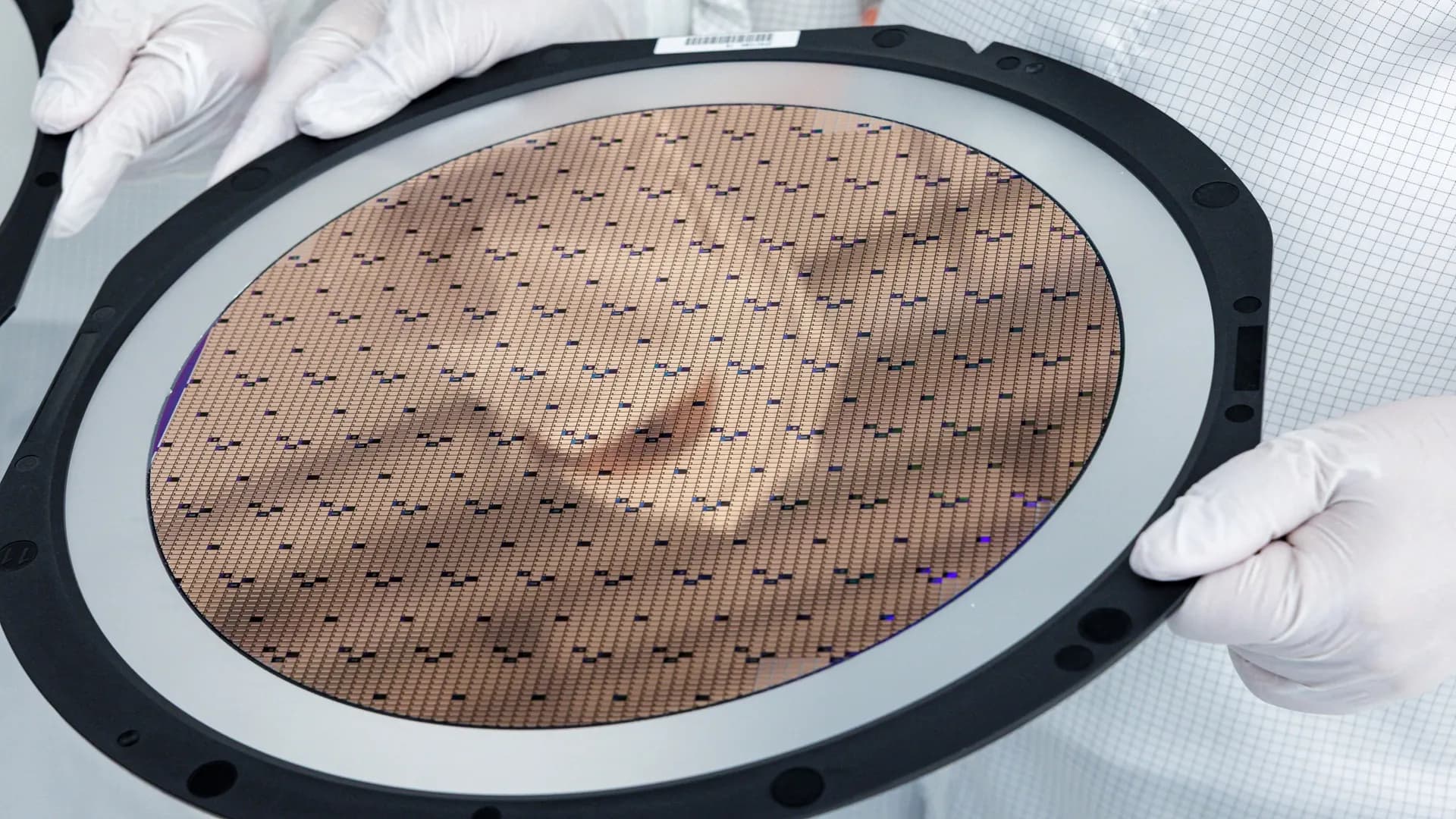
Harvard University researchers have developed a semiconductor chip capable of simultaneously synthesizing 64 different DNA sequences—each up to 39 nucleotides long—using electric current and aqueous enzymatic reactions. The method offers a greener alternative to conventional phosphoramidite chemistry, which relies on large volumes of organic solvents. The team successfully encoded a 169-byte text message into DNA, demonstrating the platform's potential for DNA data storage. Findings have been published in Nature Electronics.
Highlights
- Harvard University researchers developed a semiconductor chip that simultaneously synthesizes 64 different DNA sequences, each up to 39 nucleotides long, using electric current and aqueous enzymatic reactions.
- The chip uses concentric ring electrodes at each of its 64 synthesis sites to locally control pH, enabling precise enzymatic DNA elongation without cross-contaminating neighboring sites.
- The new method replaces conventional phosphoramidite chemistry, which requires large volumes of organic solvents, making it a greener alternative for synthetic DNA production.
- The research team encoded a 169-byte text message into the 64 synthesized DNA sequences, demonstrating the platform's potential for DNA-based digital data storage.
- The study, published in Nature Electronics, found that the bottleneck for scaling synthesis density lies in the deprotection chemistry, not the chip's electronic architecture.
Researchers at Harvard University have developed a semiconductor chip capable of simultaneously synthesizing 64 different DNA sequences using electric current and aqueous enzymatic reactions, offering a potential alternative to conventional DNA manufacturing methods.
The chip triggers DNA synthesis at specific sites on its surface through a locally controlled electrical mechanism. According to the research team, this approach can eliminate the large volumes of organic solvents required by phosphoramidite chemistry—the method currently dominant in synthetic DNA production.
Synthetic DNA is a critical tool in modern biotechnology, with applications spanning diagnostic testing, genome engineering, and cancer research. While enzymatic DNA synthesis has attracted growing interest as a greener alternative, scaling it to match traditional methods has remained a persistent challenge.
The researchers note that enzymatic approaches have so far been limited to synthesizing roughly a dozen DNA sequences simultaneously. In the new study, the chip can generate 64 distinct DNA sequences in parallel, each up to 39 nucleotides in length.
Electric Current Guides DNA Synthesis with Precision
DNA synthesis proceeds one nucleotide at a time. After each addition, a temporary blocking group must be removed before the next nucleotide can be attached.
To control this process, the Harvard team designed a chip with 64 synthesis sites. Each site features two concentric ring-shaped electrodes surrounding a DNA strand anchored at the center.
When activated, the inner electrode generates protons that lower the pH around a specific DNA strand, creating an acidic environment that promotes enzymatic DNA elongation. The outer electrode simultaneously consumes diffusing protons, preventing the low-pH zone from spreading to neighboring sites.
By repeating this process at selected locations during each synthesis cycle, the chip can build multiple distinct DNA sequences in parallel.
The research builds on a semiconductor platform originally developed for neuroscience applications.
"A hallmark of our chip is precision current injection, which we originally used to penetrate neuronal cell membranes for intracellular access," said Donhee Ham, John A. and Elizabeth S. Armstrong Professor of Engineering and Applied Sciences at Harvard. "At some point, we began to wonder whether we could redirect the same electrical control from cells to molecules—replacing electrodes aimed at neurons with ring electrode pairs to locally modulate pH for DNA synthesis. It worked."
Potential for DNA Data Storage
Beyond biomedical applications, the researchers also explored the platform's potential for DNA data storage.
Using the 64 synthesized DNA sequences, the team encoded a 169-byte text message, demonstrating the feasibility of storing digital information in DNA molecules.
The researchers argue that water-based synthesis methods will become increasingly important if DNA production scales dramatically in the future.
"DNA data storage demands DNA synthesis at a scale far beyond today's needs," said Woo-Bin Jung, co-first author of the study. "This is where aqueous enzymatic synthesis matters—if sequences far exceeding 64 can be synthesized simultaneously, it could provide an environmentally friendly pathway for large-scale DNA writing."
The team also attempted to increase the density of synthesis sites on the chip. Although those experiments were unsuccessful, the results revealed that the primary bottleneck lies in the chemistry of blocking group removal rather than in the chip's electronic architecture.
"The chip did what we asked of it: it confined the low-pH environment to specific sites. The limitation comes from the deprotection chemistry, not the silicon chip itself," said Han Sae Jung, co-first author of the paper.
The research has been published in the academic journal Nature Electronics.
原文來源: 查看原文
FAQ
Newsletter
Subscribe to our Low-Altitude Industry Newsletter
Daily curated news on low-altitude economy and drone industry, delivered to your inbox.
Reviewed and published by the LAETimes editorial desk ·