French Rafale Jets Integrate 68mm Laser-Guided Rockets to Boost Anti-Shahed Drone Capability
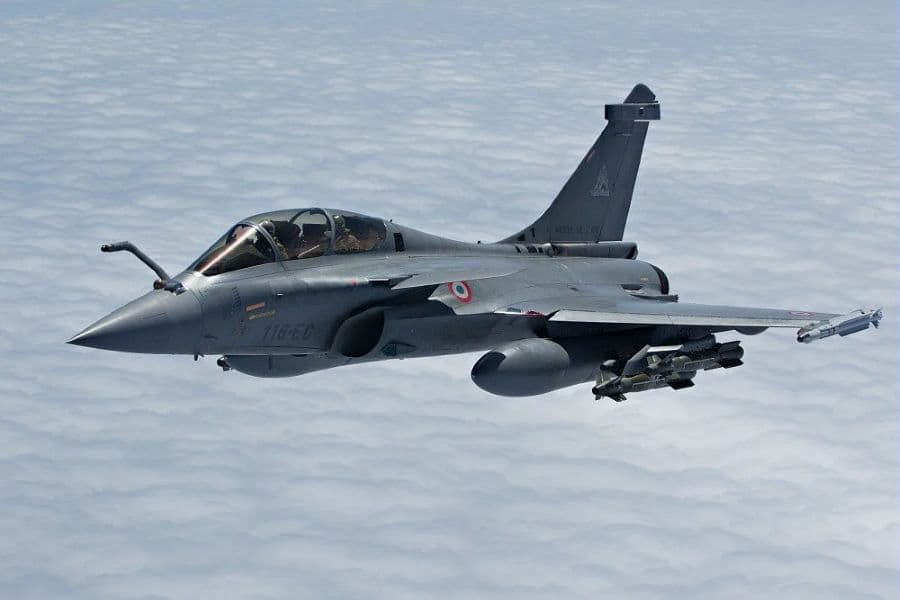
France's defence procurement agency DGA has announced the successful completion of testing for the LADAC (Laser Anti-Drone Air Combat) system on the Rafale fighter jet, integrating 68mm laser-guided rockets as a low-cost option to intercept drones such as the Shahed. The programme reached initial operational capability in under eight months from contract signature, with first deliveries to the French Air and Space Force expected by end of July 2026.
Highlights
- France's DGA completed LADAC system testing on the Rafale in under eight months from contract signature (31 December 2025), reaching initial operational capability ahead of schedule.
- The Rafale's LADAC system integrates 68mm laser-guided rockets — previously used on the Tiger helicopter — via the TALIOS targeting pod to intercept Shahed-type drones at low cost.
- First LADAC equipment deliveries to the French Air and Space Force are scheduled by end of July 2026, covering rocket pods, laser-guided rockets, and LADAC-enabled TALIOS pods.
- Dassault Aviation and Harmattan AI demonstrated Rafale–drone teaming for electronic warfare, with the NAMIB-equipped drone geolocating air defence radar signals and passing coordinates to the Rafale for a simulated SEAD strike.
- The LADAC counter-drone capability and the new EW teaming concept together expand the Rafale's role in multi-domain operations against both drone swarms and integrated air defence systems.
France's Rafale fighter jet has gained a new counter-drone capability — following the successful integration of 68mm laser-guided rockets, the aircraft now has a low-cost option for engaging drone threats such as the Iranian-designed Shahed series.
France's Directorate General of Armaments (DGA) announced the successful completion of testing for the LADAC (Laser Anti-Drone Air Combat) system, with the programme reaching its first initial operational capability (IOC) milestone in under eight months from contract signature.
The test campaign was overseen by the DGA and conducted in cooperation with the French Air and Space Force's Aviation Expertise Centre (CEAM), Dassault Aviation, and Thales.
A Dedicated Counter-Drone Capability
The development of this capability stems from the French Air and Space Force's requirement for a low-cost yet effective counter-drone weapon.
Following an evaluation of multiple solutions in late 2025, the DGA selected an already-certified 68mm laser-guided rocket — previously integrated on the Tiger attack helicopter — and adapted it for use on the Rafale.
Under an urgent operational requirement programme, the DGA signed contracts with Dassault Aviation and Thales on 31 December 2025, integrating the rocket system onto the Rafale using the TALIOS laser designation pod.
From February 2026 onwards, Rafale aircraft underwent a series of tests validating: drone detection via radar, target tracking through the TALIOS pod, laser designation, rocket firing, and successful engagement of airborne targets.
According to the DGA, the LADAC capability will enable the Rafale to destroy Shahed-type drones using laser-guided rockets, giving the aircraft a dedicated counter-UAS (C-UAS) operational capability.
The first batch of equipment — comprising rocket launcher pods, laser-guided rockets, and TALIOS targeting pods loaded with the LADAC mode — is expected to be delivered to the French Air and Space Force by the end of July 2026, laying the groundwork for full system qualification.
Expanding Electronic Warfare Capabilities
Separately, Dassault Aviation and Harmattan AI recently completed a flight demonstration showcasing the Rafale's ability to conduct electronic warfare missions in coordination with an unmanned aircraft.
The trial involved a Rafale F4 aircraft operating in conjunction with a drone carrying Harmattan AI's NAMIB electronic warfare payload.
During the demonstration, the drone system detected, identified, and precisely geolocated electromagnetic emissions from an air defence radar located several dozen kilometres away, before transmitting the target coordinates to the Rafale, which then simulated a strike on the radar.
The demonstration highlighted the Rafale's integration with autonomous systems for electronic warfare and Suppression of Enemy Air Defences (SEAD) missions, further expanding its role in future multi-domain operations and complementing the newly developed counter-drone capability.
Image credit: Dassault Aviation
原文來源: 查看原文
FAQ
Reviewed and published by the LAETimes editorial desk ·