Ukraine Dismantles Russian Kalibr Cruise Missile: 80–90% of Guidance Components Found to Be Foreign-Made, Raising Doubts Over Sanctions Effectiveness
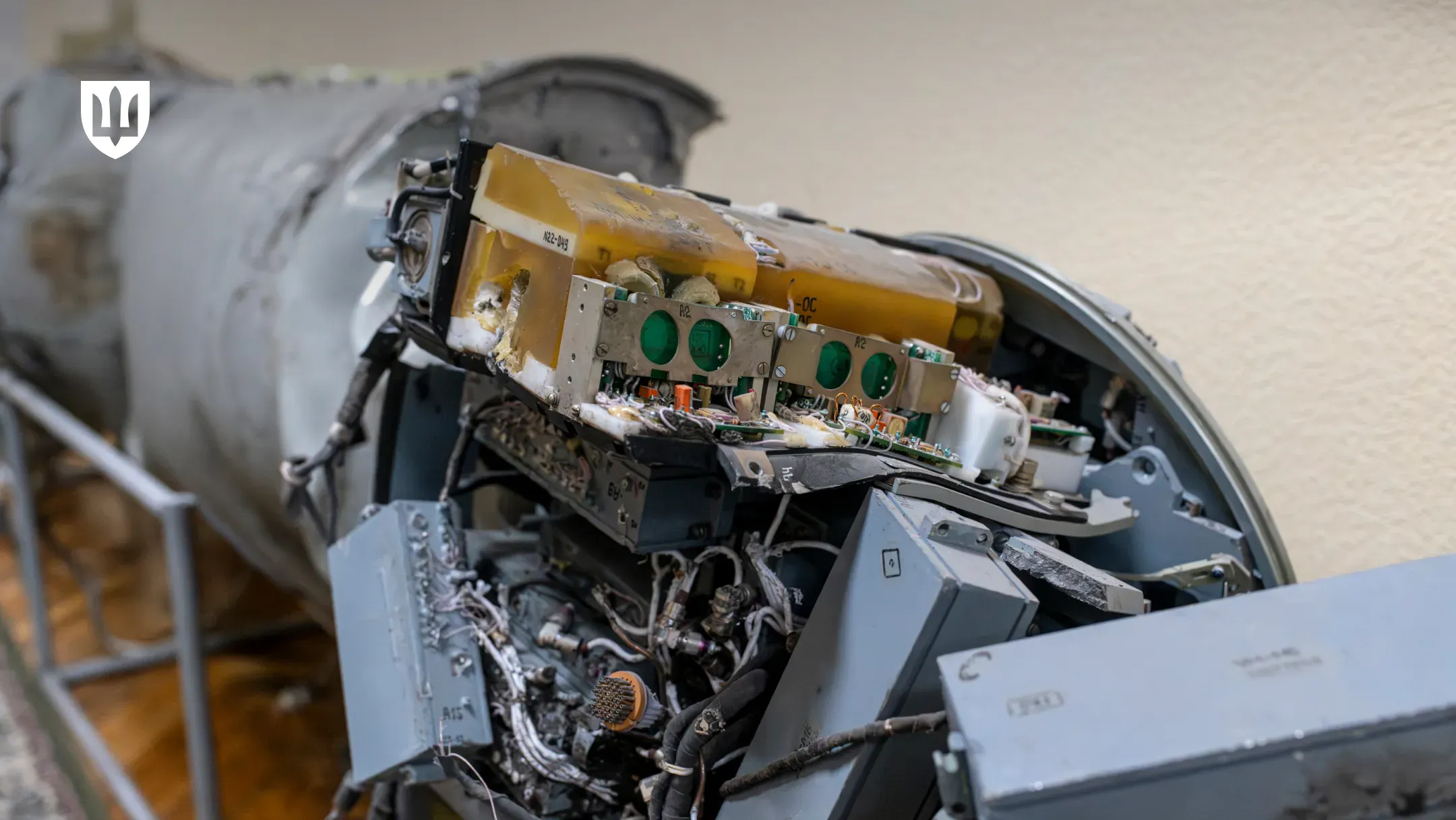
Ukrainian military engineers have conducted a full teardown of intercepted Russian Kalibr cruise missiles, finding that 80–90% of guidance system components are of foreign origin. The analysis exposes significant gaps in international sanctions imposed since February 2022. A separate finding revealed that Russia has begun fitting Kalibr missiles with cluster warheads, expanding their area-of-effect lethality.
Highlights
- Ukrainian military engineers confirmed that 80–90% of the Kalibr cruise missile's guidance system components are foreign-manufactured, verified part-by-part by military officials.
- Kalibr onboard computers (OBCs) produced in 2025 still contain imported parts, suggesting Russia's attempts to substitute domestic electronics failed due to insufficient precision.
- Ukraine's Ministry of Defence identified the designers and all electronic component suppliers involved in Kalibr production and is processing the data under sanctions policy.
- Russia fitted the Kalibr with a cluster warhead for the first time, observed in missiles intercepted in spring 2026, expanding lethality against dispersed targets such as airfields and hangars.
- The Kalibr's SN-99 navigation system was originally designed in Ukraine in the 2000s and is now mass-produced in Russia, while its supply chain relies on Western components obtained in violation of export controls.
Ukraine Dismantles Russian Kalibr Cruise Missile: 80–90% of Guidance Components Found to Be Foreign-Made
The Ukrainian military has announced the successful recovery and comprehensive teardown of Russian Kalibr cruise missiles, revealing that the weapons continue to rely heavily on foreign-manufactured components despite sweeping international sanctions.
Board-by-Board, Component-by-Component Analysis
Amid a backdrop of large-scale Russian missile and drone strikes against Ukrainian targets, Ukrainian forces managed to recover intact Kalibr missiles. Military engineers and scientists subsequently disassembled multiple intercepted rounds "board by board, component by component," examining each part, compiling detailed structural and functional diagrams, and identifying the manufacturer of every element.
The Kalibr 3M14 is a subsonic, long-range terrain-following cruise missile capable of striking targets more than 1,500 km from its launch point. It carries a 450 kg warhead and is equipped with a four-channel guidance system — GPS satellite navigation, an inertial navigation system (INS), a radio altimeter, and a terminal radar seeker — and can fly as low as 20 metres above the water surface to reduce its detection profile.
Sanctions Under Scrutiny: 80–90% of Guidance Electronics Are Foreign-Made
Engineers who analysed the missile stated that approximately 80–90% of the guidance system's electronic components were manufactured abroad, exposing serious loopholes in the international sanctions regime imposed following Russia's full-scale invasion in February 2022.
Ukraine's Ministry of Defence stated in its report: "More than 80–90% of the guidance system circuit boards are composed of foreign-made components. This is a confirmed fact, not an estimate: every part is labelled and has been verified by military officials."
Notably, although Russia reportedly made efforts between 2023 and 2024 to shift toward domestically produced components, the missile's onboard computer (OBC) — said to have been manufactured in 2025 — still contained imported parts. Ukrainian engineers surmised that domestically produced components likely failed to meet required standards, prompting a return to previously proven foreign configurations.
The report noted: "Experts believe that switching to domestic electronic components may have reduced the precision of the guidance system, which is why the manufacturer reverted to the previously verified configuration."
Western Components Continue to Flow Into Russian Weapons Systems
Ukraine's Ministry of Defence did not publicly disclose the exact countries of origin for the components, but stated that the primary design bureau behind the Kalibr and all electronic component manufacturers involved in its production had been identified, with the data being processed further under sanctions policy.
Kyiv has previously accused Russia of procuring key electronic components from China and Hong Kong, and identified Central Asian countries, as well as Turkey, the UAE, and India, as likely transit routes for Western-origin parts.
Western components have been found frequently in recovered Russian weapons. For example, a Russian S-70 "Okhotnik" drone shot down in October 2024 was reported to contain components from U.S. firms Analog Devices, Texas Instruments, and Xilinx-AMD, as well as Switzerland's STMicroelectronics and Germany's Infineon Technologies.
Russia's Geran-2 drone — one of the most persistent threats to Ukraine — has also been found to contain Western components. Vladyslav Vlasiuk, Ukraine's Presidential Commissioner for Sanctions Policy, disclosed earlier this year that the lead time for Western components reaching Russia had been reduced to the "critical minimum."
Other missiles — including the Kh-101, Kh-69, Iskander, Kinzhal, Zircon, Kh-59, and even the Oreshnik — have similarly been alleged to contain foreign-made parts.
Navigation System Traces Back to Ukrainian Design
The Ministry of Defence report also noted that the SN-99 navigation system used in the Kalibr is regarded as one of the missile's critical subsystems, and that its design originated in Ukraine, having been developed in the 2000s. "The system is now mass-produced in Russia, but its design foundation is Ukrainian," the report stated.
Ukraine's official military social media accounts commented: "The navigation system now used to target Ukrainian cities is built on Ukrainian engineering expertise. The electronic supply chain that maintains its accuracy runs through Western component manufacturers — whose products have reached Russian hands via military procurement channels in violation of export controls."
The Ministry also assessed that Russia has not yet exhausted stockpiles of components acquired before sanctions took effect. The report further noted that certain Kalibr components are standardised across other Russian missile systems — the onboard computer, tail section, and satellite navigation system are also used in the Iskander, and some modules are identical to those found in the Bastion coastal defence system.
Kalibr Fitted With Cluster Warhead for the First Time
The Ukrainian Ministry of Defence report revealed an additional significant finding: Russia has modified the Kalibr to carry a cluster warhead, expanding its area-effect lethality.
"In 2026, experts at Ukraine's Ministry of Defence noted a fundamental change: a cluster warhead was observed for the first time in missiles shot down this spring, similar to the type used on the Kh-101," the report stated.
Cluster munitions disperse large numbers of smaller submunitions — also known as bomblets — and are particularly effective against dispersed or moving targets, blanketing personnel, vehicles, or equipment across a wide area. The modified warhead is expected to broaden the missile's strike coverage and enhance its effectiveness against dispersed targets such as hangars, airfields, and open terrain.
According to Ministry of Defence data, Kalibr missiles used between 2022 and 2026 were originally fitted with high-explosive fragmentation warheads containing more than 3,600 metal fragments capable of penetrating 10 cm of concrete — making the addition of a cluster munition payload a notably recent modification.
Humanitarian Concerns Over Cluster Munitions
Cluster warheads are widely regarded as unsuitable for use in populated urban areas due to the broad dispersal pattern of their submunitions. Their use is increasingly viewed as a deliberate violation of human rights norms, primarily because of the severe collateral damage and civilian casualties they cause.
These munitions have a high dud rate, with many submunitions failing to detonate on impact, leaving civilians at long-term risk well after hostilities have ended.
The 2008 Convention on Cluster Munitions prohibits the use, production, and stockpiling of such weapons and has been signed by more than 100 countries; however, neither Russia nor the United States is a signatory. It is worth noting that Ukraine has also employed cluster munitions against Russian forces during the current conflict.
Despite the humanitarian risks, cluster munitions continue to be used because the simultaneous detonation of multiple submunitions can suppress enemy defences, the radar signatures of individual small submunitions are difficult to detect, and mass use of cluster warheads can produce a decoy-like effect that overwhelms air defence systems attempting to prioritise targets.
原文來源: 查看原文
FAQ
Reviewed and published by the LAETimes editorial desk ·


