Weighing In at 80 Tons: Two Decades of Upgrades Force the U.S. Army to Cancel M1A2 SEPv4 and Redesign the Abrams
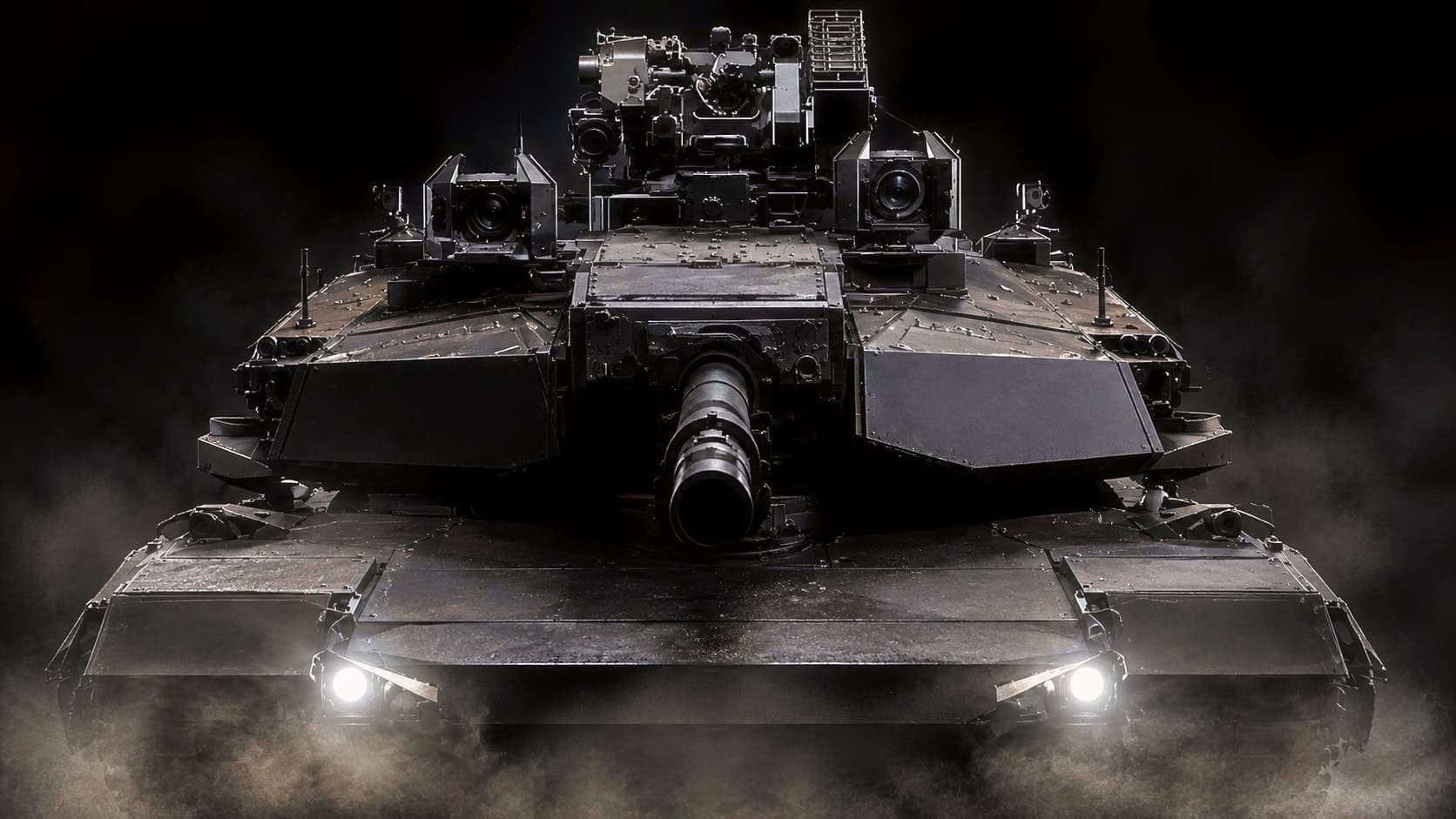
The U.S. Army has cancelled the M1A2 SEPv4 upgrade program after the Abrams tank ballooned to nearly 80 tons, exhausting its upgrade margin. Lessons from Ukraine—where cheap drones destroy million-dollar tanks—accelerated the rethink. The next-generation M1E3 Abrams features an unmanned turret, crew relocated inside the hull, a hybrid diesel-electric engine, and a modular open-systems architecture, with prototype testing set to begin this autumn.
Highlights
- M1A2 SEPv4升級計畫因坦克重量暴增至約76至78噸、達到升級極限而遭美國陸軍取消。
- 烏克蘭戰場上廉價無人機擊毀高價坦克的實戰經驗,加速了美軍重新設計艾布蘭的決策。
- 下一代M1E3艾布蘭採用無人砲塔,三名乘員全部安置於車體內部,以提升戰場存活率。
- M1E3以混合柴電引擎取代原有燃氣渦輪,並採用模組化開放系統架構以便快速技術升級。
- M1E3原型車測試預計於2025年秋季展開,美國陸軍目標是盡快形成戰鬥力。
Why SEPv4 Failed
Development of the M1E3 Abrams is now in full swing, with prototype testing expected to begin this autumn. The U.S. Army is pressing to field the new tank as quickly as possible.
The M1E3 was selected as the next variant in the Abrams family after the M1A2 SEPv4 was cancelled.
Despite offering advanced capabilities, the SEPv4 program was ultimately shelved for several reasons. The most critical was that the M1A2 had reached the limits of what further upgrades could achieve—a clean-sheet approach was needed to ensure the tank's survivability on the modern battlefield.
The Army stated that the M1E3 incorporates the best features of SEPv4 while avoiding its shortcomings, and at significantly improved cost-effectiveness.
What SEPv4 Would Have Delivered
First unveiled in 2017, the M1A2 SEPv4 was designed to build on the SEPv3 baseline.
SEPv3 had already introduced numerous improvements to the Abrams' computing and imaging systems, including an improved Forward-Looking Infrared (IFLIR) system, a new Vehicle Health Management System (HMS), and a Remote Weapon Station (RWS).
SEPv3 also significantly enhanced crew survivability through the addition of Abrams Reactive Armor Tiles (ARAT) and the Israeli Trophy Active Protection System (APS). Compared with earlier variants, the M1A2 SEPv3 represented a qualitative leap in overall capability.
SEPv4 aimed to go further, equipping the commander and gunner with next-generation FLIR sights to improve target detection and acquisition.
The new variant was also planned to field next-generation tank ammunition, such as the XM1147 Advanced Multi-Purpose (AMP) round, fitted with a programmable fuze capable of engaging hardened bunkers, dismounted infantry, and light armored vehicles.
Additional SEPv4 improvements included an upgraded Fire Control System (FCS), improved onboard diagnostics, more advanced sensors, and a thermal management system. The overall program goal was to push lethality and survivability beyond the already-capable SEPv3 baseline.
Poor Return on Investment
During SEPv4 testing, however, the Army quickly ran into a fundamental problem: the M1A2 was approaching the limits of what it could absorb.
Approximately two decades of stacked upgrade packages had caused the tank's weight to balloon significantly. The baseline M1A1 weighed roughly 63 tons, while the M1A2 SEPv3 had climbed to approximately 76–78 tons.
The excess weight severely degraded overall mobility—the tank had grown too heavy for certain bridges—and dramatically increased logistical demands, a serious liability in large-scale, sustained combat operations.
"The Abrams tank has no more capacity to add capability without adding weight, and we need to reduce its logistics footprint," said Maj. Gen. Glenn Dean, Program Executive Officer for Ground Combat Systems.
As upgrade after upgrade was stacked onto an already massive platform, the headroom for future growth continued to shrink.
Combat experience from the war in Ukraine further forced the Army to reassess its assumptions about future armored warfare. SEPv4 was designed in the mid-to-late 2010s, before the Ukraine conflict and long before drones reached their current ubiquity.
While drones were already an industry focus around 2015, almost no one anticipated what has materialized on the Ukrainian battlefield—cheap, mass-produced drones capable of destroying multi-million-dollar tanks with ease.
Ukraine gave the Army a clear picture of what works and what does not. The Abrams' gun, armor, and sensors remain effective against contemporary threats; the tank's weight problem and fuel-hungry engine, however, demanded urgent attention.
Good Ideas, Wrong Framework
Many of the concepts behind SEPv4 were sound—the problem lay with the inherent limitations of the M1A2 itself. The Army therefore began searching for an alternative path.
Because many aspects of the Abrams design continue to perform well, a complete clean-sheet replacement was not considered necessary.
The M1E3 retains the same hull and carries over many of the upgrades originally planned for SEPv4, while introducing an entirely new turret.
The M1E3 is reported to incorporate FLIR sights and sensors, along with the onboard sensor suites and diagnostic systems from its predecessors.
The most significant departure from the M1A2 is the M1E3's modular design philosophy, which ensures that critical systems such as sights and electronics can be swapped out and upgraded without significantly adding to the vehicle's overall weight.
"Development of the M1E3 Abrams will incorporate the best features of the M1A2 SEPv4 and comply with the latest Modular Open Systems Architecture standards, enabling faster technology insertions at reduced resource requirements," the Army stated in an official announcement.
This approach allows the Army to integrate the best systems from SEPv4 and SEPv3 without a weight penalty, while preserving ample room for future upgrades.
What Makes the M1E3 Different
At its core, the M1E3 is still an Abrams—but it represents a marked departure from its predecessors.
The M1E3 features an unmanned turret, with all three crew members relocated inside the hull for improved protection. The gas turbine engine has been replaced by a new hybrid diesel-electric powertrain offering substantially better fuel efficiency. The legacy torsion-bar suspension has been replaced with a modern hydropneumatic system to accommodate the new crew compartment and drivetrain.
While not a ground-up redesign, the M1E3 presents a dramatically different tank from the variants that came before it.
Author: Isaac Seitz holds a degree in Strategic Intelligence and National Security from Patrick Henry College, studied Russian at the Middlebury Language Schools, and has worked as an intelligence analyst in the private sector.
原文來源: 查看原文
FAQ
Reviewed and published by the LAETimes editorial desk ·