Sacramento Sheriff Uses $999 DJI Avata 2 to Disarm Suspect — And the Politics Are Sharper Than the Blade
A Sacramento County Sheriff's Office pilot flew a consumer-grade DJI Avata 2 FPV drone into a garage, used a magnet to remove a knife from a barricaded parolee's hand, and completed what the department calls the first drone disarmament in U.S. history — all while federal regulators are actively pushing to ban the Chinese-made hardware from law enforcement use.
Highlights
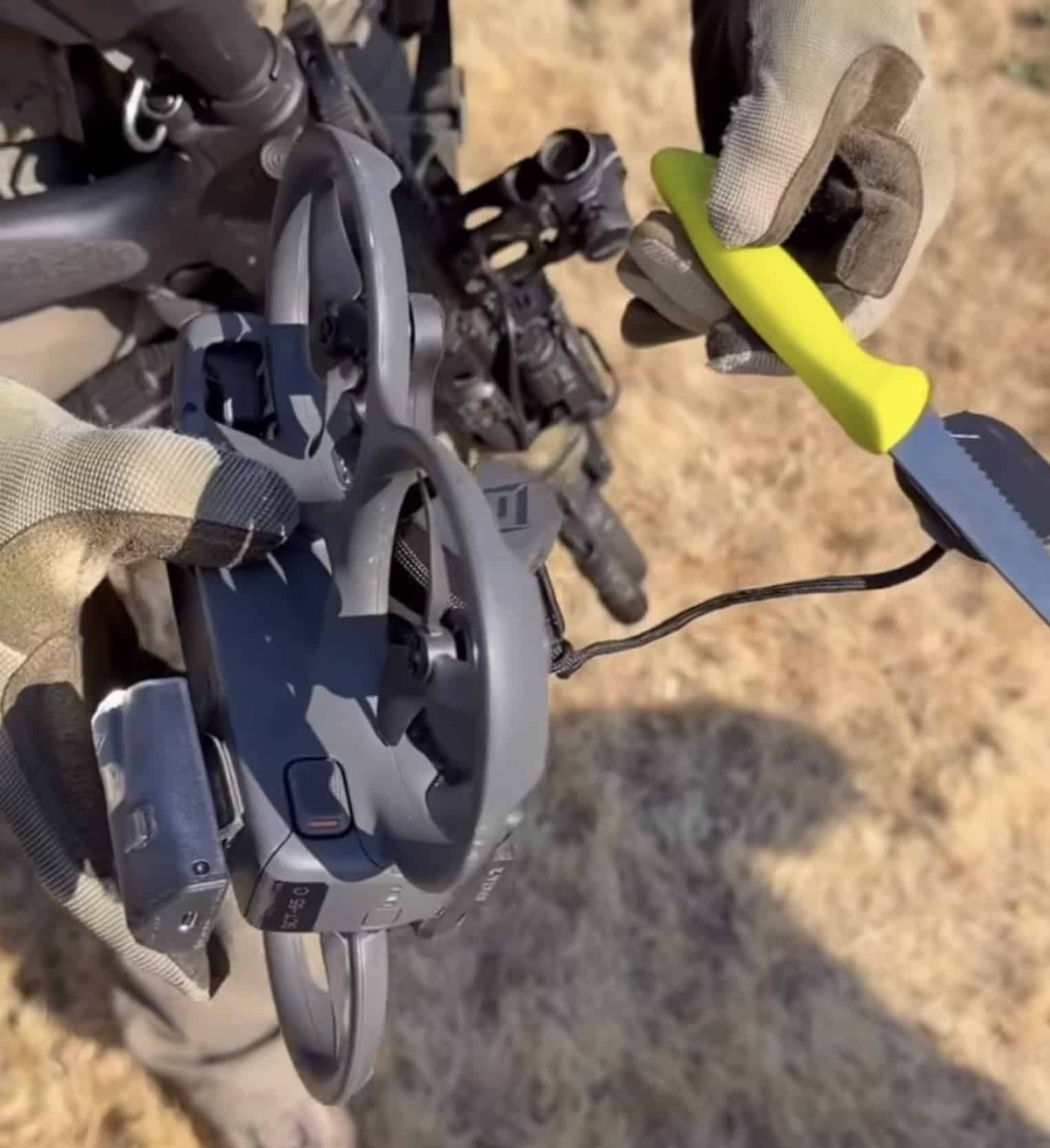
- On June 18, 2025, a Sacramento County Sheriff's pilot attached a magnet to a DJI Avata 2 and flew it into a garage to remove a knife from suspect Austin Carter's hand — the first drone disarmament operation in U.S. history according to the department.
- The DJI Avata 2 is a $999 consumer cinewhoop weighing 377 grams, not a purpose-built law enforcement platform; its ducted propeller guards allowed safe indoor flight in a cluttered garage.
- The FCC added DJI to its Covered List in December 2025; DJI has stated the ban blocks 25 planned 2026 products and threatens $1.56 billion in U.S. losses, yet California law enforcement continues to rely on its hardware for tactically demanding missions.
- Approximately 1,500 U.S. law enforcement agencies now operate drone programs; 58 are in California, with rapid DFR expansion in 2026 including Yucaipa (Skydio, 100+ calls, 71% first-arrival rate), Orlando (11-drone network), and Alameda County.
- Skydio CEO Adam Bry walked back his company's no-weaponization pledge just four days before the Sacramento incident, while DJI — the Chinese manufacturer under federal scrutiny — still maintains its anti-weaponization policy.
A Sacramento County Sheriff's Office pilot flew a consumer-grade FPV drone into a garage, located a knife-wielding parolee in hiding, and used a magnet to remove the blade from his hand before any officer entered the scene. The department is calling it a first in the United States. The drone used was a DJI Avata 2 — a $999 cinewhoop originally designed for hobbyists filming at skate parks, not a purpose-built law enforcement platform. That detail changes everything about the story.
What Happened
The standoff took place on June 18 at Goya Parkway in South Sacramento. Folsom police had been tracking 30-year-old Austin Carter — a wanted parolee with a prior weapons conviction — and requested assistance from the Sheriff's Special Enforcement Detail. Carter had reportedly been seen with a firearm earlier that day and had stopped responding to negotiators. Officers surrounded the residence and sent a drone inside, where it located Carter hiding in a corner of the garage. One hand was concealed beneath his body; the other held a knife. He showed signs of life but was motionless, leaving officers uncertain whether he was unconscious or waiting to strike.
Rather than rush the corner, the pilot attached a strong magnet to the drone and flew in to pull the knife away. A robot dog named "Buster" cleared debris to open the garage. A police K-9 completed the arrest. Carter was taken into custody without a shot fired. A video released by the Sheriff's Office on June 22 — set to the Mission: Impossible theme — shows the knife spinning in the air as the drone carries it back toward officers.
DJI Avata 2: Consumer Toy, SWAT-Level Task
The DJI Avata 2 is a cinewhoop: a small first-person-view (FPV) drone with integrated propeller guards, designed to bounce off walls and fly slowly indoors. It weighs approximately 377 grams (13 oz), achieves roughly 23 minutes of flight per battery, shoots 4K video, and starts at $999 in the Fly More Combo with goggles. DJI markets it as an immersive content creation tool — the kind of drone you hand to a teenager, not the kind a city council puts in a public safety budget.
That is precisely why it worked here. The ducted propeller guards allowed the pilot to navigate a cluttered garage without crashing into door frames; the compact, agile airframe was precise enough to guide a magnet to a suspect's hand — a level of accuracy clearly visible in the footage. A 5-pound (2.3 kg) Drone-as-First-Responder (DFR) patrol unit designed to hover over highways could not have done this. The task demanded the smallest, cheapest aircraft on the shelf and a skilled pilot in FPV goggles to make it look effortless. The Mission: Impossible edit undersells the technical difficulty: flying a magnet onto a knife in someone's hand in a dark garage, without injuring the person, is not a week-one FPV maneuver.
Sacramento Has Been Flying Cheap Indoor Drones for Years
The "first in the U.S." claim refers specifically to the magnet application, not to the broader tactic of flying small drones into buildings during standoffs. Sacramento has been doing that for more than five years. In 2020, this reporter covered the Sacramento Police Department flying an approximately $93 cinewhoop through a partially open door to clear an apartment — a task no DJI Matrice or Skydio platform could have completed at the time because they were too large and too fragile to survive wall contact. The Avata 2 is the same concept with a better camera and a magnet attached. A jurisdiction that recognized the value of cheap, maneuverable indoor drones six years ago has now used one to physically disarm a suspect.
Other departments have reached the same conclusion. The Wilmington Police Department uses the DJI Avata for building searches and barricaded-suspect standoffs specifically because ducted FPV frames can pass through narrow interior spaces that larger drones cannot enter. The cinewhoop has quietly become the preferred tool for a specific set of tasks that expensive autonomous fleets cannot handle: operating inside structures, in confined spaces, where wall contact is an expected outcome rather than a catastrophic failure.
Chinese-Made Hardware Just Did What Washington Is Trying to Ban
This is where the drone model stops being a specification and becomes the story itself. At the very moment the federal government is pushing to remove DJI from the American market, a California sheriff's department used Chinese-made hardware to execute a high-profile public safety operation. In December 2025, the Federal Communications Commission (FCC) added foreign-manufactured drones to its Covered List. DJI has told the U.S. Ninth Circuit Court of Appeals that the listing has blocked 25 products it planned to release in 2026 and threatens $1.56 billion in losses this year alone. The entire policy push is premised on the idea that law enforcement should be flying American-made Skydio drones instead.
The Avata 2 itself sits in a regulatory grey zone. Units authorized before the December 22, 2025 deadline remain legal to purchase and fly, which is why departments can still pull them off shelves today. After 2026, no new DJI drone will be available through authorized retail channels — meaning the platform Sacramento just used to such visible effect is precisely the equipment the federal government wants no agency to be able to buy. The procurement debate now has a concrete rebuttal, and it is flying a Chinese flag.
The Magnet Runs into DJI's Own Anti-Weaponization Policy
The disarmament operation raises a second question. DJI has for years maintained that its drones are not for combat or weaponization. The company says it was the first drone manufacturer to publicly condemn its products being used in combat and has committed to policies prohibiting military use. A magnet that removes a weapon is not itself a weapon, and the Sheriff's disarmament is not combat. But it is a payload modification to a consumer DJI airframe used in a tactical law enforcement action — landing squarely in the grey zone that DJI's public statements have tried to sidestep.
The irony is that DJI's primary U.S. competitor has moved in the opposite direction. Just four days before the Sacramento incident, Skydio CEO Adam Bry walked back his own company's no-weaponization pledge during a podcast, calling the impulse to draw ethical red lines around drone technology "dangerously misguided." That leaves a Chinese company maintaining an anti-weaponization stance while its American rival abandons one — and the drone that disarmed a suspect in Sacramento came from the company that is still holding the line. Whatever the FCC Covered List is meant to protect against, this incident does not fit that narrative.
Drone-as-First-Responder Programs Are Expanding Rapidly Across California
This incident sits within a broader build-out. Approximately 1,500 law enforcement agencies across the U.S. now operate drone programs, with 58 in California, according to figures cited by the Los Angeles Police Department. Chula Vista established the first DFR program in 2018 and built the operational template others have followed. Fremont developed its own DFR program as early as 2022 and received city council approval for deployment in 2024.
The pace of expansion in 2026 has been difficult to track. San Bernardino County's Yucaipa station launched a DFR pilot with Skydio drones on May 28 and reported responding to more than 100 calls within weeks, arriving before officers in 71 percent of cases. That first-arrival rate matches figures this reporter saw when covering the Dallas Police Department, where a Skydio drone beat officers to a man walking into traffic on Interstate 45 the day after the program launched. In the same period, Orlando activated a network of 11 Skydio drones, and Port St. Lucie logged 17 missions on its first day. In the Bay Area, Alameda County established a DFR program in 2025.
Nearly all of these programs share the same profile: large autonomous American-made drones launching from rooftop pads to provide aerial surveillance for incidents in open areas. The Sacramento disarmament differs on every dimension — a consumer-grade Chinese-made drone, flown manually by a pilot in goggles, indoors, used as a physical tool rather than an aerial camera. The DFR headlines and the Sacramento footage point toward the same future from opposite ends of the hardware catalog: the drone arrives first and completes the part that would put a human being in danger.
DroneXL Analysis
This reporter has been covering Sacramento flying drones into buildings since 2020, when the tool was a $93 FPV quad peeking through a door gap while the industry was still debating whether a Matrice could be used in search and rescue. Six years later, the same jurisdiction physically removed a weapon from a suspect's hand with a $999 DJI Avata 2. That is a clear developmental arc, and it runs through the cheap end of the hardware catalog, not through the expensive autonomous fleets that generate the most press releases.
What keeps resurfacing is the politics inside the airframe. Washington spent nearly a decade building a case that DJI represents a security threat American law enforcement should not touch, and the FCC ultimately put foreign-made drones on the Covered List in December. Then a California sheriff used a Chinese consumer drone to pull off precisely the kind of clean, injury-free arrest that every department wants in its promotional reel. The hardware that delivered the win is the hardware the policy is trying to remove. That contradiction does not resolve itself, and it will keep surfacing every time a DJI airframe does something a rooftop-based Skydio cannot.
What remains unanswered — and what the Sheriff's Office has not addressed — is whether this was an individual pilot's improvisation or an approved tactic backed by written policy. That question matters more than it appears. A magnet strong enough to pull away a knife can pull away other things, and a department attaching homemade payloads to consumer DJI drones and flying them into barricaded-suspect standoffs is operating in territory that neither DJI's own use policies nor California drone regulations clearly cover. Whether Sacramento releases an after-action review or a formal payload policy is worth watching. If it does, other agencies will replicate the approach, and the Avata 2 will quietly become a SWAT tool. If it does not, this remains a viral video — and the next pilot to attempt the same technique will be improvising in the same grey zone with less skill, and a worse outcome will be waiting.
Sources: SFGATE, CBS Sacramento, ABC10, Sacramento County Sheriff's Office
原文來源: 查看原文
FAQ
Newsletter
Subscribe to our Low-Altitude Industry Newsletter
Daily curated news on low-altitude economy and drone industry, delivered to your inbox.
Reviewed and published by the LAETimes editorial desk ·