Nine Nations Back Ukraine's 'Freyja' Patriot Alternative, Targeting Operational Deployment Within 12 Months
Ukrainian President Volodymyr Zelenskyy announced at a Paris defence summit that Denmark, France, Germany, Italy, the Netherlands, Norway, Spain, Sweden, and the United Kingdom have joined Ukraine to form the 'Freyja' coalition — a new ballistic missile intercept system aimed at achieving initial operational capability within one year, addressing a critical global shortage of interceptor weapons.
Highlights
- Nine European nations — Denmark, France, Germany, Italy, the Netherlands, Norway, Spain, Sweden, and the UK — officially joined Ukraine's Freyja ballistic missile intercept coalition at a Paris defence summit.
- The Freyja system is built around Fire Point's FP-7.X interceptor missile, designed to engage ballistic targets at approximately 24 km (15 miles) altitude.
- Zelenskyy set a 12-month target for initial operational capability, significantly faster than the 24-month production cycle required for Patriot interceptor missiles.
- Ukraine will supply the interceptor missiles, while coalition partners will contribute radar, tracking, and command-and-control systems currently absent from Ukraine's arsenal.
- NATO Secretary General Mark Rutte, European Commission President Ursula von der Leyen, and representatives from 12 major defence firms including MBDA, Saab, and Thales attended the Paris meeting.
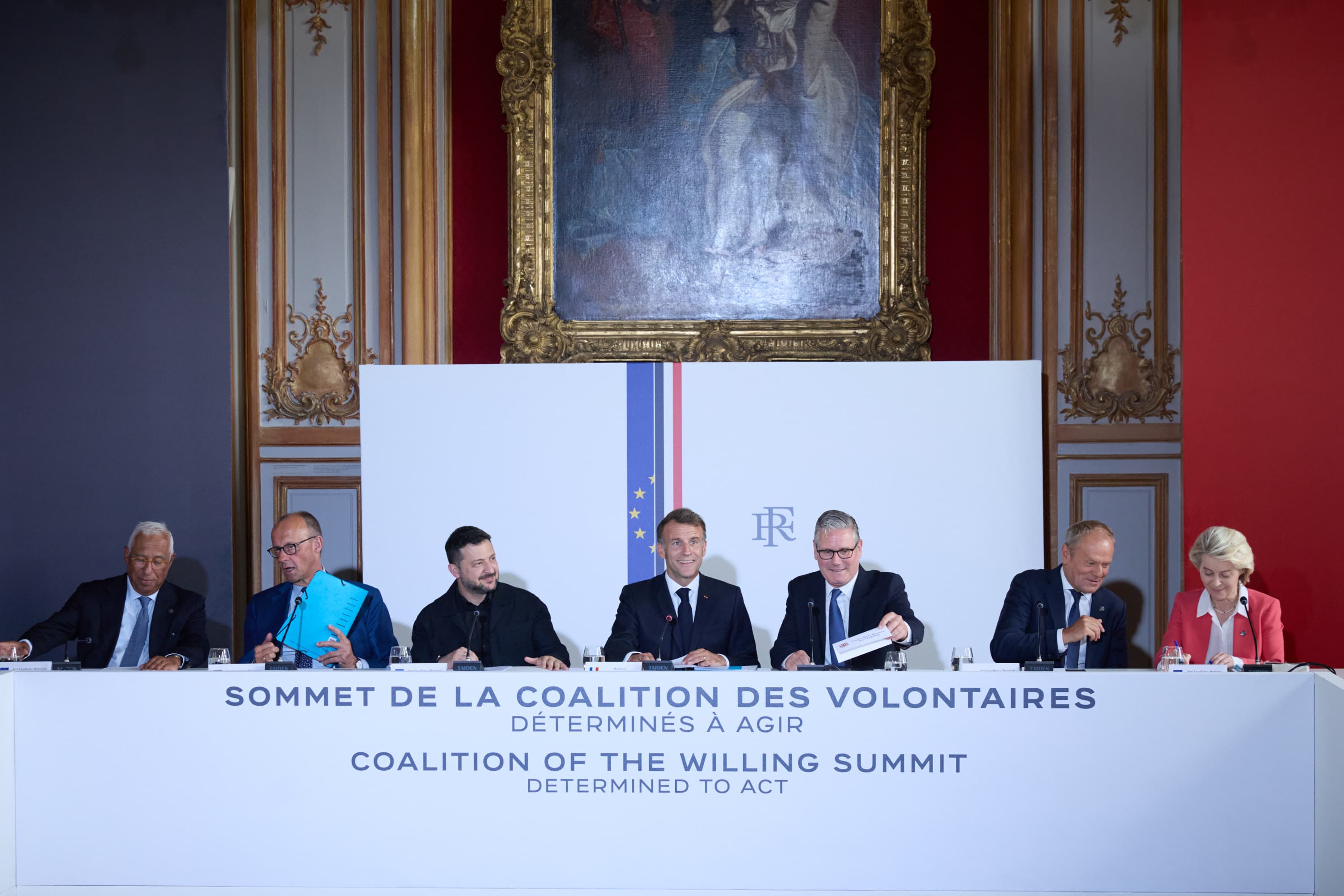
Kyiv, Ukraine — Ukrainian President Volodymyr Zelenskyy announced Monday at a defence allies summit in Paris that nine countries have joined Ukraine in forming a new ballistic missile defence coalition, with the goal of accelerating production of Ukraine's domestically developed Freyja interceptor system and achieving operational capability within one year.
From NATO Summit to the Paris Declaration
Zelenskyy first floated the initiative last week at the NATO summit in Ankara, where allied nations agreed to jointly develop the complex weapons system. U.S. President Donald Trump pledged at the summit to allow Ukraine to manufacture Patriot interceptor missiles domestically, describing Ukraine as "a country ready to do exactly that."
The initiative comes amid a severe global shortage of ballistic missile interceptors. The war involving Iran and surrounding regions has now entered its fifth month, and allied nations are rapidly stockpiling defensive weapons.
Nine Founding Members Formally Sign On
The nine European nations joining Ukraine as founding members of the Paris Declaration are: Denmark, France, Germany, Italy, the Netherlands, Norway, Spain, Sweden, and the United Kingdom.
In a joint statement formalising the new coalition, officials wrote: "We believe that protecting Europe requires a global solution through an integrated missile defence architecture — deterring and defeating future missile threats through collective effort, technological openness, and trusted industrial partnerships."
Despite increased Patriot missile production by the United States and expanded European output of surface-to-air systems including SAMP/T, IRIS-T, and NASAMS, the supply-demand gap remains substantial.
Strategic Interests for Ukraine and Europe
For Ukraine, acquiring ballistic missile intercept capability would enable more effective protection of cities and frontline positions that are frequently struck by Russian ballistic missiles — attacks current air defence systems cannot reliably counter — while reducing total dependence on allied support for this category of defence.
For Europe, the coalition offers a fast-track solution to the weapons shortage, an opportunity to strengthen defences at lower cost, and direct access to the hard-won combat experience Ukraine has accumulated over years of full-scale war.
System Architecture and Timeline
Zelenskyy said Ukraine will lead the programme by providing the interceptor missiles themselves, while partners will supply the radar, tracking, and command-and-control components currently lacking.
The Freyja system is built around Fire Point's FP-7.X interceptor missile, designed to engage ballistic targets at approximately 15 miles (roughly 24 km) altitude. Compared to the 24-month production cycle required for Patriot missiles, Zelenskyy is aiming for a much faster deployment timeline.
"Each of us holds a critical piece of the puzzle: we Ukrainians have the missile, but that is only one part of the system," he said. "Together we can build this complete system — Freyja — within the next 12 months."
Zelenskyy also outlined the coalition's early priorities: establishing common operational requirements, forming a joint technical working group, defining governance mechanisms, and developing a roadmap to initial operational capability.
Industry Leaders Convene in Paris
Monday's Paris meeting also drew NATO Secretary General Mark Rutte, European Commission President Ursula von der Leyen, and European Council President António Costa. Representatives from a number of major European defence companies attended, including: Destinus, Diehl Defence, Eurosam, Fire Point, HENSOLDT, Kongsberg Defence & Aerospace, Leonardo, MBDA, Saab, Safran, Thales, and Weibel Scientific.
"Everyone in the room is an indispensable part of building this system," Zelenskyy said. "Thank you to all the companies willing to work together."
Coalition members will retain a degree of autonomy. Zelenskyy noted: "Europeans themselves will be able to decide how many systems Europe needs and where to deploy them. This will open a strategically new chapter."
Closing a Global Ballistic Missile Intercept Gap
"The threat from ballistic missiles will only grow globally — it is one of the main consequences of the wars involving Russia and Iran," Zelenskyy said. "That is why Freyja must become reality."
Ballistic missiles currently represent the only major category of threat that Ukraine cannot intercept with its own domestically produced weapons. The formation of the Freyja coalition marks a pivotal step for Ukraine and its European allies in building collective defence capacity.
原文來源: 查看原文
FAQ
Reviewed and published by the LAETimes editorial desk ·