Historic First: U.S. Navy Unmanned Surface Vessel Rescues Two Apache Crew Members Near Strait of Hormuz
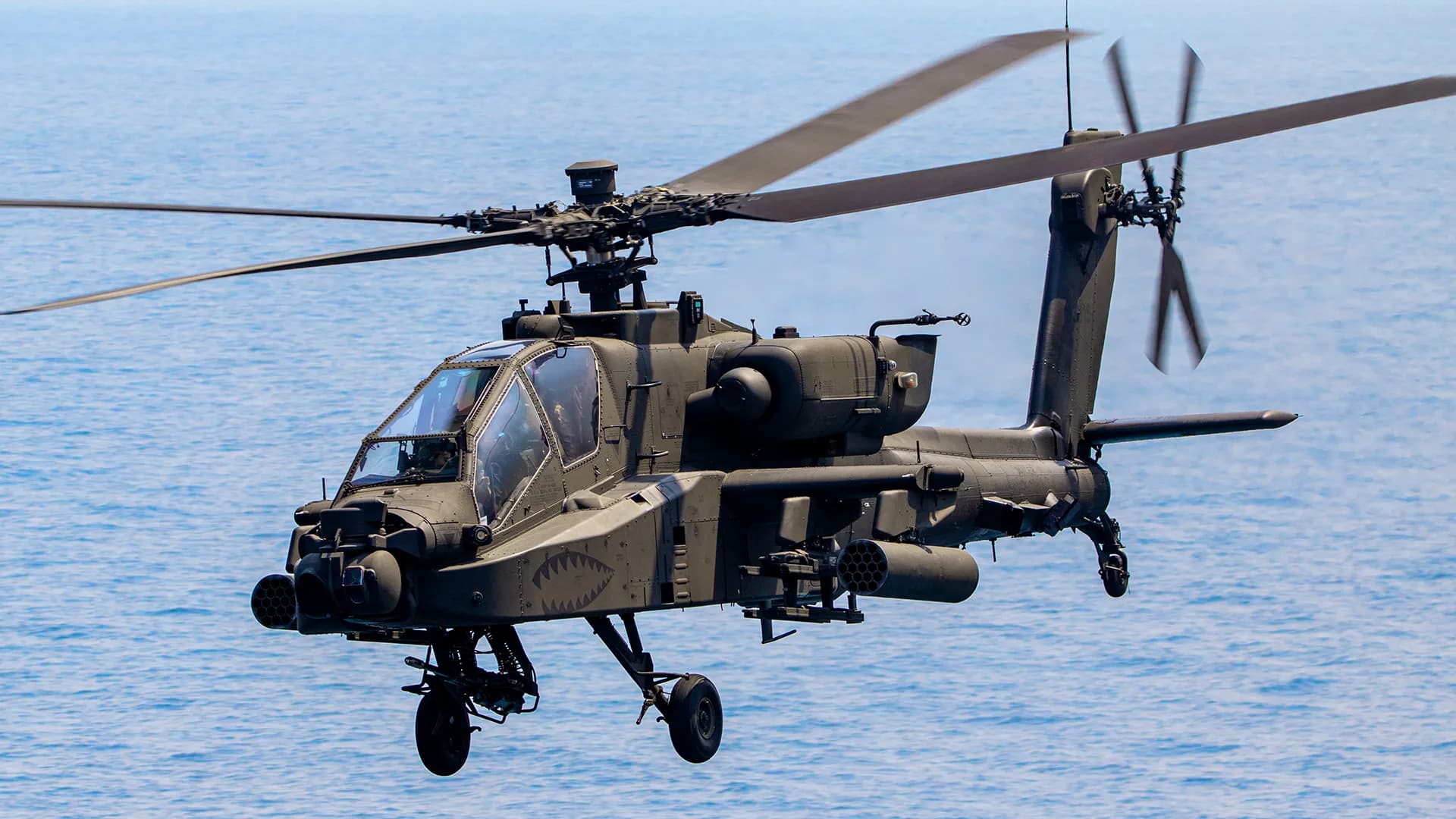
A U.S. Navy unmanned surface vessel (USV) successfully rescued two Army AH-64 Apache helicopter crew members after their aircraft went down near the Strait of Hormuz in the Gulf of Oman on June 8 — marking the first known use of an unmanned vessel to recover personnel in a military search-and-rescue operation. President Trump subsequently claimed the Apache was shot down by Iran and vowed retaliation.
Highlights
- On June 8, a U.S. Navy USV from Task Force 59 rescued two AH-64 Apache crew members near the Strait of Hormuz — the first known military personnel recovery performed by an unmanned vessel.
- Both Army soldiers were recovered within approximately two hours of the crash and are in stable condition, per a CENTCOM official statement.
- President Trump claimed on Truth Social that Iran shot down the Apache during a patrol over the Strait of Hormuz and vowed a U.S. response.
- The U.S. military has lost at least seven manned aircraft since its latest round of operations against Iran began in February.
- The successful USV rescue demonstrates the potential of unmanned platforms for CSAR missions in high-threat, denied-access environments, including future Pacific contingencies.
Military First: Unmanned Surface Vessel Performs Personnel Rescue
A U.S. Navy unmanned surface vessel (USV) located and rescued two crew members from a downed U.S. Army AH-64 Apache attack helicopter near the Strait of Hormuz in the Gulf of Oman. This marks the first known instance of an unmanned vessel performing personnel recovery in a military search-and-rescue (SAR) operation, signaling the significant potential of unmanned platforms in future rescue missions. The cause of the crash remains under investigation.
Navy Captain Tim Hawkins, a U.S. Central Command (CENTCOM) spokesperson, confirmed to media that a Navy USV participated in the rescue. CENTCOM's official statement referenced Task Force 59 — the U.S. Navy's primary unmanned systems unit in the Middle East — implicitly acknowledging the vessel's involvement. The specific model of USV used has not been disclosed. Task Force 59 operates multiple USV types, including high-speed boat-style unmanned craft, and has been at the forefront of testing new unmanned naval technologies. This rescue represents a landmark achievement for the forward-leaning unit.
Both Crew Members Recovered Within Approximately Two Hours
According to the CENTCOM statement: "At 7:33 p.m. EDT on June 8, a U.S. Army AH-64 Apache helicopter crashed while conducting a patrol of regional waters near the Omani coastline. Both crew members were subsequently recovered by U.S. forces. Both soldiers were safely recovered in approximately two hours and are in stable condition. The cause of the crash is under investigation."
The statement added: "The rescue operation was led by U.S. Naval Forces Central Command and the 82nd Airborne Division, with support from U.S. Air Force and Navy units, including Task Force 59 of U.S. Fifth Fleet."
The New York Times was first to report the Apache's crash near the Strait of Hormuz. President Trump had earlier confirmed to reporters that the crew members were safe.
"We'll put out a report tomorrow, but the pilots are fine," Trump said upon returning to Washington from the NBA Finals in New York.
Apaches Have Played a Key Role in Operations Against Iran
As previously reported, U.S. Army AH-64 Apaches have been actively involved in American blockade operations against Iran and in protecting commercial shipping. Last month, CENTCOM Commander Admiral Brad Cooper stated that Apaches and U.S. Navy MH-60 Sea Hawk helicopters had destroyed six Iranian small boats threatening commercial vessels in and around the Strait of Hormuz. Prior to a ceasefire announcement in April, Apaches had been conducting sustained strike missions against Iranian naval assets in the vicinity of the strait. These operations demonstrate that armed helicopters remain a critical asset in maritime combat, particularly in countering small boat swarm attacks.
Unmanned Vessel Rescue Opens a New Era for SAR Operations
Search-and-rescue missions carry inherent complexity and risk, particularly when conducted near hostile territory. Open-water rescues present unique additional challenges, and combat search-and-rescue (CSAR) operations anywhere carry the risk of losing further equipment and personnel.
The Navy USV's role in this rescue opens an entirely new dimension for future maritime CSAR. Unmanned assets can be pre-positioned in a distributed manner far more readily than manned platforms. In the vast expanse of the Pacific, for example, USVs could be forward-deployed at multiple points along specific flight corridors precisely for contingencies like this. In certain scenarios, USVs can access areas unreachable by conventional assets — and do so without placing additional personnel at risk.
These realities extend beyond the maritime domain. It is likely we will see unmanned platforms of all types playing an increasingly prominent role in rescue operations, especially in high-threat, denied-access environments. The U.S. military is acutely aware of the vulnerability of its SAR assets and the operational ranges required to penetrate heavily defended areas — particularly in peer-competitor conflicts. The use of unmanned systems for personnel recovery is increasingly seen as a critical component of addressing this pressing challenge.
At Least Seven Manned Aircraft Lost Since February
With this Apache crash, the U.S. military has lost at least seven manned fixed-wing aircraft and helicopters since the latest round of military operations against Iran began in February. Several additional aircraft have been damaged — both in the air and on the ground — including from Iranian fire.
Update: Trump Claims Apache Was Shot Down by Iran
At 12:56 p.m. EDT, President Trump stated that the Apache had been shot down by Iran and that the United States would retaliate.
Trump posted on his Truth Social platform: "I was just informed by our great military that the Iranians shot down one of our very sophisticated Apache helicopters last night while it was on patrol over the Strait of Hormuz. Two pilots were involved, both are safe and uninjured. The United States, however, must respond to this attack."
原文來源: 查看原文
FAQ
Reviewed and published by the LAETimes editorial desk ·