French Start-Up Alta Ares Raises €50 Million to Scale AI-Guided Interceptor Drone Production
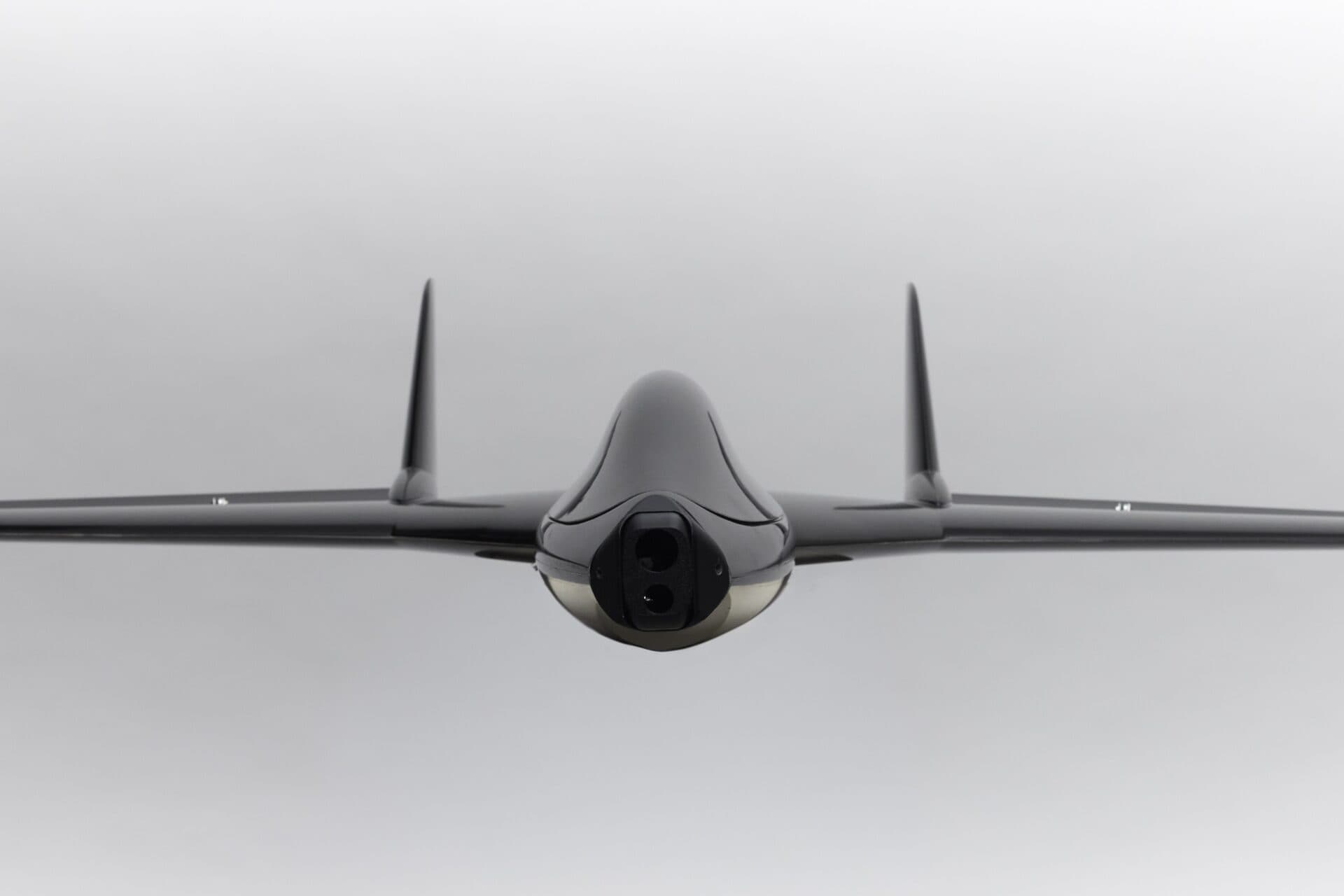
French defence-tech start-up Alta Ares has closed a €50 million funding round led by Air Street Capital to expand production of its AI-guided interceptor drones. Already combat-deployed across three active conflict zones in Europe, the Middle East, and Asia, the company operates two interceptor platforms — the X-Lock and the Black Bird — designed to counter loitering munitions and cruise missiles respectively.
Highlights
- Alta Ares 於 2026 年 6 月 9 日宣布完成 5,000 萬歐元融資,由 Air Street Capital 領投,為其第二輪融資(首輪為 2025 年 5 月的 200 萬歐元)。
- 公司旗下 X-Lock 攔截器作戰半徑 15 公里,針對 Shahed-136 自殺式無人機;Black Bird 採渦輪噴射動力,作戰半徑達 30 公里,可攔截巡弋飛彈與滑翔炸彈。
- Alta Ares 系統已在歐洲、中東與亞洲三個活躍衝突區實戰部署,並計劃 2026 年底前於中東與亞洲設立新辦公室。
- 歐洲國防新創 2026 年至今已募資 21 億歐元,接近 2025 年全年的 25 億歐元,防空與反無人機領域為最受矚目板塊之一。
- 執行長 Hadrien Canter 描述在札波羅熱距前線 15 公里處以兩枚攔截器迎擊 45 架 Shahed 無人機的實戰經歷,強調規模化生產是因應飽和攻擊的核心策略。
French Start-Up Alta Ares Raises €50 Million to Scale AI-Guided Interceptor Drone Production
French defence-tech start-up Alta Ares has announced the close of a €50 million funding round to scale production of its AI-guided interceptor drones. The raise comes as the ongoing war in Ukraine continues to drive demand for low-cost air-defence solutions, with European investors doubling down on the sector.
The round, announced on 9 June 2026, was led by Air Street Capital, with participation from Cherry Ventures, OTB Ventures, and Harpoon Ventures.
Multi-Theatre Deployment, Global Expansion
Operating out of France and Ukraine, Alta Ares says the new capital will build on existing contracts worth "several million euros" and ongoing combat deployments across Europe, the Middle East, and Asia. The company plans to expand its headcount, open new offices in the Middle East and Asia, and scale up manufacturing facilities in Toulouse, France and Ukraine — all before the end of 2026.
This is Alta Ares's second funding round; the company raised €2 million in its seed round in May 2025. Further expansion into Poland, Germany, and the United States is also planned.
Two Interceptors Built for the Ukrainian Battlefield
Founded in 2024, Alta Ares develops air-defence systems combining AI-powered automated detection, classification, and interception. Its product portfolio centres on two interceptor platforms:
- X-Lock: Designed to counter Shahed-136 loitering munitions, with an engagement range of 15 kilometres.
- Black Bird: Turbojet-powered and built for faster targets, including Kh-101 cruise missiles and FAB-500 glide bombs, with an engagement range of up to 30 kilometres.
Alta Ares states that its systems are currently deployed across three active conflict zones in Europe, the Middle East, and Asia, providing the company with valuable real-world operational feedback.
CEO: "We Sell a Capability"
"We are not an AI company, not a drone company, not a data company. We sell a capability," said CEO and co-founder Hadrien Canter on the French defence podcast Le Collimateur. The offering spans the full stack: the interceptors themselves, onboard software, maintenance, and training.
This model mirrors the broader Ukrainian strategy of integrating commercial companies into air-defence operations to address the acute cost-exchange problem in counter-drone warfare. Ukraine has repeatedly faced saturation attacks involving hundreds of loitering munitions and missiles launched in a single night, forcing defenders to seek lower-cost solutions and reserve high-end interceptors for the most threatening targets.
Canter described one operational experience near Zaporizhzhia in south-eastern Ukraine, approximately 15 kilometres from the front line: when 45 Shahed drones passed overhead, his team had only three interceptors available. One malfunctioned; of the two that launched, one scored a hit.
"Volume is a feature," Canter said, arguing that production scale can compensate for imperfect reliability — much as Russia's drone saturation tactics rely on numbers rather than precision.
Europe's Interceptor Race Accelerates
The cost-exchange dilemma extends well beyond Ukraine. On 8 June 2026 — the day before Alta Ares's announcement — a French Air Force Rafale fighter conducting a NATO Baltic Air Policing mission shot down a Russian drone over Latvian airspace using an air-to-air missile, once again highlighting the expense of intercepting cheap unmanned platforms with costly munitions.
The funding round arrives as European defence start-ups continue to attract strong investor interest. According to data from Sifted, companies in the sector have raised €2.1 billion so far in 2026, approaching the €2.5 billion total recorded for the whole of 2025.
Air-defence and counter-drone start-ups have emerged as one of the most prominent sub-sectors within this trend. In February 2026, Germany's Tytan Technologies and Estonia's Frankenburg Technologies each raised €30 million to scale interceptor and short-range air-defence production. Frankenburg's Mark 1 missile was subsequently fired during the maiden flight of the Airbus Bird of Prey interceptor, underscoring the pace at which European companies are testing new solutions in the short-range air-defence space.
原文來源: 查看原文
FAQ
Reviewed and published by the LAETimes editorial desk ·