Raytheon Expands AMRAAM Production Network with NATO Allies to Develop Key Components
Raytheon plans to scale up AIM-120 AMRAAM missile production through a multinational partnership with the U.S. government and multiple NATO allies. The initiative will assess whether European manufacturers can produce critical components, aiming to strengthen the supply chain, accelerate deliveries, and meet rapidly growing demand for air defense weapons across Europe.
Highlights
- 雷神公司與美國政府及多個北約盟國合作,評估歐洲製造商能否生產AIM-120 AMRAAM關鍵零組件,以擴大生產規模。
- 超過40個國家已採購AMRAAM,飛彈已完成逾6,000次試射,是現役最廣泛部署的超視距空對空飛彈之一。
- 美國採購與維持次長Michael P. Duffey在北約峰會簽署儀式上確認,擴大AMRAAM產能已列為當務之急。
- AMRAAM是目前唯一獲准搭載於F-35戰機的雷達導引空對空飛彈,並可整合至F-15、F-16、F-22、Eurofighter等多款西方戰機。
- AMRAAM增程型(AMRAAM-ER)透過更大火箭發動機提升射程,NASAMS系統目前有14個國際用戶,包括保護美國首都的防空部隊。
Raytheon is moving to scale up production of the AIM-120 AMRAAM missile through a multinational partnership involving the U.S. government and several NATO member states. As demand for advanced air defense weapons continues to surge, the initiative is designed to strengthen the supply chain and accelerate weapons deliveries.
The collaboration will assess whether additional European manufacturers are capable of producing critical AMRAAM components. Participating NATO allies are co-funding the effort alongside the United States, with the goal of increasing production capacity for NATO's most widely used air-to-air missile while reducing supply chain risk.
Expanding the Supplier Network
Raytheon will conduct a series of feasibility studies to qualify new European suppliers for priority missile components. Once approved, these companies will join the AMRAAM production network, with the added capacity helping the United States and its allies obtain missiles more quickly.
Officials expect more nations to join the program as governments work to replenish missile stockpiles and strengthen Europe's overall air defense capability. U.S. Under Secretary of Defense for Acquisition and Sustainment Michael P. Duffey stated that expanding production has become an immediate priority.
"Expanding AMRAAM production capacity is essential to meeting the urgent air defense needs of the United States and its allies," Duffey said. He added that the missile remains central to maintaining military operational advantage, and that closer industrial cooperation will help deliver new capabilities faster. Senior U.S. officials, representatives from participating NATO allies, and Raytheon executives formally established the partnership at a signing ceremony held during a NATO summit.
Rising Missile Demand
Raytheon states that more than 40 countries have procured the AMRAAM, making it one of the most widely deployed beyond-visual-range (BVR) air-to-air missiles in service. The weapon has completed more than 6,000 test firings, and engineers continue to upgrade the design to improve performance against emerging threats.
The missile uses inertial navigation during its initial flight phase, receives mid-course guidance updates in transit, and switches to an onboard active radar seeker for the terminal intercept phase, enabling it to effectively engage targets in complex operational environments.
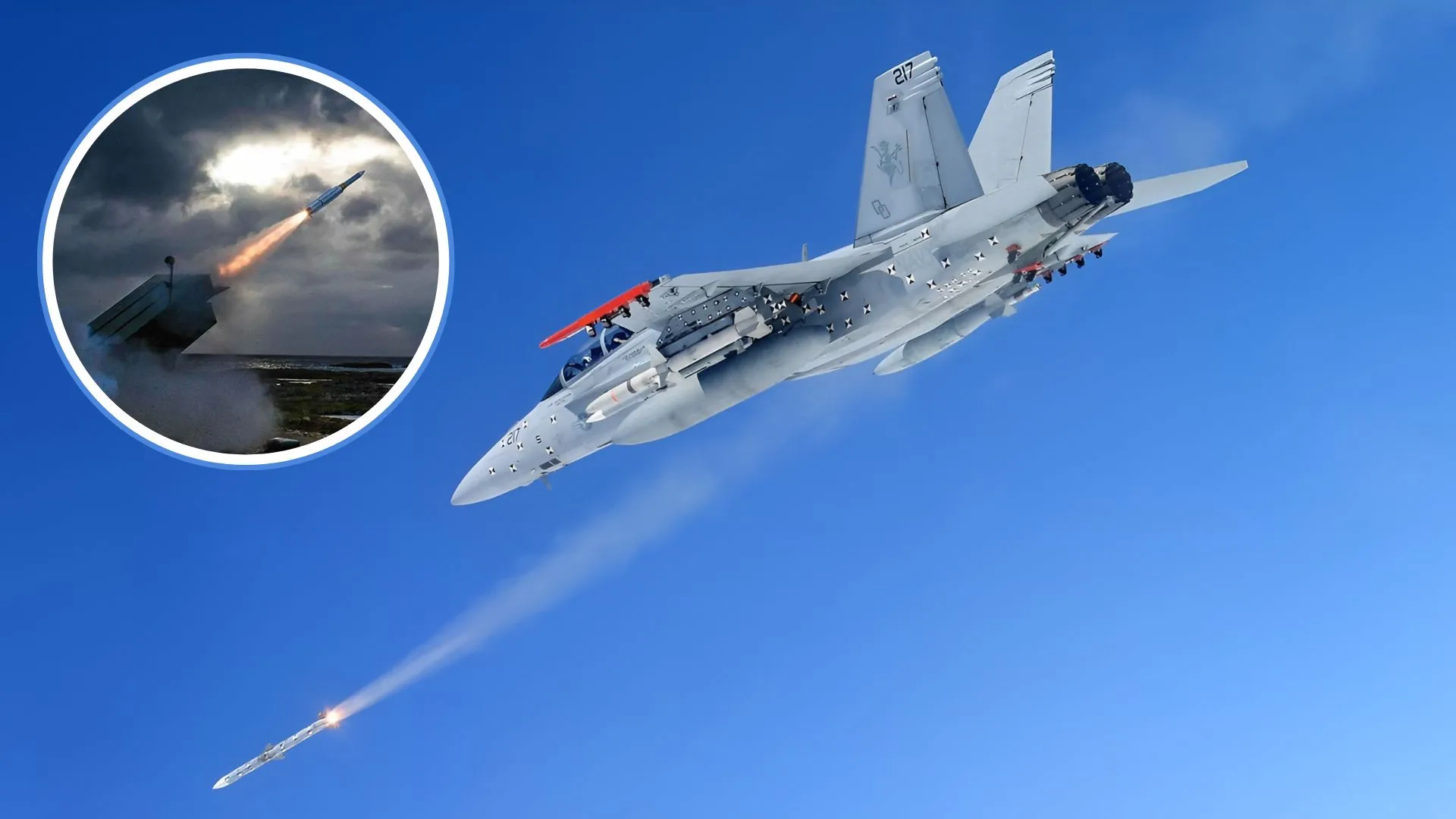
The AMRAAM is integrated on numerous Western frontline combat aircraft, including the F-15 Eagle, F-16 Fighting Falcon, F/A-18 Super Hornet, F-22 Raptor, Eurofighter Typhoon, Saab Gripen, and all operational variants of the F-35 Joint Strike Fighter. The AMRAAM is currently the only radar-guided air-to-air missile cleared for carriage on the F-35.
Supporting Air Defense Missions
The AMRAAM can also be used for ground-launched missions, performing surface-based air defense through the National Advanced Surface-to-Air Missile System (NASAMS) without any modification to the weapon itself.
Raytheon has also developed the AMRAAM Extended Range (AMRAAM-ER) variant, which features a larger rocket motor for greater range and updated flight control software to improve high-altitude intercept capability. NASAMS currently has 14 international operators, including air defense forces responsible for protecting the U.S. capital region.
Sam Deneke, President of Raytheon Air & Space Defense Systems, said that allied investment will help expand production capacity. He emphasized that closer government-industry cooperation will shorten delivery timelines and strengthen the transatlantic defense manufacturing base.
原文來源: 查看原文
FAQ
Newsletter
Subscribe to our Low-Altitude Industry Newsletter
Daily curated news on low-altitude economy and drone industry, delivered to your inbox.
Reviewed and published by the LAETimes editorial desk ·