Citizens as Sensors: Crowdsourcing Small Drone Intelligence via Smartphone Apps — A New Tool for Special Operations
Smartphone apps like Ukraine's ePPO, which allow citizens to report drone activity, can fill gaps in traditional air-defense coverage. Beyond state-on-state conflict, such tools show promise for counter-narco operations and resistance movements against authoritarian regimes. This analysis examines how special operations forces could leverage crowdsourced sensing apps, and addresses key design challenges including technical detection, reporters' legal status, identity verification, and operational security.
Highlights
- Ukraine's ePPO app has collected over 4 million crowdsourced drone sighting reports from more than 850,000 verified users, supplementing radar by detecting low-flying Shahed drones through visual and acoustic observation.
- Drug cartels in Latin America use commercial drones for attacks, remote assassinations, surveillance, and area denial; mobile phone penetration in cartel-affected countries — ranging from 0.71 to 1.77 subscriptions per 100 people — indicates that smartphone observer apps are technically feasible in those regions.
- SOF could provide ePPO-style observer apps to civilian communities and resistance fighters to generate intelligence for kinetic and non-kinetic operations while eroding adversary influence and raising operational costs.
- Civilian users who submit data used for military targeting may be deemed to have 'directly participated in hostilities' under IHL, making legal status assessment a mandatory design consideration before deploying observer apps.
- Where government-issued identity verification is unsuitable — such as in resistance or cartel contexts — third-party verification services or anomaly-detection analytics can mitigate data poisoning risks while protecting observer anonymity.
Abstract
Smartphone apps such as Ukraine's ePPO enable citizens to report drone activity, effectively bridging detection gaps in traditional air-defense systems. The concept can extend beyond conventional warfare to non-state actors — including drug cartels that increasingly use drones to control populations and territory, and underground resistance movements opposing authoritarian governments. In these contexts, observer apps represent a valuable tool that special operations forces (SOF) can offer to civilians and guerrillas, enhancing their self-protection and generating intelligence for both kinetic and non-kinetic special operations. For such apps to function effectively in broader settings, however, their design and deployment must carefully address technical detection capabilities, the legal status of civilian reporters, data validation and credibility, and system compartmentalization and security.
Introduction
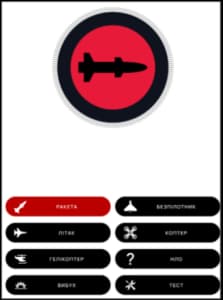
As drones come to dominate modern battlefields, gaps in traditional aerial detection and defense have grown increasingly apparent. Ukraine's ЕППО ('ePPO') smartphone app provides an additional sensing layer — citizens use it to report incoming aerial threats, including drones. The data collected serves both to warn the public and to assist Ukrainian forces in targeting.
ePPO supplements technical sensors such as radar, which cannot guarantee continuous, uninterrupted detection of low-flying assets like small drones, especially during large-scale attacks. In this context, ePPO holds a significant advantage: its distributed architecture makes it difficult to neutralize with a single strike, and it remains functional even where other air-defense systems are saturated or degraded — such as in radar shadow terrain, urban built-up areas, or woodland.
Despite the demonstrated effectiveness of crowdsourced sensing apps in bolstering battlefield air defense, their application has not yet extended to a broader range of potential uses, including offensive operations.
The value of apps like ePPO extends beyond state-on-state military confrontation to sub-threshold conflicts involving non-state actors — such as drug cartels that increasingly rely on drones to control populations and territory, or underground operations against authoritarian governments.
For SOF, providing civilians with an ePPO-style 'observer app' is an additional tool for collecting intelligence to support kinetic and non-kinetic operations. There is an ancillary benefit as well: distributing the app helps build trust between SOF and local communities, engaging citizens actively in their own protection and providing early warning of surveillance or attack assets. In doing so, the app can erode the dominance — and the perceived dominance — of state and non-state adversaries.
While crowdsourced observer apps hold significant potential, their design and deployment must balance technical detection capabilities, the legal status of civilian reporters, identity verification and data credibility, and system compartmentalization and security.
Citizens as Sensors
The concept of citizens as sensors is not new. During the Battle of Britain in World War II, civilian volunteers of the Royal Observer Corps reported the size and altitude of enemy aircraft formations flying over Britain; the data was used for air-defense deployment and air-raid warnings. The United States operated similar civilian organizations during World War II and the Cold War.
Smartphone apps have also been used in conflict settings. Between 2017 and 2018, Syria's 'Sentry' system aggregated reports submitted by volunteer observers via a smartphone app, alongside acoustic data and open-source media, to identify aircraft in flight, estimate airstrike locations, and provide civilians with 5–10 minutes of advance warning via social media, television, and radio.
Ukraine and the ePPO App
Russian strikes against Ukraine deliberately target civilians and civilian infrastructure and make extensive use of drones. Traditional radar sensors are not always effective — the Shahed-series drones fly at low altitude, are small, and have a limited detection signature that challenges many in-service air-defense systems. At the same time, Shaheds have characteristics that make them easier to detect: they fly slowly and their engines produce a distinctive sound audible from the ground.
On this basis, Ukrainian technology company Tekhnari developed a crowdsourced observer app in 2022 to capture 'first reports' of aerial attacks. The result was ePPO.
ePPO allows Ukrainians to log detections of aerial assets — aircraft, missiles, and drones — whether by sight or sound. As of December 2025, more than 4 million reports had been submitted through the app.
ePPO data is aggregated and processed in real time to estimate flight direction and speed. Some data is accessible only to the military for tracking, targeting, and as a dataset for improving airspace situational awareness. Data is also used to protect civilians: based on predicted flight paths, app users can receive warnings up to 10 minutes before a drone passes overhead.
User verification is carried out through 'Diia' (Дія), Ukraine's government e-services app. As of 2026, ePPO had more than 850,000 verified users on Diia.
Beyond the Battlefield: Applications in Special Operations
The model of crowdsourcing aerial threat data via smartphone apps has potential well beyond state-on-state military confrontation, extending to sub-threshold conflicts — such as counter-cartel operations — and to resistance activities that go beyond the aerial domain.
Drug cartels are irregular-warfare actors that influence state behavior, erode governance, and control populations and territory. Drones are playing an increasingly significant role in their arsenals, with cartels employing them against law enforcement, rival criminal groups, and local residents through:
- Attack operations: deploying small commercial drones to drop grenades and other explosives
- Remote violence: including remote assassination
- Surveillance and reconnaissance: including territorial monitoring
- Area denial and forced displacement: clearing out resistance, 'carpet-bombing' rival-controlled areas to render them unusable by civilians
Mobile Cellular Subscriptions per 100 People — Selected Countries
| Country | Subscriptions per 100 People |
|---|---|
| El Salvador | 1.77 |
| Colombia | 1.74 |
| Peru | 1.25 |
| Mexico | 1.16 |
| Guatemala | 1.13 |
| Bolivia | 0.98 |
| Venezuela | 0.71 |
| Honduras | 0.71 |
| Benchmark: United States | 1.13 |
Source: Author's analysis of World Bank mobile cellular subscription data (2024). Country list drawn from the DEA's 2025 National Drug Threat Assessment, covering countries where cartels have an established presence or where major drug production occurs.
Drones allow cartels to achieve control effects with a smaller physical footprint and improved operational efficiency by reducing manpower requirements — through drones, cartels need fewer sicarios (hitmen) or halcones (lookouts). The unpredictability of drone strikes forces residents into constant vigilance; combined with these kinetic and non-kinetic effects, this creates a powerful psychological deterrent.
Like Russia's Shahed drones, cartel drones are difficult to detect and counter due to their low radar and thermal signatures and capacity for low-altitude flight. A smartphone observer app offers a potential solution.
As shown in the table above, mobile phone penetration in cartel-affected countries is relatively high. While the figures refer to mobile phones rather than smartphones specifically, the high penetration rates are an initial indicator of the feasibility of app-based solutions.
Beyond drone observation, a crowdsourcing app could also support guerrilla and community-level resistance operations, providing a secure and low-exposure means of reporting the location of authoritarian government forces, checkpoints, or press-gang units.
In the context of both drone data collection and resistance support, SOF personnel could offer an observer app as a tool during engagement with communities and resistance groups. Using features similar to ePPO, the app could warn civilians of incoming cartel drones, buying time to seek cover or concealment and improving interdiction efficiency — thereby undermining cartel influence and raising the cost of their operations. In a resistance context, app alerts could reduce the risk of resistance fighters being captured, degrade the effectiveness of suppression operations, and provide intelligence for kinetic actions such as targeting government arms caches.
SOF could also use app data to conduct more precise kinetic strikes, reduce the risk of detection by adversary surveillance drones, and build broader intelligence datasets.
However, for civilians to adopt and consistently use an observer app, they must trust that it will protect their identity and secure their data — particularly when facing the risk of violent reprisals from criminal organizations, corrupt officials, or authoritarian governments. To encourage adoption, protect observers, and respond effectively to threats, apps must address technical, legal, and operational considerations.
Design and Deployment Considerations
Technical Detection
An app must be configured to capture relevant data points according to the operational context. Where possible, automated data collection improves credibility and reduces the time required to submit a report. For example, ePPO uses the smartphone's built-in geolocation data directly, rather than requiring observers to manually enter their position.
Detection methods must also be matched to the likely threat type. ePPO observation reports can be triggered by acoustic signals, which is highly useful for Shahed-type drones but may be less applicable to other drone types or aerial assets.
If an app is used to support resistance activities, it must also be adapted to reliably record different data points, such as the number of government personnel, vehicles, or weapons.
Legal Status of App Users
When data reported by civilians is used by military forces for targeting or offensive action, the legal status of those civilians must be assessed. For example, ePPO reports from civilian users are used by the Ukrainian military, and in some circumstances this could lead to a civilian being considered to have 'directly participated in hostilities,' making them a lawful target under Russian targeting doctrine. For Ukrainian civilians already subject to Russian drone attacks, the distinction between 'lawful' and 'unlawful' target may seem academic rather than practical; other contexts, however, are more complex and require deeper analysis.
If non-state actors such as drug cartels are determined to constitute an 'armed party' to a non-international armed conflict, the status under International Humanitarian Law (IHL) of civilians using an observer app against them would require further assessment. Moreover, if an app is used more directly for offensive activities — such as in resistance operations — the observers' legal status would more closely resemble that of direct participants rather than passive observers. App design and deployment should incorporate an assessment of observers' IHL status and the app's intended use.
Observer Identity Verification
Verifying observer identities improves accountability and, in turn, the credibility of reported data. Anonymous reporting, by contrast, carries the risk of deliberate disinformation. In a drone intelligence context, deception through false reports — 'data poisoning' — could misdirect costly interceptor assets against low-cost threats or waste scarce counter-drone resources on non-existent attacks. In a resistance context, false reports could misrepresent government force locations, leading guerrillas into danger. In both cases, trust in the app would be damaged and usage could decline.
ePPO uses Ukraine's government e-services app Diia to verify user identities, while app reports contain only location data and the observed aerial asset. Government-provided identity verification may be appropriate in certain operational contexts — typically state-on-state conflict — but is not always suitable.
If an observer app is used to resist an authoritarian government, official government verification services cannot be used. Similarly, where communities distrust corrupt government officials — such as in cartel-controlled areas — they will be unwilling to use an app that could expose their identities and reports through corrupt officials accessing the app or its verification data.
In such cases, two alternative approaches are available. First, a third-party verification requirement could be used, similar to the process by which banks onboard new customers via third-party identity verification services — the app could record that a user has been verified without holding their personal information directly. Second, the app could allow unverified users to submit reports and then use data analytics to identify outliers and flag erroneous or false information. This approach is suboptimal and carries higher error rates, but may be sufficient in specific operational contexts.
Conclusion
Citizen crowdsourcing observer apps, exemplified by ePPO, have demonstrated their practical value on the Ukrainian battlefield in strengthening air defense and protecting civilians. Their potential extends well beyond the conventional battlefield to irregular warfare settings in which SOF support resistance against drug cartels or authoritarian governments. Realizing this potential, however, requires designers and deployers to carefully address technical detection configuration, users' legal status, identity verification mechanisms, and system compartmentalization and security — balancing the protection of observers with the effectiveness and credibility of the intelligence collected.
原文來源: 查看原文
FAQ
Reviewed and published by the LAETimes editorial desk ·