China Tests 25-Metre Airborne Electromagnetic Sensor System With Potential to Detect Submarines
China has successfully tested a large-scale airborne transient electromagnetic (ATEM) system towed by a helicopter, featuring a 25-metre dodecagonal coil array. Designed primarily for civilian geological surveys, the technology has demonstrated military potential for detecting submerged nuclear submarines, according to prior research. A seven-minute test flight confirmed the system's ability to maintain near-horizontal stability required for accurate measurements.
Highlights
- China successfully tested a helicopter-towed ATEM system featuring three 25-metre dodecagonal coils, confirming near-horizontal stability during a seven-minute test flight.
- The system detects submerged or buried conductive objects by analysing the decay of secondary electromagnetic signals generated after a high-power pulse.
- Research published in Acta Aeronautica et Astronautica Sinica on 25 April was led by Fu Jingcheng of Beihang University and the Chinese Academy of Sciences.
- Simulations conducted in 2012 by Chang'an University and Shandong University demonstrated the technology's ability to identify a scaled submarine model in saltwater.
- Sharp acceleration and tight turns cause the 25-metre coil structure to tilt beyond 20 degrees, requiring pilots to fly at low, steady speeds for accurate data collection.
China Tests 25-Metre Airborne Electromagnetic Sensor System With Potential to Detect Submarines
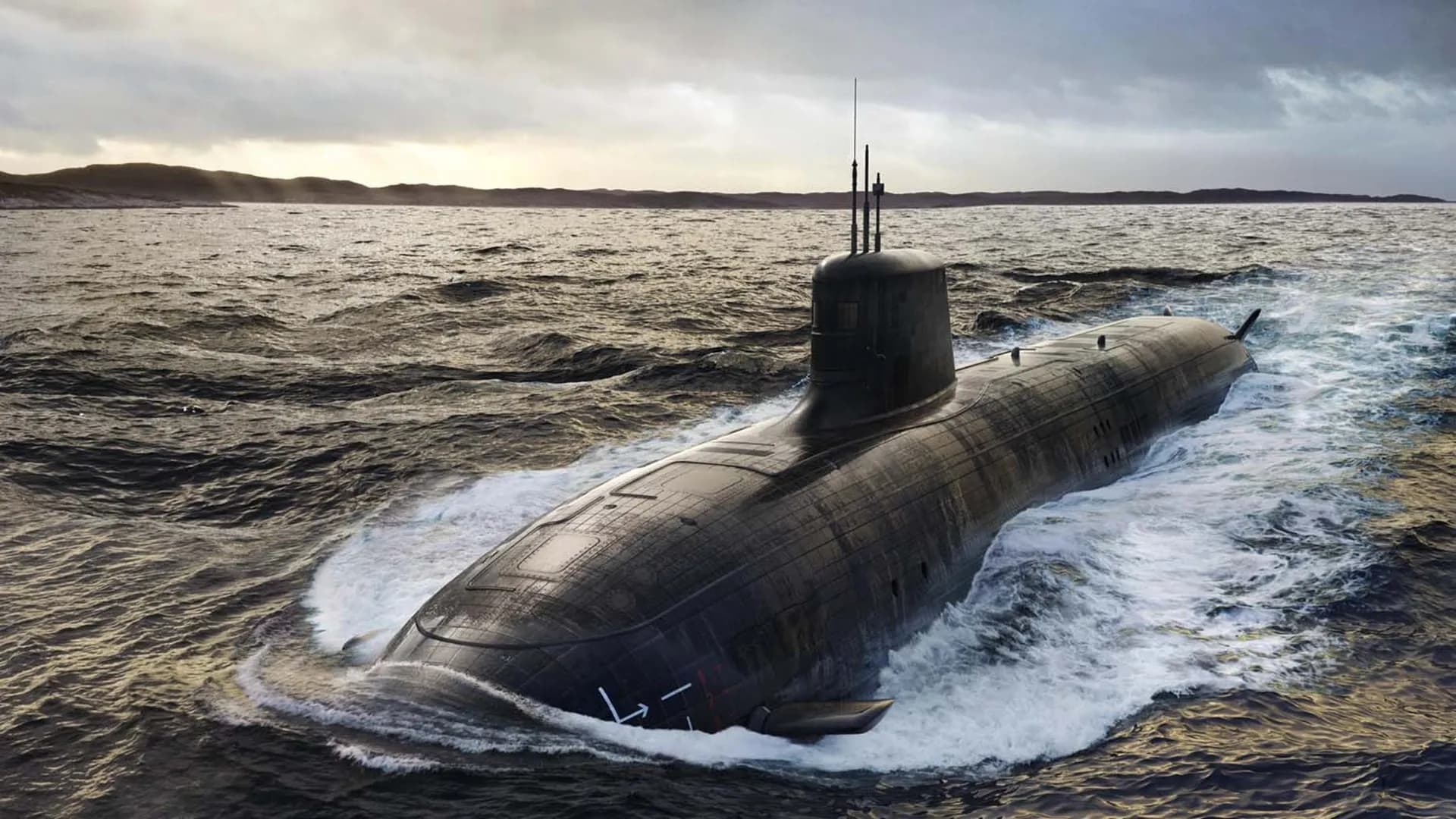
China has successfully tested a large-scale airborne electromagnetic detection system that may be capable of locating nuclear-powered submarines operating deep beneath the ocean surface.
The technology, known as Airborne Transient Electromagnetic (ATEM), reportedly consists of a massive coil array towed by a helicopter. The coils can emit powerful electromagnetic pulses into the ground or water below.
The system is primarily designed for civilian geological applications, including mineral exploration, groundwater surveys, and geological mapping. However, earlier research has indicated that the same underlying technology holds significant military potential.
Seven-Minute Test Flight Validates Stability
A research team led by Fu Jingcheng — an associate professor at Beihang University (Beijing University of Aeronautics and Astronautics) and a PhD researcher at the Institute of Geology and Geophysics, Chinese Academy of Sciences — conducted a seven-minute helicopter test flight. During the trial, onboard sensors confirmed that the coil array was able to maintain the near-horizontal stability required for accurate detection.
Core Architecture of the Detection System
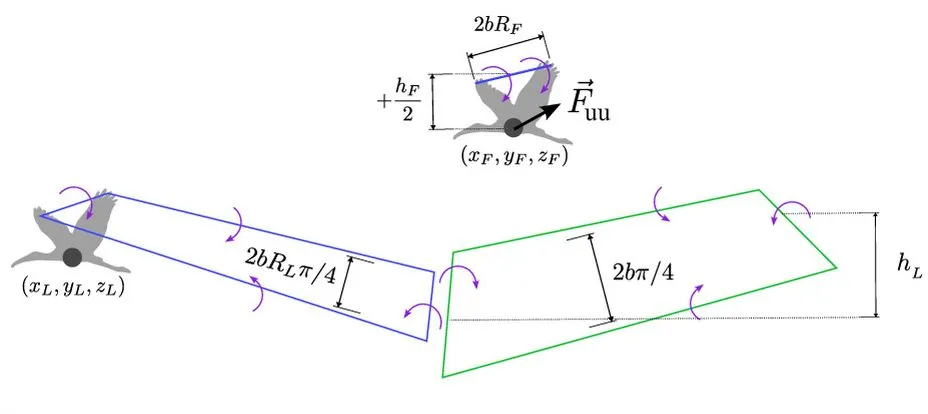
According to the South China Morning Post (SCMP), the system is a massive structure comprising three large dodecagonal (12-sided) coils, each approximately 82 feet (25 metres) in diameter, serving as the transmitter, compensation unit, and receiver respectively.
The coils are suspended beneath the helicopter via a network of cables. During operation, the transmitter coil releases a powerful pulse of electrical current, generating a brief electromagnetic field.
Once the pulse ends, conductive materials beneath the surface or underwater produce secondary electromagnetic signals, which are then captured by the receiver coil. By analysing the decay patterns of these signals, scientists can identify buried or submerged objects and estimate their depth and material composition.
Flight Stability Remains the Greatest Challenge
Maintaining stability during flight is one of the primary limitations of airborne electromagnetic systems. Large suspended coil arrays are susceptible to tilting and swaying caused by wind, rotor downwash, and aircraft manoeuvres — all of which compromise data accuracy. Even moderate helicopter acceleration can cause the structure to tilt by more than 20 degrees.
Overcoming Technical Hurdles
To address these issues, Fu Jingcheng and his team developed a computer model to calculate the optimal length and tension for each cable in the system, identifying flight configurations that keep the coils level during measurements.
The researchers also attached a flexible aerodynamic membrane behind the main transmitter coil as a passive stabilisation device. The membrane generates a restoring force to suppress severe oscillations.
The seven-minute test flight confirmed the design's ability to maintain the near-horizontal attitude required for precise measurements. The trial also showed that sharp acceleration and tight turns cause the suspended payload to swing violently, placing significant stress on the cables.
The researchers noted that the detection system performs best during slow, steady flight. Pilots are advised to reduce speed before initiating turns, execute turns gradually, and only accelerate once the manoeuvre is complete.
Earlier Research Validated Anti-Submarine Applications
As far back as 2012, researchers from Chang'an University and Shandong University proposed combining ATEM systems with synthetic aperture imaging technology for the detection of submerged submarines. Simulated experiments reportedly succeeded in identifying a scaled submarine model submerged in saltwater.
The research paper was published on 25 April in Acta Aeronautica et Astronautica Sinica.
原文來源: 查看原文
FAQ
Newsletter
Subscribe to our Low-Altitude Industry Newsletter
Daily curated news on low-altitude economy and drone industry, delivered to your inbox.
Reviewed and published by the LAETimes editorial desk ·