California Police Drone's Thermal Camera Leaves Theft Suspect Nowhere to Hide in Warehouse
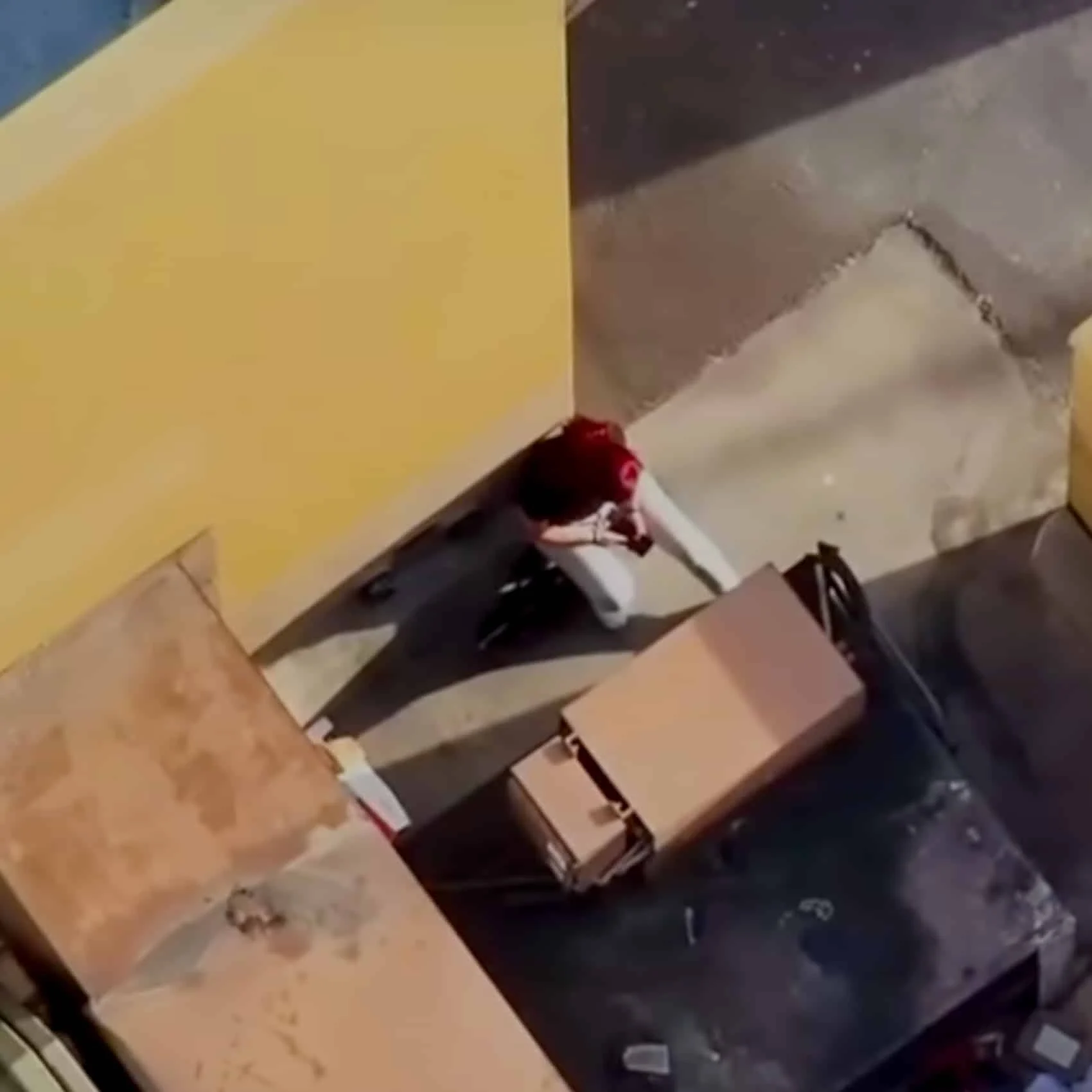
Buena Park, California police deployed their Drone as First Responder (DFR) system on June 9, using a Flock Safety 'Raven' drone equipped with a Forward Looking Infrared (FLIR) sensor to locate a theft suspect hiding inside a residential storage shed. Both suspects were arrested. The case highlights the growing role of police drones in combating retail theft.
Highlights
- On June 9, Buena Park Police used a Flock Safety 'Raven' DFR drone with FLIR thermal imaging to locate a Kohl's theft suspect concealed inside a residential storage shed, leading to arrest.
- Flock Safety acquired DFR startup Aerodome for over $300 million in late 2024, integrating autonomous drone dispatch into its surveillance platform.
- The Flock Alpha drone covers a 3.5–4 mile radius per pad, achieves an average 86-second response time, and can redeploy in 90 seconds with automated battery swapping.
- Both suspects were found with outstanding warrants; charges were filed under California Penal Code Section 666, enhanced by Proposition 36 (passed November 2024), carrying up to three years in state prison.
- The fleeing suspect faces an additional misdemeanor charge under Penal Code Section 148(a)(1) for resisting arrest, punishable by up to one year in county jail and a $1,000 fine.
A shoplifting incident at a Kohl's department store in Buena Park, California ended in dual arrests on June 9 — and the decisive factor was a police drone that never touched the ground. One suspect abandoned a vehicle, scaled a fence, and ducked into a stranger's backyard storage shed, counting on darkness and walls for cover. The drone overhead, however, read his body heat through its thermal sensor and relayed his precise location to officers on the ground. His hiding spot held for only a matter of minutes.
The Arrest
Buena Park Police Department received a report of a theft in progress at a local Kohl's store. Responding officers first located two suspects near the recycling area behind a nearby Michaels craft store.
One suspect immediately fled on foot, cutting through residential streets and jumping into private backyards — startling several residents along the way — before ducking into a stranger's storage shed in a bid to evade the search.
What the suspect didn't know was that the search had already moved overhead. The department's Drone as First Responder (DFR) unit was already airborne and tracking. The wooden walls of the shed offered no barrier against what the drone was following.
Thermal Imaging: The Eye That Sees Heat
According to New Santa Ana, the drone was equipped with a Forward Looking Infrared (FLIR) sensor — the same class of thermal imaging technology that police helicopters have used for decades. FLIR does not rely on visible light; it detects heat signatures, rendering warm human bodies as bright outlines against a cooler background.
A person crouching inside a wooden shed is invisible to the naked eye or a standard camera. Under a thermal sensor, however, that person glows clearly. Once the drone locked onto the heat signature, it relayed the shed's precise coordinates to ground officers, who immediately moved to surround it.
Darkness, fences, closed doors — these obstacles conceal a face but cannot mask a living person's body heat. Thermal imaging technology that once existed only on expensive police helicopters can now be carried by a compact drone launching from a rooftop pad.
Buena Park uses Flock Safety drones, designated "Raven." Flock Safety, originally known for license plate readers and street cameras, formally entered the aerial surveillance market in late 2024 when it acquired DFR startup Aerodome for more than $300 million.
The model deployed is likely the Flock Alpha — a U.S.-manufactured, NDAA-compliant quadcopter equipped with a high-definition thermal imaging system and a high-resolution camera. Flock claims the aircraft can read license plates from an altitude of 2,000 feet (approximately 610 meters). While the specific model was not confirmed in reports, the capability demonstrated on scene was unambiguous: real-time aerial thermal tracking with live position data fed directly to responding officers.
What Is Drone as First Responder (DFR)?
DFR inverts the traditional dispatch sequence. Previously, officers arrived on scene before requesting air support; now, a drone launches the moment a call comes in, often arriving before patrol cars.
Buena Park's DFR program runs on Flock's Aerodome platform — an automated docking and dispatch system integrated into Flock's broader surveillance network. A single docking pad covers a radius of approximately 3.5 to 4 miles (5.6 to 6.4 km), and Flock states an average response time of roughly 86 seconds from call receipt to drone overhead.
The Flock Alpha can redeploy within 90 seconds via an automated battery-swap system, with a maximum flight endurance of 45 minutes per sortie. These are Flock's published figures rather than Buena Park-specific measurements, but they illustrate the design intent: get eyes in the air before ground units arrive.
In foot-pursuit scenarios, that time advantage is decisive. By the time the suspect entered the shed, the drone was already ahead of him. Officers were able to act on precise intelligence rather than conduct a blind search. DFR drones of this type typically operate at altitudes of 200 to 400 feet (approximately 61 to 122 meters).
Retail theft is a natural fit for this deployment model — high frequency, difficult to staff adequately. A patrol car can only be in one place at a time; an airborne drone can simultaneously monitor a fleeing suspect and guide officers into position. This is why departments facing staffing shortages and pressure from busy commercial districts are increasingly adopting DFR programs.
This case is not an isolated example. Local outlets including New Santa Ana have documented multiple arrests across Orange County over the past year in which drone coverage — rather than a foot chase — determined the outcome, spanning incidents from shoplifting to stolen e-bikes. Drones have turned what was once a suspect's most effective strategy — running and hiding — into their worst option.
Charges and the Impact of California's Proposition 36
Both suspects were taken into custody, and both were found to have outstanding arrest warrants. Theft charges were filed under California Penal Code Section 666 — the "petty theft with prior" provision — enhanced under Proposition 36.
Proposition 36 was passed by California voters in November 2024 and took effect in December of that year. The measure restored the option to elevate repeat theft offenses to felony status; qualifying repeat offenders now face up to three years in state prison for conduct that previously may have been prosecuted only as a misdemeanor.
The suspect who fled on foot faces an additional misdemeanor charge under Penal Code Section 148(a)(1) — resisting and obstructing a peace officer — which carries a maximum penalty of one year in county jail and a $1,000 fine. A shoplifting call had escalated to felony exposure, and the thermal camera ensured neither suspect could slip away.
Editor's Note
Flock Safety is quietly winning over departments that are unwilling to pay a premium for Skydio solutions. Washington's push to phase out DJI equipment has opened market space for Skydio, but not every agency is prepared to absorb the cost differential. Buena Park's choice has validated itself through arrest results — a case study worth examining for any department weighing its options.
原文來源: 查看原文
FAQ
Reviewed and published by the LAETimes editorial desk ·