New Research Reveals Novel Method for Measuring Planetary Mass
Researchers from the University of Warwick, MIT, and McMaster University have discovered that the structure of dust rings around young stars can be used to estimate the mass of hidden planets, offering astronomy a new indirect detection method beyond traditional transit and radial velocity techniques.
Highlights
- Researchers from the University of Warwick, MIT, and McMaster University identified dust ring structures in protoplanetary discs as a tool for estimating hidden planet masses.
- The method analyses perturbations in the shape, width, and density of dust rings caused by the gravitational influence of embedded planets.
- This indirect approach offers an alternative to traditional transit and radial velocity techniques, which cannot easily detect unseen planets.
- The discovery has significant implications for understanding planetary formation and the early evolution of extrasolar planetary systems.
New Research Reveals Novel Method for Measuring Planetary Mass
Researchers from the University of Warwick (UK), the Massachusetts Institute of Technology (MIT), and McMaster University (Canada) have jointly discovered that the structure of dust rings surrounding young stars can serve as a key indicator for estimating the mass of hidden planets.
This study provides the astronomical community with a new indirect observational method. Traditionally, measuring the mass of exoplanets has relied on techniques such as planetary transits or radial velocity measurements. However, these approaches are often difficult to apply to planets that have not yet been directly observed.
Dust Ring Structure Emerges as Critical Clue
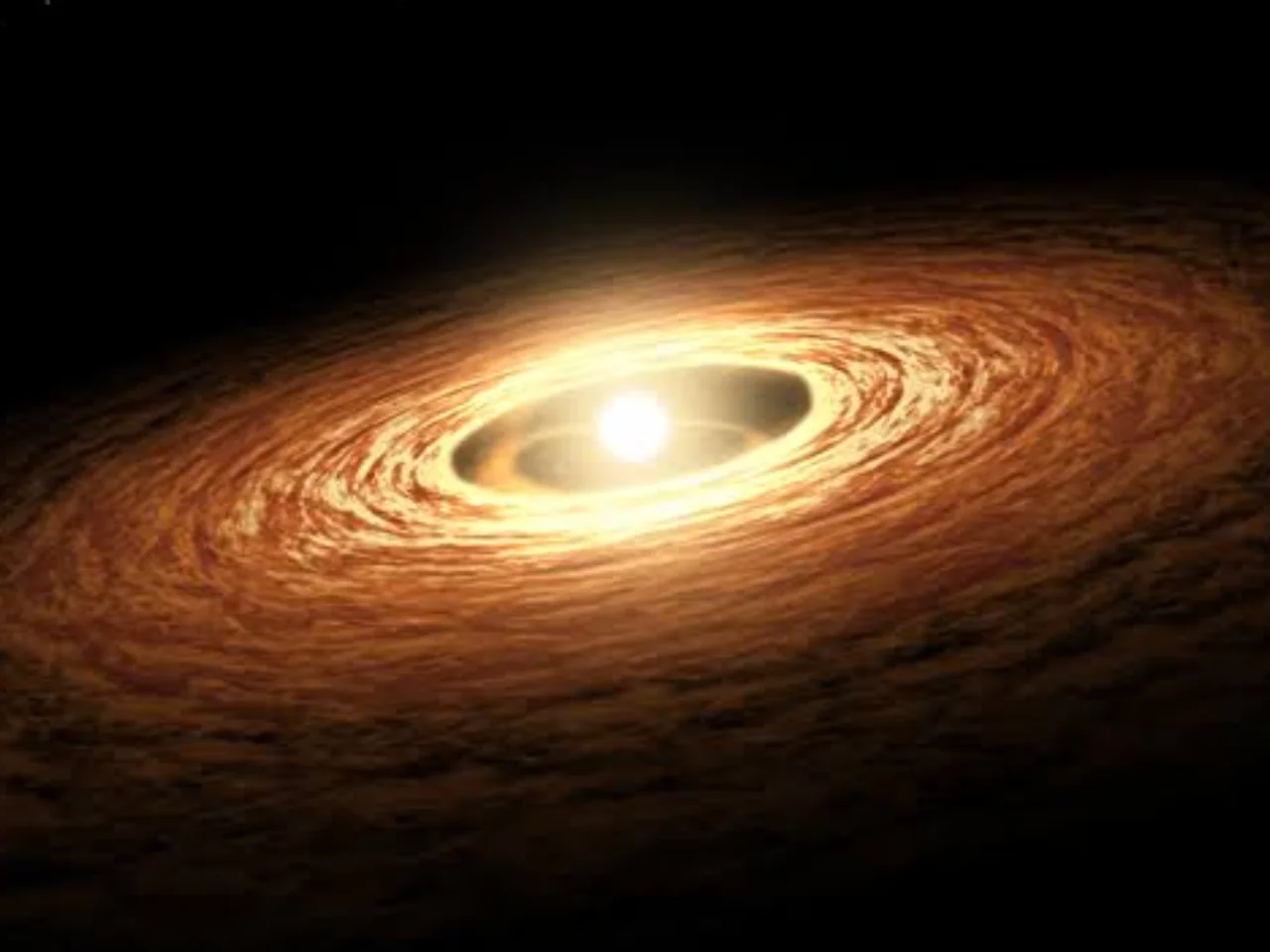
The research team found that within the protoplanetary discs surrounding young stars, the shape, width, and density distribution of dust rings are influenced by the gravitational pull of embedded planets, producing specific perturbation signatures. By analysing these signatures, scientists can work backwards to determine an approximate mass range for the planet in question.
This finding holds significant implications for the study of planetary formation, particularly in exploring the early evolutionary stages of planetary systems beyond our own Solar System, offering a more practical observational tool for researchers in the field.
The findings have been published and have attracted widespread attention from the international astronomical community.
原文來源: 查看原文
FAQ
Reviewed and published by the LAETimes editorial desk ·