Drone Community Buzzes Over 'What Could Possibly Go Wrong?' Safety Post
A sarcastically titled post circulating among drone communities — captioned 'what could possibly go wrong?' — has sparked widespread industry discussion about flight safety, regulatory enforcement gaps, and management vulnerabilities. Shared by accounts including @UK_Daniel_Card and @UAVHive, the brief post resonated with practitioners frustrated by underappreciated risks in the rapidly expanding drone sector.
Highlights
- A sarcastic social media post captioned 'what could possibly go wrong?' went viral across drone community accounts including @UK_Daniel_Card and @UAVHive, sparking industry-wide safety discussion.
- The post reflects deep-seated frustration among drone professionals over regulatory enforcement gaps and underappreciated flight safety risks.
- Industry experts identify Remote ID implementation, pilot training standards, and consistent regulation enforcement as the three critical pillars for reducing drone-related incidents.
- Drone applications now span aerial photography, agricultural spraying, infrastructure inspection, and logistics delivery, making safety culture increasingly critical as the operator base expands.
- Patchy Remote ID adoption and enforcement remain ongoing concerns for safety advocates in the US, EU, and UK markets.
Drone Community Buzzes Over Safety and Regulatory Gaps
A short social media post sarcastically captioned "what could possibly go wrong?" has gone viral within drone industry circles, spreading rapidly across accounts including @UK_Daniel_Card and @UAVHive and igniting a broader conversation about flight safety, regulatory enforcement, and systemic management vulnerabilities.
Despite its brevity, the post struck a nerve among industry professionals and observers who have long harbored concerns about risks being underestimated or overlooked — both by individual operators and by regulatory bodies.
A Symptom of Deeper Industry Frustration
Sarcastic shorthand like "what could possibly go wrong?" is rarely accidental in professional communities. In this case, it appears to encapsulate a widely shared sentiment: that as the drone industry scales at pace, safety culture and regulatory enforcement have not always kept up.
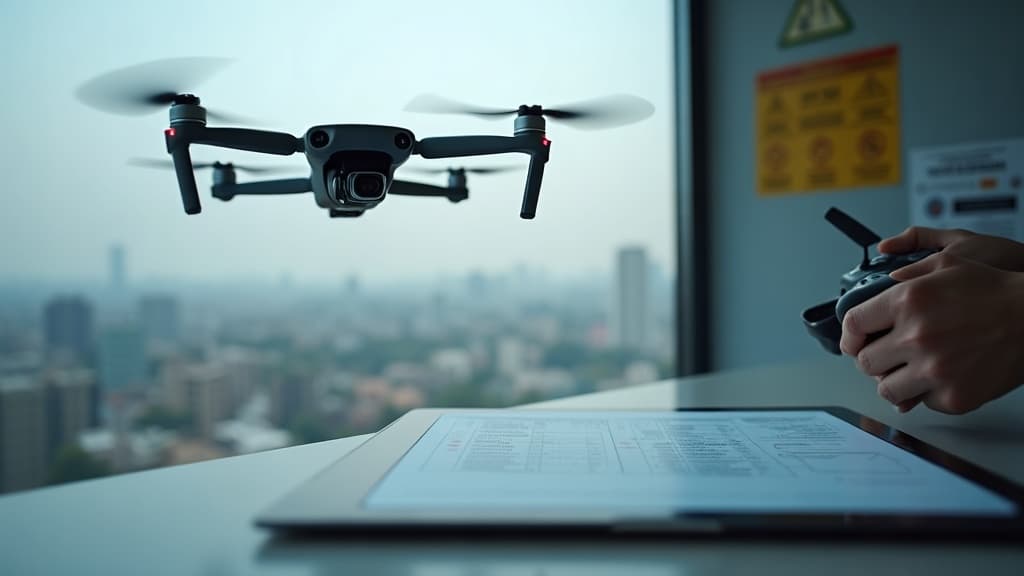
The drone sector has expanded dramatically in recent years, with applications spanning aerial photography, agricultural spraying, infrastructure inspection, and last-mile logistics delivery. With the operator base growing, so too have incidents involving airspace violations, near-misses, and regulatory grey areas.
Safety Culture and Oversight Mechanisms
Industry experts broadly agree that mitigating these risks requires a multi-pronged approach:
- Robust safety culture embedded from the operator level upward
- Improved pilot education and training standards
- Consistent enforcement of existing regulations
- Full implementation of Remote ID and other monitoring mechanisms that give authorities real-time visibility into drone operations
Remote ID, in particular, has been positioned by regulators in the US, EU, and UK as a cornerstone of scalable drone traffic management — yet patchy adoption and enforcement remain ongoing concerns among safety advocates.
The Bigger Picture
What appears on the surface to be a throwaway social media quip reflects a genuine undercurrent of anxiety in the professional drone community. As unmanned aircraft systems become more capable and more numerous, the margin for complacency shrinks accordingly.
The consensus among experienced practitioners is clear: technological advancement must be matched by an equally rigorous evolution in safety awareness, operational standards, and regulatory follow-through — or the industry risks setbacks that could undermine public trust and long-term growth.
Editor's note: The original source for this article was a brief social media post. This report has been expanded to provide industry context based on available information.
原文來源: 查看原文
FAQ
Reviewed and published by the LAETimes editorial desk ·