U.S. Navy Pursues Fleet-Wide Expeditionary Mine Countermeasures Capability in Wake of 'Operation Epik Fury'
The Navy's Explosive Ordnance Disposal Training and Evaluation Unit One (EODTEU1) is evaluating new mine countermeasures capabilities to support Distributed Maritime Operations in the Indo-Pacific. The plan calls for Expeditionary MCM Companies to operate from 'opportunity vessels' carrying UUVs and rigid-hull inflatable boats, with a training exercise scheduled off San Diego in June 2025.
Highlights
- EODTEU1 is evaluating new expeditionary mine countermeasures capabilities to support U.S. Navy Distributed Maritime Operations doctrine in the Indo-Pacific.
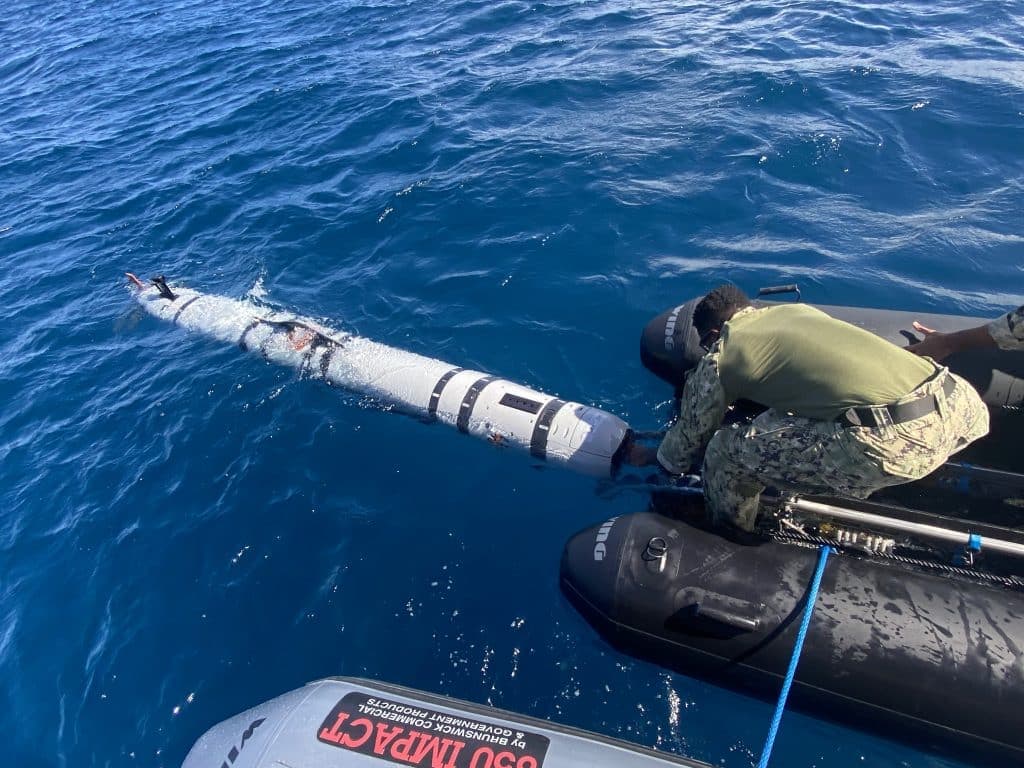
- Training exercises aboard a leased commercial 'opportunity vessel' are scheduled off San Diego from June 7–12, 2025, carrying Mark 18 Mod 2 'Kingfish' UUVs and RHIBs.
- The initiative reflects a broader transition away from dedicated Avenger-class minehunters toward flexible, multi-platform EOD operations deployable from commercial and gray-hull vessels.
- Growing concern over naval mine threats in potential Western Pacific conflicts — including blockades of chokepoints and amphibious zones — is driving this capability development.
- The U.S. Navy previously tested containerized SM-3 Block IA ballistic missile defense systems aboard a commercial vessel during Resolute Dragon 2024, reflecting the same broader strategic trend.
The U.S. Navy's Explosive Ordnance Disposal Training and Evaluation Unit One (EODTEU1) has announced plans to evaluate new mine countermeasures capabilities, citing emerging requirements identified in the Indo-Pacific region — particularly in support of the Navy's Distributed Maritime Operations (DMO) doctrine, according to newly released procurement documents.
Middle East and Indo-Pacific Challenges Drive Mission Transformation
The mission shift is rooted in a series of operational challenges at the Strait of Hormuz, where Iranian forces have laid mines in an effort to disrupt commercial shipping access to the Persian Gulf. Simultaneously, the broad deployment of EOD personnel across the U.S. Indo-Pacific Command (INDOPACOM) area of responsibility has, according to the documents, "impacted all training requirements for individuals and detachments."
The documents state: "In preparation for Distributed Maritime Operations, EODTEU-1 has identified that Expeditionary Mine Countermeasures Companies (ExMCM Co) must be capable of deploying from any opportunity vessel to conduct operations." The documents also outline fleet requirements across the Fifth and Seventh Fleet areas of responsibility, emphasizing that "required maritime vessel support services are critical to maritime EOD operations."
Multi-Platform Training Program
EODTEU1 plans to establish new training frameworks enabling Expeditionary MCM Companies to operate across a range of platforms — including gray-hull warships and commercial vessels — to meet near-term mission requirements for both U.S. Central Command (CENTCOM) and INDOPACOM.
Training exercises are scheduled for June 7–12, 2025, aboard a leased commercial vessel off San Diego, in support of Naval EOD Group objectives.
The vessel to be contracted will carry:
- 3 Rigid-Hull Inflatable Boats (RHIBs)
- Combat Rubber Raiding Craft (CRRC)
- 2 Mark 18 Mod 2 "Kingfish" Unmanned Underwater Vehicles (UUVs), typically paired with hull-mounted sonar systems for mine detection and mapping
The 'Opportunity Vessel' Strategy: Adapting to the Pacific's Vast Battlespace
This initiative reflects a broader transformation in U.S. Navy mine countermeasures planning. For decades, the mission has been heavily reliant on dedicated minehunting vessels. However, as the Navy progressively retires its aging Avenger-class mine countermeasures ships and places greater emphasis on Distributed Maritime Operations, EOD teams are increasingly expected to operate from a wider variety of platforms — including vessels not originally designed for mine warfare.
The ability to deploy mine-hunting systems from opportunity vessels carries significant tactical value across the vast expanses of the Pacific, where dedicated MCM assets may not be available at the onset of a conflict. By pairing EOD teams with UUVs and small boats aboard commercial ships, logistics vessels, or other naval platforms, the Navy aims to build a more resilient and responsive capability to rapidly clear critical sea lanes and sustain dispersed fleet operations across a large theater.
Naval Mines: A Critical Variable in Western Pacific Conflict Scenarios
This requirement also highlights growing concern about the potential role of naval mines in a future Western Pacific conflict. Mines are relatively inexpensive, difficult to detect, and can be used to blockade critical chokepoints, ports, and amphibious landing zones. For U.S. forces operating across a dispersed network of islands and expeditionary bases, the ability to rapidly locate and neutralize mines is essential to maintaining freedom of maneuver and logistical continuity. The U.S. Marine Corps is expected to test related concepts during Balikatan 2026 exercises in the Philippines.
Broader Trend: Containerized Weapons Systems
The U.S. Navy has previously experimented with similar concepts for long-range strike and missile defense, including the deployment of SM-3 Block IA ballistic missile defense systems aboard a leased commercial vessel during the Resolute Dragon 2024 exercise. These efforts are part of a broader strategic push to field containerized weapons systems aboard U.S. Navy and allied vessels, with the goal of dramatically multiplying available firepower at the outset of a major regional conflict.
原文來源: 查看原文
FAQ
Reviewed and published by the LAETimes editorial desk ·