Europe's First Superconducting X-Ray Spectrometer Goes Live in Germany, Boosting Photon Detection Efficiency Up to 1,000-Fold
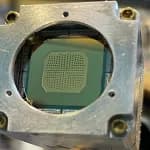
A collaboration between Germany's Helmholtz-Zentrum Berlin (HZB), the Max Planck Institute for Chemical Energy Conversion (MPICEC), and the U.S. National Institute of Standards and Technology (NIST) has commissioned Europe's first superconducting Transition Edge Sensor (TES) array X-ray spectrometer at the BESSY II synchrotron facility. Equipped with 248 sensors, the instrument detects photons 100 to 1,000 times more efficiently than conventional systems, dramatically reducing experiment times and enabling new research into atomic-thin layers and nanostructures.
Highlights
- Europe's first superconducting TES array X-ray spectrometer has been commissioned at BESSY II in Germany through a tri-party collaboration between HZB, MPICEC, and NIST.
- The instrument's 248 sensors achieve photon detection efficiency 100 to 1,000 times greater than conventional wavelength-dispersive XES spectrometers.
- The TES sensors operate at 25 millikelvin, cooled by a He4-He3 dilution refrigerator — the same technology used in quantum computers.
- Measurements that previously took hours with conventional systems can now be completed in minutes, enabling research on atomically thin layers, nanostructures, and highly dilute molecular samples.
- The spectrometer is installed at the UE52-SGM beamline at BESSY II and includes a custom ultra-high vacuum sample chamber supporting temperatures from 10 K to room temperature.
Researchers in Germany have officially commissioned Europe's first — and only — superconducting Transition Edge Sensor (TES) array X-ray spectrometer at BESSY II, one of the world's leading third-generation synchrotron light sources.
The instrument was jointly developed by the Helmholtz-Zentrum Berlin (HZB), the Max Planck Institute for Chemical Energy Conversion (MPICEC), and the U.S. National Institute of Standards and Technology (NIST). It employs a detector array of 248 sensors and far outperforms conventional X-ray Emission Spectroscopy (XES) and Resonant Inelastic X-ray Scattering (RIXS) systems — achieving 100 to 1,000 times the efficiency of traditional wavelength-dispersive X-ray emission spectrometers.
The research team says the instrument will be used to investigate the electronic properties of atomically thin layers, nanostructures, and highly dilute atomic and molecular samples, with many breakthrough experiments anticipated.
Europe's First TES Spectrometer
Synchrotron facilities such as BESSY II generate intense X-ray beams that allow researchers to probe the structure and properties of matter. However, techniques such as XES and RIXS require the detection of photons emitted by samples under X-ray illumination, placing high demands on photon yield — which previously limited these methods to large or highly concentrated samples.
The new Transition Edge Sensor (TES) spectrometer opens the door to studying atomically thin layers, nanostructures, impurities, and highly dilute molecular systems.
Dr. Régis Decker, the HZB scientist responsible for the new instrument, said: "The superconducting TES array photon detector we have put into operation at BESSY II detects photons approximately 100 to 1,000 times more efficiently than conventional XES and RIXS spectrometers."
Decker added that the system will provide new insights for molecular chemistry, molecular biology, and quantum materials research, and can also complement widely used techniques such as Angle-Resolved Photoemission Spectroscopy (ARPES) for studying electronic band structures.
Redefining the Possibilities of X-Ray Analysis
The instrument is expected to dramatically reduce experiment times. Measurements that would have taken hours with conventional systems could now be completed in just minutes, enabling scientists to collect data more efficiently and study a far greater range of materials.
HZB notes that the 248 sensors in the TES array enter a superconducting state when cooled to 25 millikelvin (mK) — just marginally above absolute zero — a condition achieved using a helium-4/helium-3 (He4-He3) dilution refrigerator of the type also used in quantum computers.
When an X-ray photon emitted by the sample strikes one of the sensors, it causes an extremely small rise in temperature that momentarily disrupts the sensor's superconducting state. This change in electrical resistance is detected by a circuit composed of an array of Superconducting Quantum Interference Devices (SQUIDs).
The spectrometer also integrates a custom ultra-high vacuum sample chamber, allowing researchers to transfer, prepare, and measure samples across a temperature range from 10 kelvin (K) to room temperature.
The complete system is installed at the UE52-SGM beamline at BESSY II, where scientists can also control the polarization of the incident X-rays. "We look forward to receiving exciting research proposals from the user community," Decker said in a press release.
原文來源: 查看原文
FAQ
Newsletter
Subscribe to our Low-Altitude Industry Newsletter
Daily curated news on low-altitude economy and drone industry, delivered to your inbox.
Reviewed and published by the LAETimes editorial desk ·