Austrian Research Team Develops Next-Generation BMS Capable of Real-Time Detection of Internal Cell Damage
Researchers from TU Graz and Vrije Universiteit Brussel, under the EU-funded Nemo project, have developed a new battery management system (BMS) that uses electrochemical impedance spectroscopy (EIS) to directly detect internal damage and aging within EV battery cells. The system enables earlier safety warnings and longer battery lifespans. Findings have been published in the Journal of Power Sources.
Highlights
- TU Graz and Vrije Universiteit Brussel developed a new BMS under the EU-funded Nemo project that uses electrochemical impedance spectroscopy (EIS) to detect internal cell damage in real time.
- The system can autonomously identify faults and monitor cell degradation at the individual cell level, enabling earlier maintenance before safety risks escalate.
- Researchers intentionally deformed battery cells to simulate minor collision impacts, using the data to train damage-recognition algorithms.
- TU Graz developed models to predict cell volumetric changes during charge/discharge cycles, helping to prevent mechanical stress-induced failures such as internal short circuits and thermal runaway.
- The enhanced BMS does not significantly increase system size or weight; a module-level prototype has been completed and industrial deployment is the next target.
Austrian Research Team Develops Next-Generation BMS Capable of Real-Time Detection of Internal Cell Damage
Austrian researchers have developed a new battery management system (BMS) capable of detecting hidden internal damage and tracking the aging of electric vehicle (EV) batteries in real time — a breakthrough that could significantly enhance battery safety, performance, and service life.
The technology emerged from the EU-funded Nemo project, involving Graz University of Technology (TU Graz), Vrije Universiteit Brussel (VUB), and several industry partners. Unlike conventional BMS solutions that primarily monitor voltage, current, and temperature, this new approach provides direct insight into the actual condition inside individual battery cells.
Existing battery systems typically rely on external computation to estimate battery state of health, meaning internal damage or degradation within a single cell often goes undetected until performance visibly deteriorates. The research team states that their new models and algorithms enable the BMS to autonomously identify faults, monitor cell degradation, and determine when maintenance is required.
Monitoring from Inside the Cell
A central goal of the project is to improve the system's ability to flag safety risks before they escalate into serious problems.
"The battery management system is an important tool for making electric vehicles safer and more sustainable," said Christoph Drießen of the Institute of Vehicle Safety at TU Graz.
To train the system, researchers deliberately inflicted damage on cells under laboratory conditions. Some cells were mechanically deformed to simulate minor impacts — such as those that might occur during a low-speed parking collision — and the resulting data was used to develop algorithms capable of recognizing signs of similar damage in real-world batteries.
The system employs electrochemical impedance spectroscopy (EIS), a technique that measures internal resistance within a cell via sensors. This allows engineers to obtain information directly from inside the battery rather than inferring its condition solely from external measurements.
The researchers note that this additional layer of monitoring enables earlier identification of damaged cells, thereby reducing safety risks and allowing maintenance to be performed before larger issues develop.
"If the BMS can detect faults and damage in individual cells at an early stage, many hazards can be prevented before they arise," said Drießen.
Smarter Aging Detection
Beyond safety, the research team also focused on understanding how batteries degrade over time.
The TU Graz team developed a model to predict volumetric changes in cells during charge and discharge cycles. Excessive swelling increases mechanical stress within a battery pack, raising the risk of cell cracking, deformation, internal short circuits, and thermal runaway.
Meanwhile, researchers at VUB developed models to track aging and lifetime evolution at the individual cell level.
The team notes that existing battery diagnostics largely only indicate how much total capacity has been lost relative to the original factory state. The new approach aims to provide a far more detailed picture of what is changing inside a cell as it ages.
"Previous tests could only show how much capacity had declined compared to the original battery state," said Drießen. "But the new models also give us insight into the internal changes occurring as a cell ages, enabling adjustments that benefit performance, service life, and safety."
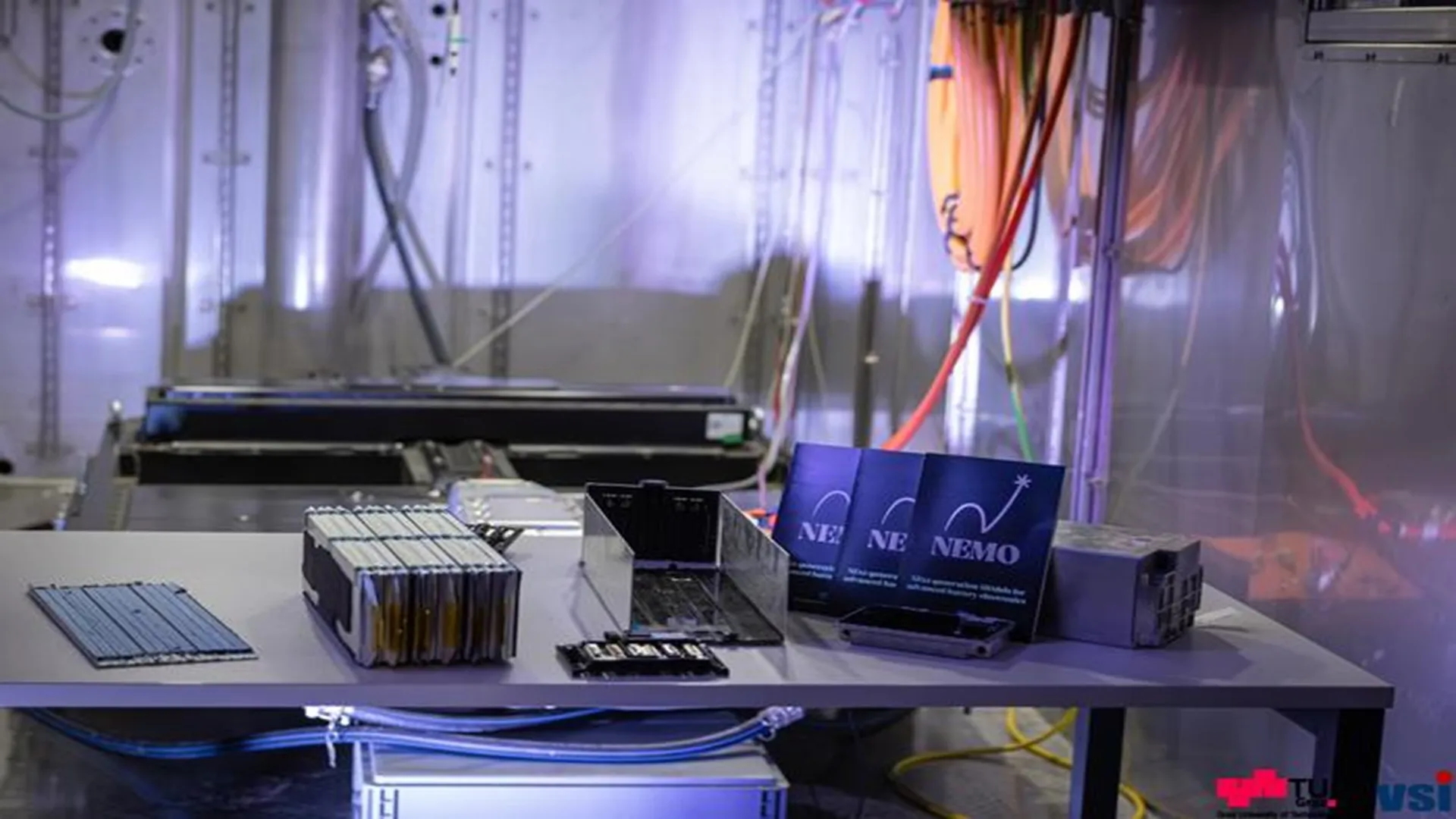
Despite the added functionality, the researchers state that the enhanced BMS will not significantly increase the size or weight of existing systems. A demonstration prototype has already been built at the battery module level, and future work will focus on advancing the technology toward industrial deployment.
The findings have been published in the academic journal Journal of Power Sources.
原文來源: 查看原文
FAQ
Newsletter
Subscribe to our Low-Altitude Industry Newsletter
Daily curated news on low-altitude economy and drone industry, delivered to your inbox.
Reviewed and published by the LAETimes editorial desk ·