UK's £300M 'Future Flight' Programme Hampered by Regulatory Delays, Funding Gaps and Public Scepticism
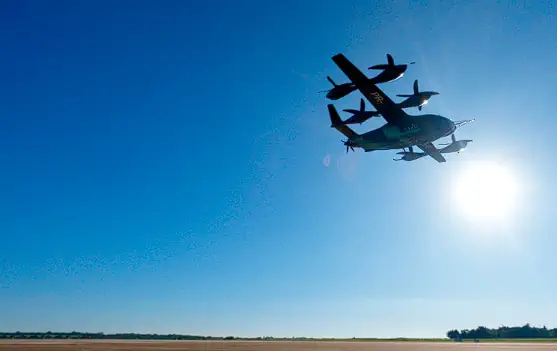
The UK government's £300 million Future Flight Challenge, led by UKRI, aimed to usher in a new era of drones and eVTOL air taxis. However, an official evaluation report has exposed serious headwinds: slow CAA certification, a funding 'valley of death' between grants and private investment, underdeveloped vertiport infrastructure, and persistent public concerns over noise and privacy — all threatening to leave the UK behind in the global advanced air mobility race.
Highlights
- The UK government has committed £300 million to the Future Flight Challenge programme, managed by UKRI, to develop drones and eVTOL air taxi services.
- An official evaluation report found that CAA certification delays are preventing companies from setting reliable commercial deployment timelines and deterring investors.
- Many UK advanced air mobility firms are trapped in a funding 'valley of death' between government grants and private investment, a gap wider than in the US or EU.
- Critical eVTOL and drone infrastructure — including vertiports and dedicated corridors — is being deployed far more slowly than planned across the UK.
- Industry stakeholders are calling on the UK government to accelerate regulatory reform and establish stable long-term funding to avoid falling behind the US, Singapore, Japan, and EU competitors.
The UK government's £300 million Future Flight Challenge — launched to position Britain at the forefront of drone and eVTOL air taxi adoption — is facing a sobering reality check. An official evaluation report has laid bare a series of structural obstacles threatening to stall the programme's ambitions, including regulatory bottlenecks, a chronic shortage of private investment, lagging infrastructure, and lukewarm public acceptance.
An Ambitious Programme Meets Hard Truths
Managed by UK Research and Innovation (UKRI), the Future Flight Challenge was designed to catalyse next-generation urban air mobility solutions — from drone logistics and air taxi services to advanced air traffic management systems. The evaluation report, however, reveals a significant gap between stated goals and on-the-ground progress.
Three Core Obstacles
Regulatory Delays The UK Civil Aviation Authority's (CAA) certification and approval processes have drawn widespread criticism from industry participants for being too slow. The existing regulatory framework has not kept pace with technological development, making it difficult for companies to plan commercial deployment timelines and deterring potential investors.
Funding Valley of Death Despite initial government grants, many companies are caught in a dangerous gap between public funding and commercial investment. Private market confidence in the UK's advanced air mobility (AAM) sector lags noticeably behind that seen in competing markets such as the United States and the European Union.
Infrastructure Deficit The rollout of critical infrastructure — including vertiports for eVTOL operations, dedicated drone corridors, and supporting charging facilities — is advancing far more slowly than anticipated across the UK, acting as a significant brake on commercialisation.
Public Acceptance Remains a Barrier
The report also flags public scepticism as a softer but persistent obstacle. A considerable portion of the British public remains uneasy about drones flying regularly over urban areas, with ongoing concerns around noise pollution, privacy infringement, and flight safety continuing to generate community resistance.
International Competition Is Intensifying
The stakes are raised further by rapid progress in rival markets. The United States, Singapore, Japan, and several EU member states have all moved ahead in advanced air mobility — whether in terms of regulatory liberalisation, the scale of commercial pilots, or infrastructure investment. Industry observers warn that unless the UK's current challenges are addressed promptly, Britain risks ceding its position in this emerging sector.
Industry Calls for Government Action
In response to the evaluation report's findings, stakeholders across the UK drone and eVTOL industry are urging the government to accelerate regulatory reform, establish clearer commercialisation pathways, and provide more stable, long-term funding mechanisms — steps they argue are essential if the UK is to remain competitive in the global advanced air mobility race.
原文來源: 查看原文
FAQ
Reviewed and published by the LAETimes editorial desk ·