Russia Drapes Warships in Garden Netting to Defend Against Ukrainian Kamikaze Drones
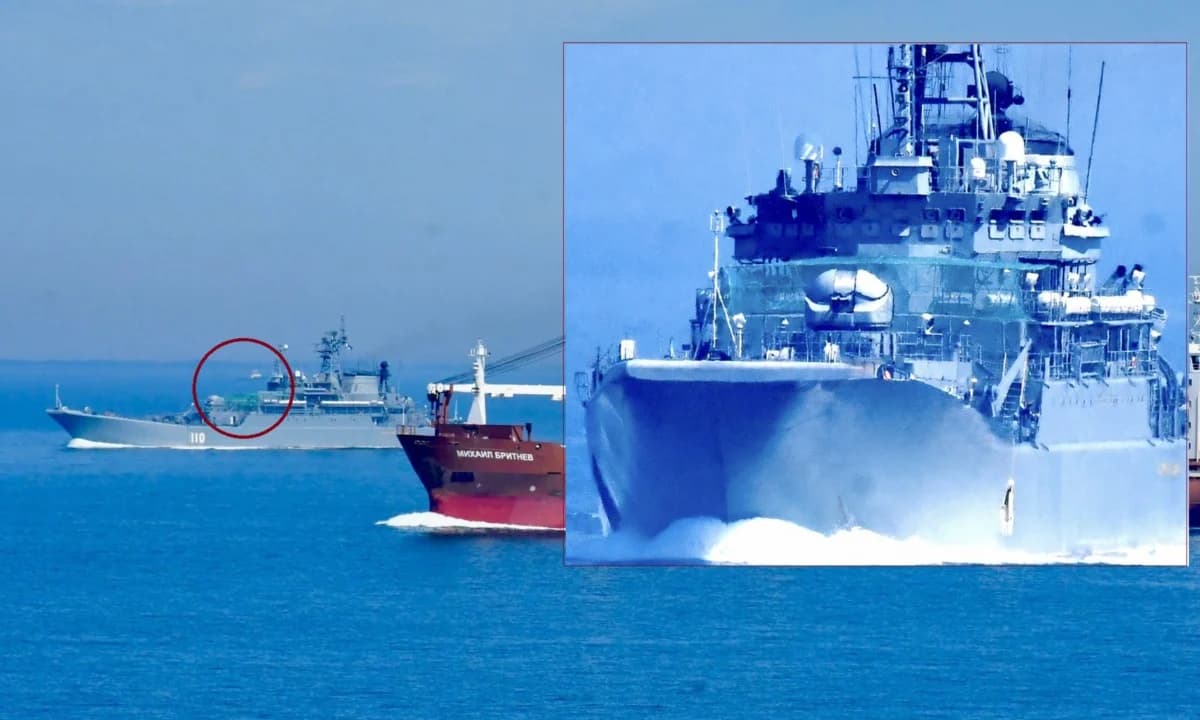
The Russian Navy has adopted a surprisingly low-tech countermeasure against Ukraine's escalating maritime drone threat: covering warships with thin green garden netting. Photographs circulating in Russian military analysis circles highlight the latest development in an asymmetric technological conflict, raising questions about the netting's effectiveness against high-speed explosive drones.
Highlights
- The Russian Navy has installed thin green garden netting on warships as a low-cost countermeasure against Ukrainian kamikaze drone and USV attacks.
- Photographs of the netting-equipped vessels have circulated in Russian military analysis communities, drawing international attention to the tactic.
- Ukraine's drone offensive — combining airborne kamikaze drones and maritime USVs — has caused significant damage to Russia's Black Sea Fleet since the war began.
- Military observers view the garden-netting measure as a stark illustration of asymmetric warfare, where billion-dollar warships are defended by inexpensive civilian materials.
- The Russia-Ukraine conflict has emerged as a major real-world testing ground for drone tactics, closely monitored by military experts worldwide.
A photograph circulating widely in Russian military analysis circles has revealed the Russian Navy's latest countermeasure against Ukraine's escalating maritime drone threat — a thin green mesh net of the kind more commonly found on garden trellises.
A Low-Tech Response to a High-Tech Threat
The measure may appear rudimentary, but it reflects the mounting dual pressure the Russian Navy faces from Ukrainian uncrewed surface vehicles (USVs) and airborne kamikaze drones. In recent years, Ukraine has deployed large numbers of low-cost, high-impact kamikaze drones and maritime USVs, inflicting considerable damage on Russia's Black Sea Fleet.
A Snapshot of Asymmetric Warfare
Military observers have characterized the move as emblematic of the current asymmetric warfare dynamic — multi-billion-dollar warships reduced to relying on cheap civilian materials for basic protection. Whether garden netting can effectively stop a drone traveling at hundreds of kilometers per hour and packed with explosives remains doubtful, but the attempt at least demonstrates that the Russian Navy is actively experimenting with every available defensive option as drone threats rapidly evolve.
Ukraine's Drone Tactics Continue to Evolve
Since the outbreak of the Russia-Ukraine war, Ukraine has continuously innovated its drone attack tactics — deploying small USVs against the port of Sevastopol and using airborne kamikaze drones to harass Russian logistics and naval vessels. The conflict has become a critical real-world testing ground for drone tactics worldwide, drawing intense scrutiny from military experts across the globe.
Regardless of its ultimate effectiveness, Russia's adoption of garden netting has already secured its place as one of the more striking images of this modern war.
原文來源: 查看原文
FAQ
Newsletter
Subscribe to our Low-Altitude Industry Newsletter
Daily curated news on low-altitude economy and drone industry, delivered to your inbox.
Reviewed and published by the LAETimes editorial desk ·