Hundreds of Illegal Drones Intercepted at FIFA World Cup as U.S. Federal Agencies Deploy Counter-UAS Resources
Since the 2026 FIFA World Cup kicked off on June 11, federal law enforcement has seized more than 300 drones that violated temporary flight restrictions across host cities including Dallas, Miami, Philadelphia, and Los Angeles. FEMA has disbursed $250 million in C-UAS grants to 11 host states, with total federal investment exceeding $465 million.
Highlights
- Since June 11, 2026, federal air marshals have seized more than 300 drones violating World Cup TFRs, with Miami alone accounting for 54 seizures and 49 citations issued.
- FEMA has disbursed $250 million in C-UAS grants to 11 FIFA World Cup host states; total federal counter-drone spending exceeds $465 million.
- The FAA's DETER enforcement framework directly levies fines up to $100,000 and revokes certificates for TFR violations, bypassing standard lighter compliance procedures.
- The NFL recorded over 2,000 drone TFR incursions per season across the past three seasons, driving legislative support for the Safer Skies Act, which took effect in December 2024.
- AeroVironment's Locust directed-energy counter-drone laser system has received Pentagon approval for testing at five sites following earlier coordination failures that closed Texas airspace.
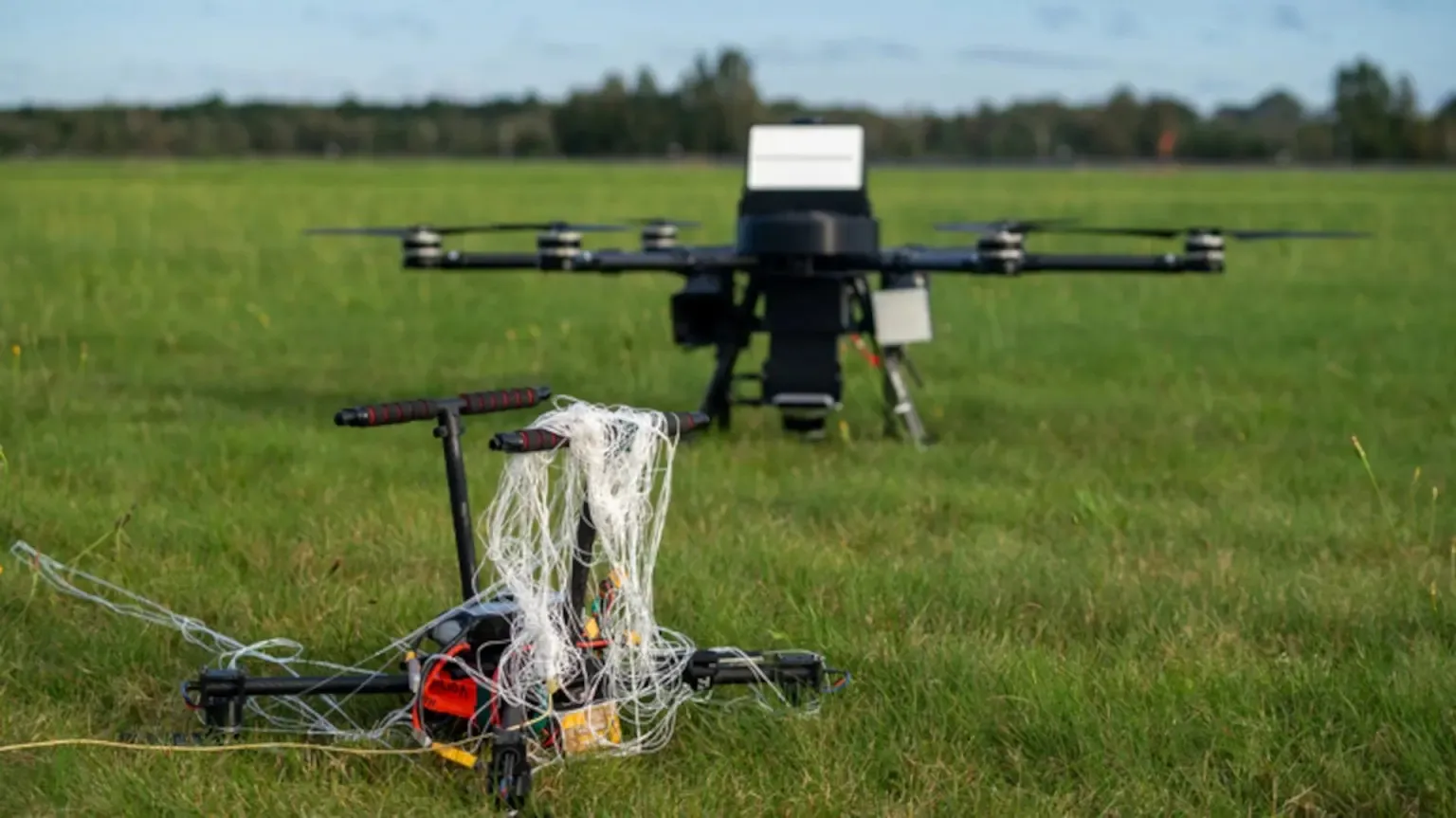
According to the Transportation Security Administration (TSA), the hundreds of millions of dollars in federal funding allocated to 2026 FIFA World Cup host states—used to procure a range of counter-unmanned aircraft system (C-UAS) technologies from net-capture drones to radio frequency takeover devices—has been put to use.
Seizure Numbers by City
The TSA announced on Tuesday that federal air marshals have seized more than 300 drones since the tournament opened on June 11. The FBI's Los Angeles field office confirmed to the Washington Examiner that 34 drones had been confiscated in the Los Angeles area; the Philadelphia field office reported recovering 42 drones since matches began at Lincoln Financial Field; and the Newark, New Jersey field office reported seizing 6 drones over MetLife Stadium.
The FBI's Dallas field office separately reported on Monday that 39 drones had been seized since June 11, while the Miami field office stated that 54 drones had been confiscated within FAA-designated temporary flight restriction (TFR) zones around venues, with 49 operators issued citations.
An FBI national press spokesperson told FLYING that the nationwide total of 300 is expected to be updated shortly.
FAA Temporary Flight Restrictions
The FAA has established TFRs extending 3 nautical miles (nm) from each of the 11 host stadiums up to 3,000 feet above ground level on match days. Additional restrictions apply within 1 nm of 12 fan festival sites up to 1,000 feet AGL. Drone pilots can check current restrictions via NOTAM, the B4UFLY app, or the FAA's Sports Events Automated Monitoring System (SEAMS).
Violators face penalties of up to $100,000, federal criminal charges, and revocation of their drone or remote pilot certificates. The FAA has clarified, however, that legitimate commercial operators—such as delivery services—may fly within TFR boundaries provided they obtain prior approval from the Department of Homeland Security (DHS).
TFR regulations permit the use of lethal force against drones deemed to pose an imminent security threat. Separately, authorities approved Sky Elements to stage the first drone air scoreboard display above Lumen Field in Seattle.
In May, the FAA announced the launch of the Drone Enforcement, Targeted Enforcement Response (DETER) framework to prosecute World Cup violations. DETER bypasses the lighter compliance actions that might otherwise apply, instead levying fines and certificate sanctions directly against offenders.
An FBI Los Angeles field office spokesperson told FLYING that violation notices have been issued in local drone seizure cases, requiring offenders to pay fines or appear in court.
Why Is Drone Incursion Such a Concern?
The FBI investigated a string of drone incursions during MLB games at Coors Field in Colorado in April—just one example of a persistent problem facing professional sports leagues. The NFL disclosed in 2025 that it had recorded more than 2,000 drone incursions into stadium TFRs each season over the past three seasons, with the numbers rising year over year. The NFL, MLB, and other leagues have backed the Safer Skies Act, which took effect last December and extended C-UAS authorities—previously limited to federal agencies—to state and local law enforcement.
Incursions are not confined to sporting events. Federal officials stated in March that unauthorized drones had flown over military installations where Defense Secretary Pete Hegseth and Secretary of State Marco Rubio were present. This month, the FBI charged an individual in connection with an alleged plot involving an explosive-laden drone at the White House UFC Fight Night 250 event.
Douglas Olson, senior coordinator of the FBI's World Cup task force, testified in April that drones represent "one of the most significant security concerns" surrounding the tournament. FEMA has disbursed $250 million through its C-UAS grant program to the 11 World Cup host states and the District of Columbia.
Total Federal Investment Exceeds $465 Million
That funding has been further augmented by $115 million from a newly established DHS office and $100 million from Joint Interagency Task Force 401—the body responsible for coordinating the federal government's overall C-UAS operations—significantly enhancing the overall counter-drone capability.
Andrew Giuliani, the White House's World Cup task force director, told ABC News this month that C-UAS technologies have been deployed at all 78 matches held in the United States, including drone-versus-drone net-capture systems, signal jamming capabilities, and fixed or portable radar and antenna arrays for passive detection.
FEMA plans to allocate an additional $250 million in fiscal year 2027 for states and territories nationwide to procure C-UAS systems.
Meanwhile, the Pentagon has approved AeroVironment's Locust counter-drone laser system—which uses a directed-energy beam to disable drones—for testing at five locations. Earlier tests had been hampered by a breakdown in communication between the Pentagon and the FAA, which forced a temporary closure of airspace over parts of Texas.
原文來源: 查看原文
FAQ
Reviewed and published by the LAETimes editorial desk ·