U.S. Navy Researchers Demonstrate Laser System That Simultaneously Delivers Wireless Power and Counter-Drone Capability
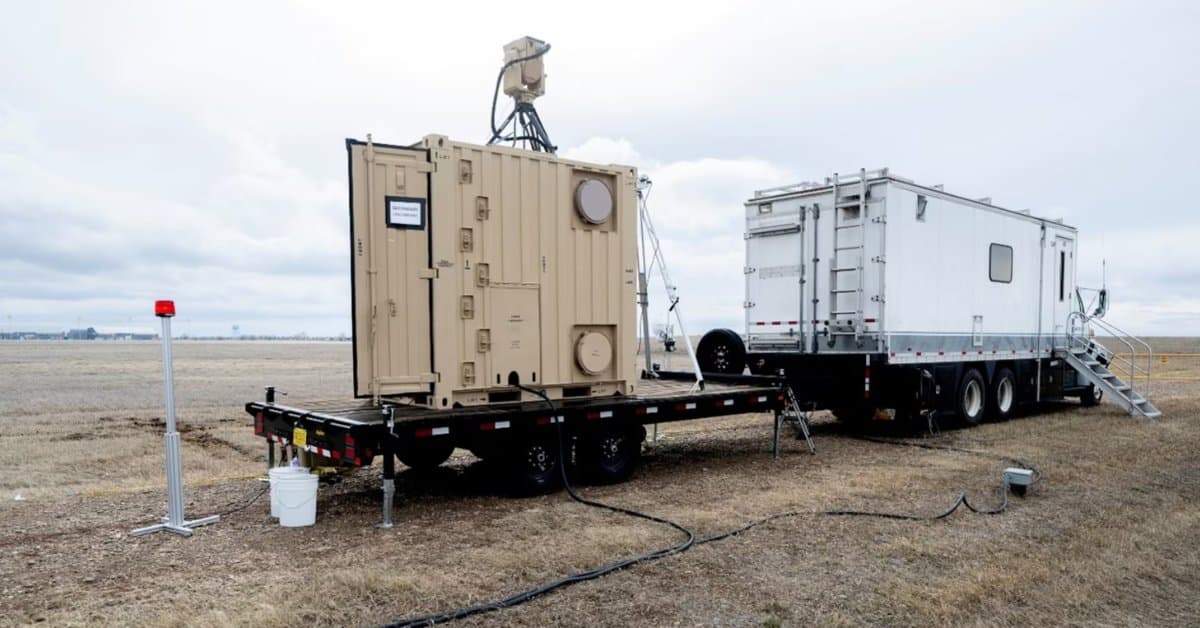
U.S. Navy researchers have successfully demonstrated a dual-purpose laser system capable of transmitting power wirelessly via laser beam while also functioning as a counter-UAS weapon. The breakthrough highlights the strategic potential of directed energy systems for future naval operations and drone defense, enabling extended UAV endurance and cost-effective threat neutralization from a single platform.
Highlights
- U.S. Navy researchers demonstrated a single laser system that can both transmit wireless power to drones and serve as a counter-UAS directed energy weapon.
- The dual-purpose design allows the same platform to switch between wireless charging mode and drone-intercept mode, reducing the need for separate systems.
- Wireless laser power transmission could extend naval drone loiter times by eliminating the need to return to base for recharging.
- Directed energy laser weapons offer a significant per-intercept cost advantage over conventional air defense missiles, making them attractive for high-volume drone threat scenarios.
- The demonstration represents a key milestone in U.S. Navy directed energy weapons and wireless power transmission research, with potential deployment on future naval vessels and shore-based installations.
U.S. Navy researchers have successfully demonstrated an innovative laser system with dual functionality — capable of both transmitting power wirelessly via laser beam and executing counter-unmanned aerial systems (Counter-UAS) combat missions.
Technical Breakthrough: One Laser Beam, Two Missions
The key highlight of this technology is that the same laser system can flexibly switch between operating modes. In one mode, it serves as a wireless power transmission medium, delivering energy to remote equipment or drones for in-flight charging. In the other, it transitions into a counter-drone weapon system, capable of intercepting or destroying hostile drone threats as needed.
This dual-use design carries significant strategic implications for modern naval warfare. As drones become increasingly prevalent in military conflicts, the ability to sustain friendly drone operations while rapidly responding to enemy UAV threats has become an urgent challenge for navies worldwide.
Military Applications
If wireless power transmission technology matures for operational military use, it would allow naval drones to extend their loiter time without returning to base for resupply, substantially improving the effectiveness of reconnaissance, surveillance, and combat missions.
At the same time, an integrated counter-drone laser system offers a rapid, precise, and comparatively low-cost defensive option. Compared to conventional air defense missiles, directed energy weapons carry a significant per-intercept cost advantage.
Looking Ahead
This demonstration marks a notable advance for the U.S. Navy in both directed energy weapons and wireless power transmission. As the technology continues to mature, multi-function laser systems of this type are expected to play a critical role aboard future naval vessels and shore-based defense installations, reshaping the conduct of modern naval warfare.
Note: Source information for this article is limited. Additional details will be updated as official full reports become available.
原文來源: 查看原文
FAQ
Reviewed and published by the LAETimes editorial desk ·