Seventy Years After the Sidewinder: The US Plans a 1,000-Nautical-Mile Missile to Reclaim Long-Range Air Superiority Over China and Russia
The US Air Force is developing the Air Force Long Range Weapon (AFLRW), an air-to-air and air-to-ground missile with a minimum range of 1,000 nautical miles (approx. 1,852 km) — more than six times the range of the most advanced air-to-air missiles currently in service. A classified industry briefing is scheduled for August 25–26, 2025, at Eglin Air Force Base, Florida, as the Pentagon seeks next-generation solutions to reclaim long-range air dominance in the Pacific.
Highlights
- The US Air Force's AFLRW programme requires a minimum engagement range of 1,000 nautical miles (approx. 1,852 km) for both air-to-air and air-to-surface variants, making it the longest-range AAM ever pursued.
- A classified Secret-level industry briefing is scheduled for August 25–26, 2025, at Eglin Air Force Base, Florida, where the USAF will present requirements to defense contractors.
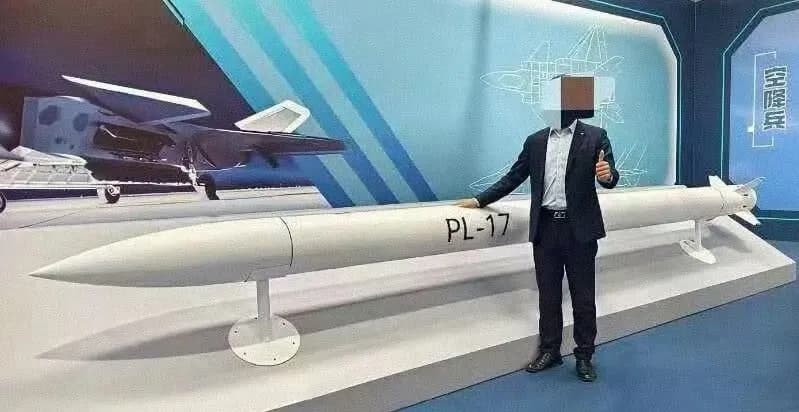
- The AFLRW's 1,000 nm range is more than six times that of the Meteor missile and more than four times the ~400 km range reported for China's PL-17, Russia's R-37M, and the US AIM-174B.
- Guidance at such extreme ranges would likely require space-based sensors or high-altitude UAVs integrated into a networked kill web, as no current fighter radar can support target acquisition at 1,000 nm.
- If fielded, the AFLRW could allow US fighters operating within Japanese airspace to strike targets deep inside China, fundamentally altering Pacific air combat strategy and deterrence calculations.
The air-to-air missile (AAM) has been the cornerstone of air combat since its first operational use during the Vietnam War. For decades, the United States held a decisive edge in this domain — it fielded the world's first practical guided AAM and was the earliest nation to deploy beyond-visual-range (BVR) missiles.
Over the past decade, however, China and Russia have closed the gap dramatically, developing missiles that reportedly surpass current US systems in both range and speed.
Now, Washington is moving aggressively to reverse that trend, pursuing what would be the world's first AAM capable of engaging targets at ranges exceeding 1,000 nautical miles.
If fielded, such a weapon would fundamentally reshape aerial warfare. US fighters could engage targets deep inside Chinese airspace while remaining safely within Japanese airspace. High-value assets such as AWACS and aerial refueling tankers — which typically operate hundreds of miles beyond the reach of current missiles — would face an unprecedented threat.
For context, 1,000 nautical miles is roughly six times the range of the Meteor, one of the most capable BVR missiles in service today, and more than four times the reported 400 km range of the US Navy's AIM-174B, Russia's R-37M, and China's PL-17.
The AFLRW Programme
The US Air Force (USAF) is preparing to brief defense contractors on requirements for the Air Force Long Range Weapon (AFLRW) — a new air-to-air and air-to-ground missile with a minimum engagement range of 1,000 nautical miles.
On 24 June, the Air Force Life Cycle Management Center (AFLCMC) Armament Directorate (EB) published a notice outlining the programme's requirements.
A classified industry day is scheduled for 25–26 August 2025 at the Guided Weapons Evaluation Facility (GWEF), Eglin Air Force Base, Florida. The event is classified at the Secret level; all attendees must hold the appropriate security clearance.
The notice states: "AFLRW will address DoD priorities by developing the next generation of air-launched long-range weapon variants."
It adds: "AFLRW may select multiple vendors to develop separate Air-to-Air (A/A) and Air-to-Surface (A/S) variants, with an A/A solution prioritized as the initial operational capability."
"The threshold range for both variants is 1,000 nautical miles, and both must be capable of rapidly engaging their respective A/A and A/S targets in Defense Planning Scenario 2.1 and 7.1 environments."
AFLCMC further noted it is seeking "next-generation air-launched long-range weapons capable of rapidly engaging priority air, ground, and maritime targets at extended range."
Beyond the 1,000 nm range requirement, the notice provides no additional technical specifications. Nevertheless, that figure alone represents a paradigm shift in air combat theory.
A Brief History of the Air-to-Air Missile
Development of air-to-air missiles began shortly after World War II at the US Naval Ordnance Test Station (NOTS) in Inyokern, California — today's Naval Air Weapons Station China Lake.
The first operational AAMs entered service in the late 1950s. In 1956, the United States became the first country to field an AAM when the AIM-9 Sidewinder entered US Air Force service. The AIM-9 uses infrared (IR) guidance, with its seeker tracking the heat signature of an aircraft's engine exhaust.
Early AIM-9B variants employed a lead-sulfide (PbS) detector and operated in a fire-and-forget mode, preserving the launching aircraft's tactical flexibility. Despite being revolutionary for its time, the AIM-9B had significant limitations: it could only lock on to a target from the rear aspect (due to its reliance on engine exhaust heat) and performed poorly in wet or rainy conditions. Its effective range was approximately 2–4.8 km.
The Soviet Union responded quickly. The K-5 missile entered service in 1957, employing rudimentary radar guidance. However, as the K-5 lacked an onboard radar seeker and required continuous illumination from the launch aircraft's radar, it forced the carrier aircraft to remain exposed to counter-fire after launch.
How China Acquired the AIM-9B
The first combat use of an AAM occurred in 1958 and produced an unexpected intelligence windfall.
During the Second Taiwan Strait Crisis, Republic of China Air Force F-86 Sabres fired multiple AIM-9B Sidewinders at People's Liberation Army Air Force MiG fighters, scoring at least one confirmed kill. One Sidewinder, however, struck an enemy aircraft without detonating. The PLAAF pilot returned to base with the missile lodged in his airframe; it was subsequently handed over to the Soviet Union. After careful analysis, the Soviets used it as the basis for the Vympel K-13, which entered service in 1961.
The 1965 Indo-Pakistani War: A Missile Decides the Balance
India introduced the MiG-21 — armed with the Soviet K-13 — into Indian Air Force (IAF) service in 1963. Just two years later, the 1965 Indo-Pakistani War broke out. Pakistan Air Force (PAF) F-86 Sabres and F-104 Starfighters were both equipped with the AIM-9B, giving Pakistan a clear missile advantage at a time when the K-13 was still immature.
IAF historian Angad Singh wrote: "In the 1965 war, this disparity proved decisive. The PAF achieved at least three confirmed missile kills, fundamentally altering tactical calculations. Even if fewer Sabres were missile-equipped than some sources suggest, Indian pilots had to assume every aircraft they faced was armed. The missile introduced a level of uncertainty that no amount of pilot skill could entirely overcome."
The 1965 war demonstrated that a clear advantage in AAM capability can be strategically decisive.
The BVR Era
Longer-range BVR missiles have since become standard. Today, the European Meteor and the US AIM-120D both have effective ranges approaching 200 km; China's export-variant PL-15E matches that figure, while the domestic PL-15 is claimed to reach 300 km.
Russia's R-37M and KS-172, China's PL-17, and the US Navy's AIM-174B all sit in the 400 km class.
The R-37M has accumulated multiple confirmed kills in the ongoing war in Ukraine. In July 2024, a Russian Su-35 reportedly downed a Ukrainian MiG-29 at a record-breaking distance of 213 km.
These represent the current state of the art in long-range BVR missiles — yet a 1,000 nm-class weapon would render them obsolete as a strategic deterrent.
For comparison, current US AAMs fall well short of that benchmark:
- AIM-120 AMRAAM: approximately 100 miles
- AIM-174B "Gunslinger": approximately 300–400 miles
- AIM-260 JATM (in development): over 200 miles
As noted, China and Russia have already surpassed the US in long-range AAM range — yet even their longest-range systems reach only approximately 300 miles.
Key Technical and Strategic Questions
The propulsion architecture for the AFLRW remains unclear. Candidates include a multi-stage missile design or a derivative of an air-launched ballistic missile.
Critically, a 1,000 nm range far exceeds the detection envelope of virtually every fighter radar in service. Target acquisition and mid-course guidance at such extreme distances will likely require space-based sensors or high-altitude UAVs feeding data into a highly networked kill web — airborne radar alone cannot support engagements at this range.
Further details are expected following the August 2025 classified briefing. What is clear is that if successfully developed and integrated into the US Air Force inventory, the AFLRW would fundamentally alter the balance of power in the Pacific theater.
Author: Sumit Ahlawat has over a decade of experience in journalism, with stints at the Press Trust of India (PTI), Times Now, Zee News, Economic Times, and Microsoft News. He holds an MA in International Media and Modern History from the University of Sheffield, UK. The views expressed are the author's own.
原文來源: 查看原文
FAQ
Reviewed and published by the LAETimes editorial desk ·