North America Has Enough Rare Earth Reserves to Break China's Global Dominance, Study Finds
Researchers at the University of Michigan have found that rare earth mineral deposits in the United States and Canada could be sufficient to achieve self-sufficiency without relying on imports. However, the study notes that doing so would be costly, requiring government support and bilateral cooperation. China currently supplies approximately 70% of the world's rare earths, a dominance that could be challenged if North American domestic mining becomes economically competitive.
Highlights
- University of Michigan researchers found that US and Canadian rare earth deposits could collectively achieve North American self-sufficiency, but government support and bilateral cooperation are required.
- China currently controls approximately 70% of global rare earth supply, a dominance built on decades of investment in large-scale mines and processing infrastructure since the 1980s.
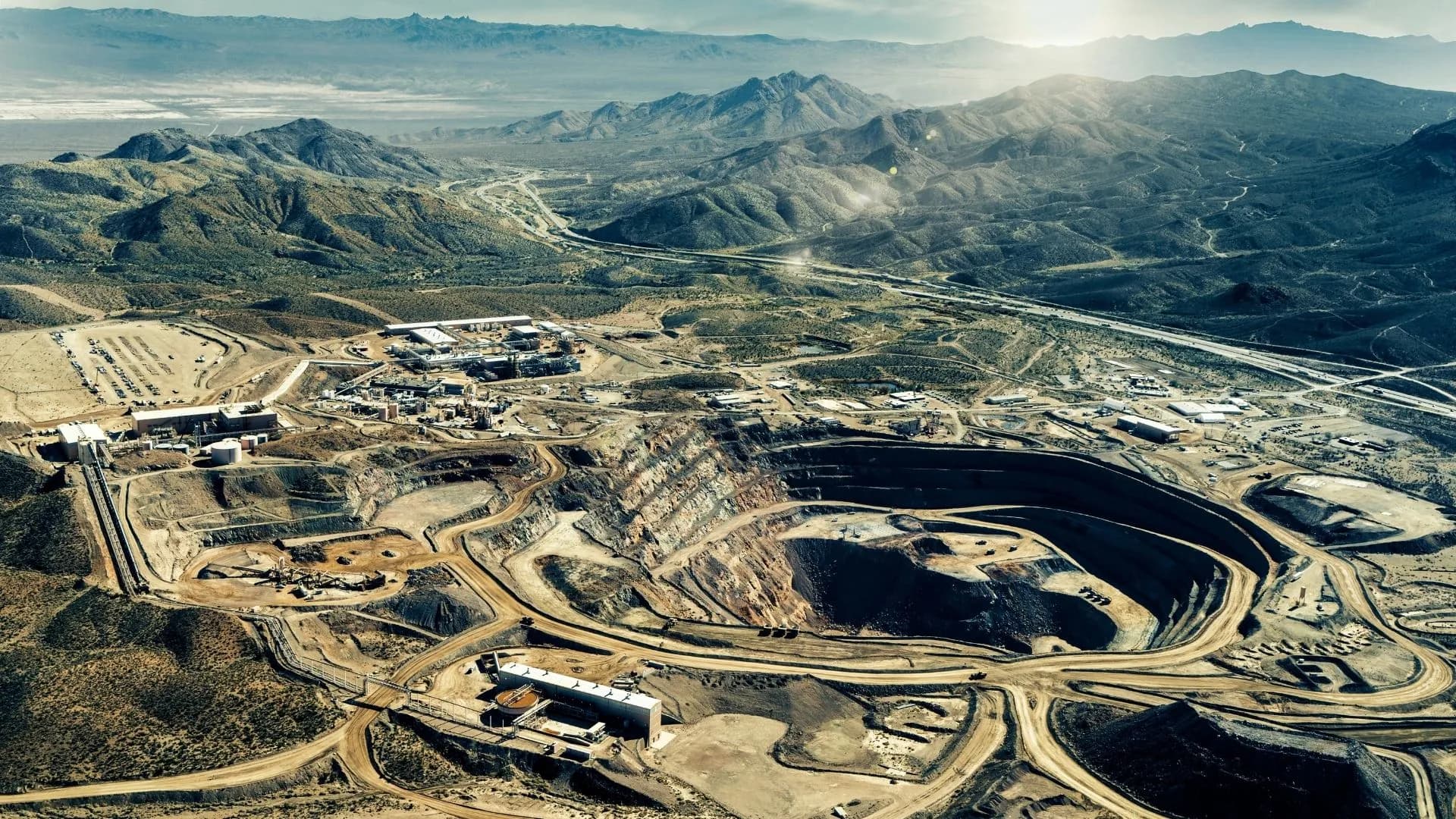
- Most North American deposits are lower in quality than operating mines in China and Australia, with the exception of the Mountain Pass mine in California.
- Global rare earth mineral demand is projected to grow from 91,000 tonnes in 2024 to 150,000 tonnes by 2040, driven by electric vehicle and clean energy expansion.
- The US can potentially achieve self-sufficiency in light rare earths (neodymium, praseodymium) but would need Canadian collaboration for heavy rare earths (dysprosium, terbium).
Researchers at the University of Michigan have found that the United States and Canada may collectively hold sufficient rare earth mineral deposits to achieve self-sufficiency once developed, eliminating the need to rely on imports. However, the research team cautions that this path is far from cheap — it will require government policy support and close cooperation between the two nations to turn the goal into reality.
Rare earth metals such as neodymium, praseodymium, dysprosium, and terbium are critical raw materials for electric vehicles, wind turbines, consumer electronics, and weapons systems, prized for their ability to produce exceptionally strong permanent magnets. Without these materials, modern high-performance electric motors would be heavier and far less efficient. Given their growing strategic importance, rare earth supply has increasingly become a national security issue, with nations that have the capacity to do so under pressure to produce domestically wherever possible.
Can the US and Canada Break Their Dependence on Chinese Rare Earths?
"The purpose of this research is to provide an information framework that allows stakeholders to more systematically evaluate individual deposits, avoiding over-concentration of investment in mines that may prove uncompetitive in the long run," said Stephen Kesler, Professor Emeritus in the Department of Earth and Environmental Sciences at the University of Michigan.
He added: "From an environmental standpoint, we don't want to conduct more mining than is necessary. If output exceeds demand, prices will fall and all operators will face losses. In such a scenario, moderate government funding and policy incentives can help establish a stable domestic industry."
Although both the US and Canada are endowed with substantial rare earth resources, importing from overseas — principally China — remains cheaper at present. Since the 1980s, China has invested heavily in large-scale mines, advanced processing facilities, and efficient supply chains, and today controls roughly 70% of global rare earth supply. If North America can make domestic rare earth mining and processing economically competitive, that dominance could be disrupted.
Not All Deposits Are Created Equal
The research team also found that deposit quality varies considerably. "The results show that all North American deposits, with the exception of the already-operational Mountain Pass mine in California, are of lower quality than currently operating mines in China and Australia. But that does not mean these deposits cannot be mined," said Kesler.
"The conclusion is that these deposits are close enough in quality that, with modest government support — especially if rare earth prices remain elevated — there is a viable opportunity to sustain a domestic supply chain. In such a supply chain, the higher cost of rare earth mining could potentially be offset by savings in processing and manufacturing," he elaborated.
Kesler also noted: "For light rare earths, the United States has the capacity to achieve self-sufficiency. For heavy rare earths, collaboration with Canada would be preferable."
For context: "light rare earths" refers to relatively abundant elements such as lanthanum (La), cerium (Ce), neodymium (Nd), and praseodymium (Pr); "heavy rare earths" refers to dysprosium (Dy) and terbium (Tb), which are scarcer and commonly used in high-temperature magnets.
Supply Chain Risk and the Clean Energy Transition
"Rare earth elements are classified as critical minerals because they are essential to a wide range of industrial and technological applications as well as national defense," said researcher Greg Keoleian.
"At the same time, they represent a significant supply chain risk — any disruption can have serious economic and national security consequences. They are also indispensable inputs for the clean energy transition," he added.
The researchers estimate that global demand for rare earth minerals will rise from 91,000 tonnes in 2024 to 123,000 tonnes in 2030, reaching 150,000 tonnes by 2040. The team's next phase of work will assess whether domestic supplies of the four key magnetic materials — neodymium, praseodymium, dysprosium, and terbium — will be sufficient to meet demand through 2050 as electric vehicle production continues to expand.
The study has been published in the peer-reviewed journal Resources, Conservation & Recycling.
原文來源: 查看原文
FAQ
Newsletter
Subscribe to our Low-Altitude Industry Newsletter
Daily curated news on low-altitude economy and drone industry, delivered to your inbox.
Reviewed and published by the LAETimes editorial desk ·